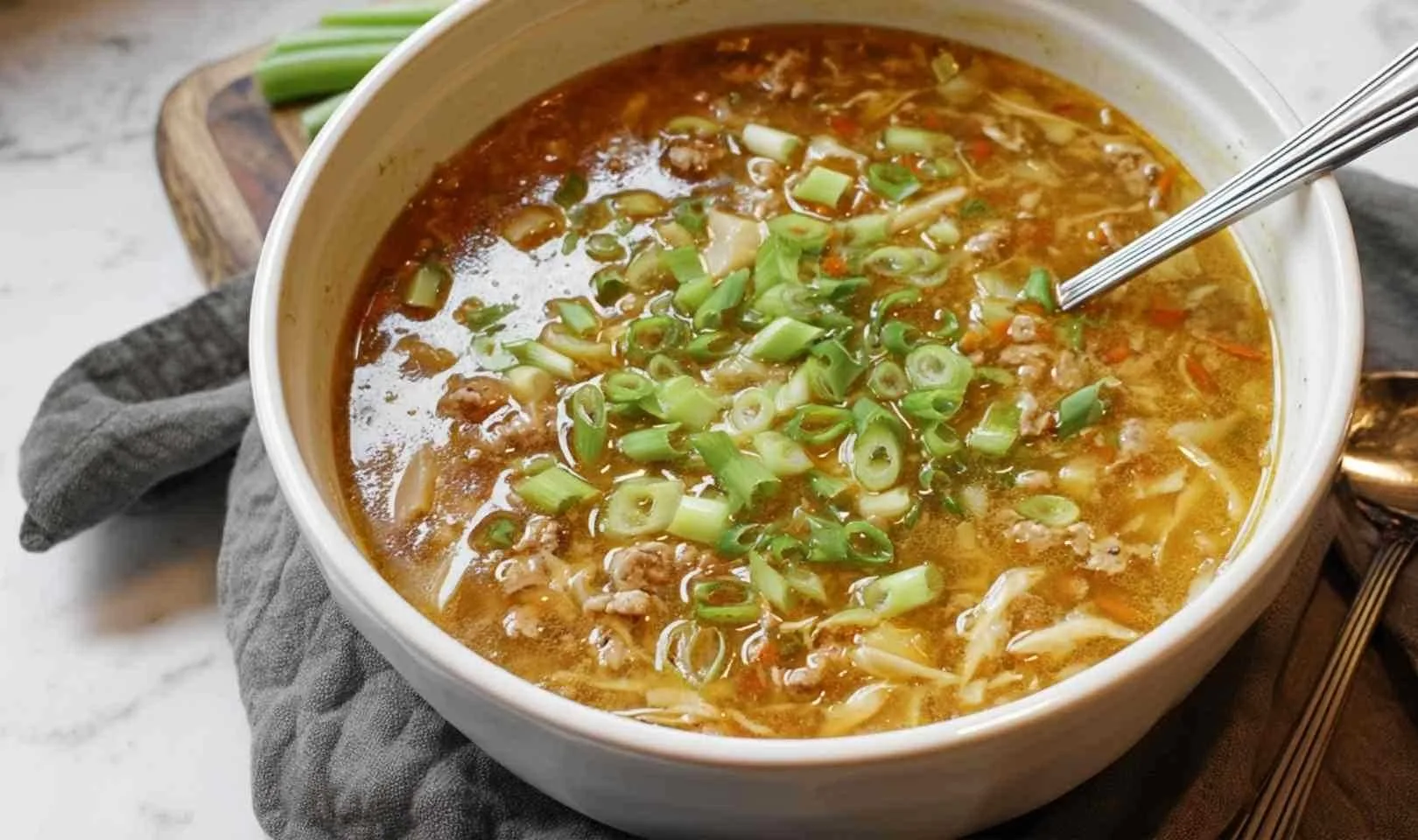
This paleo egg roll soup delivers all the savory, satisfying flavors of your favorite takeout egg rolls in a nourishing, wrapper-free bowl. It’s naturally gluten-free, packed with vegetables, and comes together faster than ordering delivery.
I still remember the first time I made this soup on a chilly October evening when my grandson called asking for “something like egg rolls but healthier.” Growing up in the Midwest, we didn’t have much Asian food, but I’ve learned over the years that the best comfort food borrows flavors from everywhere. This soup has become my go-to when someone’s feeling under the weather or when I want something filling without all the fuss of wrapping and frying. The cabbage wilts down into silky ribbons, the ginger warms you from the inside out, and that combination of coconut aminos and rice vinegar creates the perfect savory-tangy balance. Your kitchen’s about to smell incredible.
What Makes This Paleo Egg Roll Soup So Special
I’ve made countless versions of cabbage soups over the years, but this one stands out because it captures those crave-worthy takeout flavors while keeping everything clean and nourishing. The secret is in how the aromatics (garlic, ginger, and onion) bloom in coconut oil before the broth goes in.
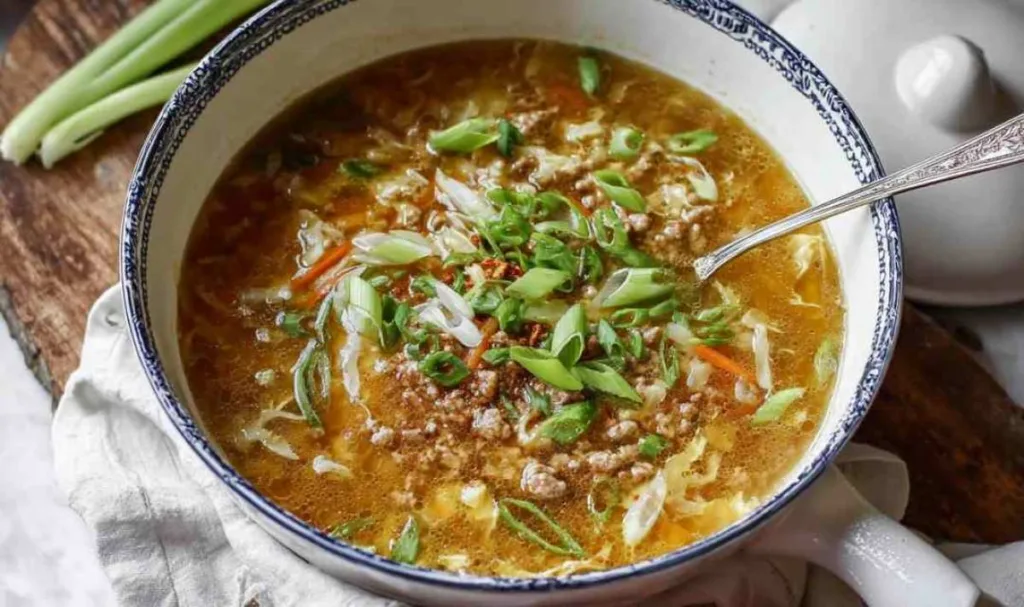
Here’s why this soup belongs in your weekly rotation:
- Budget-friendly ingredients – Ground pork and cabbage are some of the most affordable proteins and vegetables you’ll find, making this perfect for feeding a family without breaking the bank
- Quick 30-minute meal – No complicated techniques or advance prep needed; everything cooks in one pot from start to finish
- Dietary-friendly – Works beautifully for paleo, Whole30, AIP, gluten-free, and soy-free eating styles without sacrificing flavor
- Incredibly filling – High protein from the ground meat combined with fiber-rich vegetables keeps you satisfied for hours
- Healthier than takeout – You get all those familiar egg roll flavors without the deep-fried wrapper, refined oils, or hidden sugars
- Meal prep champion – Makes great leftovers and actually tastes better the next day after the flavors meld together
This is the kind of soup that disappears fast at my table, and I love that it’s both indulgent-tasting and genuinely good for you.
Key Players in This Recipe
Ground pork forms the hearty protein base and brings rich, savory flavor that pairs perfectly with Asian-inspired seasonings. I always choose pork with a bit of fat content (around 80/20) because it adds depth, though you can certainly use ground chicken or turkey for a leaner option.
Green cabbage is the star vegetable here, providing that signature egg roll texture and a subtle sweetness when cooked down. In my kitchen, I prefer buying a whole head rather than pre-shredded coleslaw mix because the texture holds up better during simmering.
Coconut aminos replaces traditional soy sauce to keep this paleo and soy-free while delivering that essential umami-rich, slightly sweet flavor profile. I’ve found it’s become a staple in my pantry for all kinds of Asian-inspired dishes.
Fresh ginger brings warming spice and authentic flavor that you simply can’t replicate with powdered ginger. I always keep a knob in my freezer (it grates easier when frozen and lasts for months).
Coconut oil provides a neutral cooking fat that works beautifully with the other ingredients and keeps the recipe compliant with paleo guidelines. Betty’s tip: let it fully melt before adding your aromatics so they cook evenly.
Chicken broth creates the flavorful soup base that ties everything together. I’ve learned that using good-quality broth makes a noticeable difference in the final taste (homemade or a quality store-bought bone broth work wonderfully).
Rice vinegar adds that bright, tangy finish that makes the flavors pop at the end of cooking. For AIP compliance, fresh lime juice works as an excellent substitute and brings its own lovely citrus note.
Carrots contribute natural sweetness and a pop of color while adding extra nutrients. Betty always says that the shredded carrots blend into the soup more seamlessly than chopped chunks.
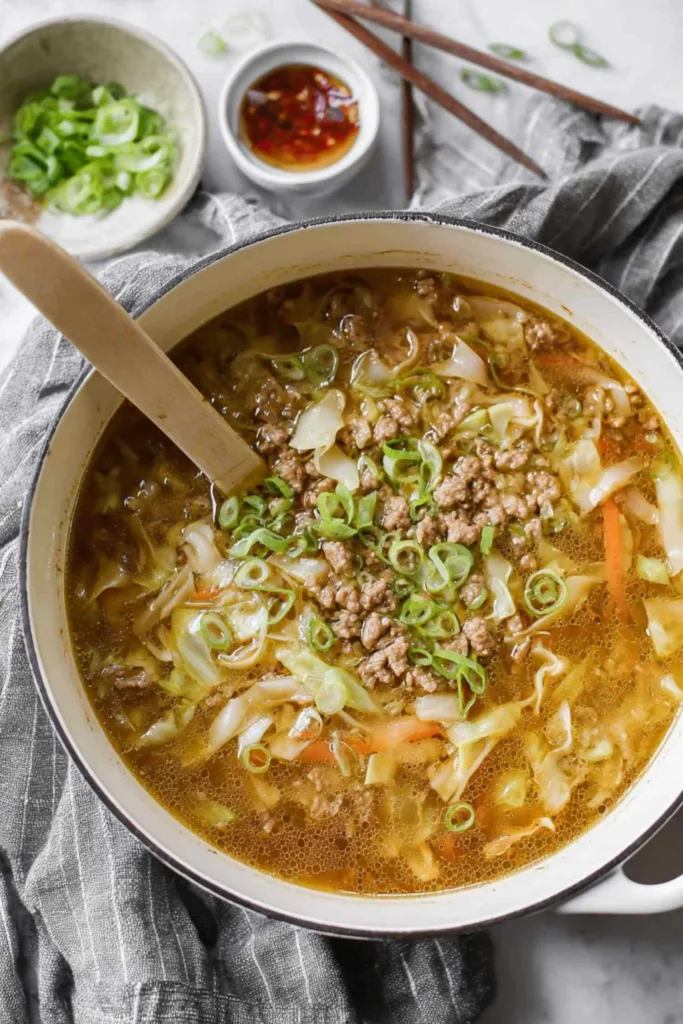
How to Make Paleo Egg Roll Soup
Step 1. I always start by browning the ground pork in a large pot over medium heat, breaking it into small crumbles with a wooden spoon and seasoning lightly with salt and pepper. After years of making this, I’ve learned that browning the meat well (not just cooking it through) develops deeper flavor throughout the entire soup.
Step 2. Once the pork is cooked through with some nice browned bits, transfer it to a bowl and discard the excess fat from the pot. This keeps the soup from becoming greasy while still maintaining great flavor.
Step 3. Melt the coconut oil in the same pot, then add your diced onion, minced garlic, and grated ginger, sautéing for about 4 minutes until everything softens and becomes fragrant. Betty’s tip: you’ll know it’s ready when your whole kitchen smells amazing and the onions turn translucent.
Step 4. Toss in the shredded carrots and sauté for 2-3 more minutes to begin softening them. Remove the tough core from the cabbage by cutting around it with a knife, then slice the cabbage into strips about 1/4 to 1/2 inch thick. Add your sliced cabbage strips and stir for just a few minutes until the cabbage barely begins to wilt. I’ve found that not overcooking the cabbage at this stage keeps it from turning mushy later.
Step 5. Pour in the chicken broth, return the cooked pork to the pot, and add the coconut aminos, stirring everything together to combine well. Bring the mixture to a rolling boil, then reduce the heat to maintain a gentle simmer.
Keeping This Paleo Egg Roll Soup Fresh
I typically store leftovers in glass containers in the refrigerator, where they’ll stay fresh for 3-4 days. In fact, this is one of those soups that tastes even better the next day after all the flavors have had time to meld together overnight. Just make sure to let the soup cool completely to room temperature before sealing and refrigerating to prevent excess condensation.
Betty’s freezing method works well for this recipe if you want to make a double batch. Portion the cooled soup into freezer-safe containers or bags, leaving about an inch of headspace for expansion, and freeze for up to 2-3 months. I’ve found that the vegetables maintain their texture surprisingly well through freezing, though the cabbage may soften slightly.
For the best texture, I reheat by transferring the soup to a pot on the stovetop over medium-low heat, stirring occasionally until heated through. While you can use the microwave in a pinch, stovetop reheating gives you more even heating and better preserves the vegetables’ texture. Add a splash of broth or water if the soup has thickened during storage.
Easy Paleo Egg Roll Soup
Ingredients
Equipment
Method
-
In a large pot, brown the ground pork over medium heat, breaking it into small crumbles with a wooden spoon. Season lightly with salt and pepper. Once cooked through with nice browned bits, transfer to a bowl and discard excess fat from the pot.
-
Add the shredded carrots and sauté for 2-3 minutes to begin softening. Remove the tough core from the cabbage by cutting around it with a knife. Slice the cabbage into strips about 1/4 to 1/2 inch thick. Add the sliced cabbage and stir for a few minutes until it barely begins to wilt.
-
Pour in the chicken broth, return the cooked pork to the pot, and add the coconut aminos. Stir well to combine. Bring to a boil, then reduce heat to maintain a gentle simmer.
-
Simmer uncovered for 20-25 minutes, stirring occasionally, until the cabbage is wilted but still has a pleasant bite (not mushy).
-
Remove from heat and stir in the rice vinegar. Taste and adjust seasoning with additional salt, pepper, or coconut aminos as needed.
Notes
Perfect Partners for Egg Roll Soup
Cauliflower rice makes an excellent pairing if you want to bulk up the meal while keeping it grain-free and low-carb. The neutral flavor soaks up the delicious broth, and it adds extra vegetables to an already veggie-packed dish.
Simple green salad with sesame dressing provides a fresh, crisp contrast to the warm, savory soup. I love serving something cool and crunchy alongside to balance the textures, and a light Asian-inspired vinaigrette ties the flavors together beautifully.
Roasted Brussels sprouts offer a slightly bitter, caramelized element that complements the soup’s savory-sweet profile. After years of experimenting, I’ve found that roasting them with a bit of coconut oil and sea salt creates the perfect side that even picky eaters enjoy.
Roasted sweet potatoes add a comforting starch element for those who want a heartier meal. The natural sweetness plays nicely against the ginger and garlic, and they’re paleo-friendly unlike traditional egg roll accompaniments.
Easy homemade focaccia bread works wonderfully for sopping up every last drop of that flavorful broth. Betty always made biscuits with her soups, and while focaccia isn’t strictly paleo, it brings that same comforting, homestyle feeling to the table for those not following strict paleo guidelines.
Fresh fruit salad with pineapple, mango, and berries offers a bright, refreshing finish to the meal and adds natural sweetness that cleanses your palate. My grandchildren especially love this combination on busy weeknights.
FAQs
Can I use ground chicken or turkey instead of pork? I recommend either as excellent substitutions – just know that they’ll create a slightly leaner soup with a milder flavor. Many home cooks find success browning turkey or chicken over slightly higher heat to develop those flavorful browned bits.
What if I don’t have coconut aminos? To keep this paleo-compliant, coconut aminos is your best bet, but if you’re not following strict paleo guidelines, tamari or regular soy sauce works in the same quantity. Betty’s solution is to always keep a bottle of coconut aminos in the pantry since it lasts for months.
Can I make this soup ahead of time? Absolutely – this is actually one of those dishes that benefits from sitting. The best approach I’ve tested is making it a day ahead and storing it in the refrigerator overnight, which allows the flavors to deepen and meld together beautifully.
How do I keep the cabbage from getting too mushy? I’ve learned that the key is not overcooking it. Watch carefully during the simmering stage and remove from heat once the cabbage is wilted but still has a slight bite. To prevent this issue, aim for the shorter end of the 20-25 minute simmer time.
Can I add noodles to make it heartier? While traditional noodles aren’t paleo, you can add spiralized zucchini noodles, shirataki noodles, or kelp noodles during the last 5 minutes of cooking. Many home cooks find success with these alternatives for added heartiness without compromising the paleo egg roll soup concept.
Is this soup spicy? The base recipe has warming ginger but no heat – it’s family-friendly and mild. I recommend offering sriracha or chili crisp on the side so each person can add their preferred level of spice to their individual bowl.