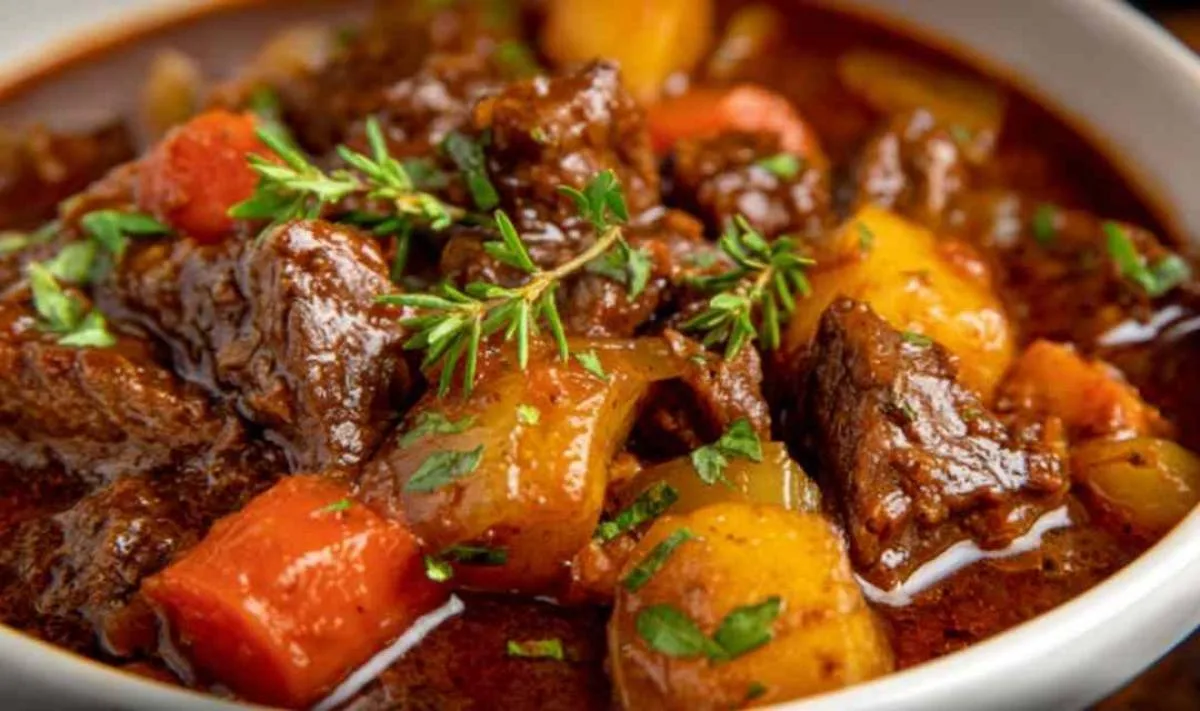
Stove Top Beef Stew transforms tough chuck roast into melt-in-your-mouth tender bites swimming in rich, savory gravy alongside perfectly cooked vegetables. I still remember the first time I made this recipe on a chilly October evening – the way the aroma of simmering beef and herbs filled every corner of my kitchen, drawing my family to the table before I even called them for dinner.
There’s something magical about watching a simple pot of ingredients transform into a hearty, soul-satisfying meal right on your stove top. In my grandmother’s farmhouse kitchen, Sunday afternoons meant the gentle bubbling of her cast iron dutch oven, filled with beef stew that had been patiently cooking for hours. She taught me that the secret wasn’t fancy techniques or expensive ingredients – it was simply giving the stew time to develop its deep, complex flavors while the meat became so tender it practically fell apart at the touch of a spoon. Those Sunday stews brought our entire family together around one table, and now I’m thrilled to share this treasured recipe that’s been tested and perfected over decades of family gatherings. Time to get your dutch oven ready!
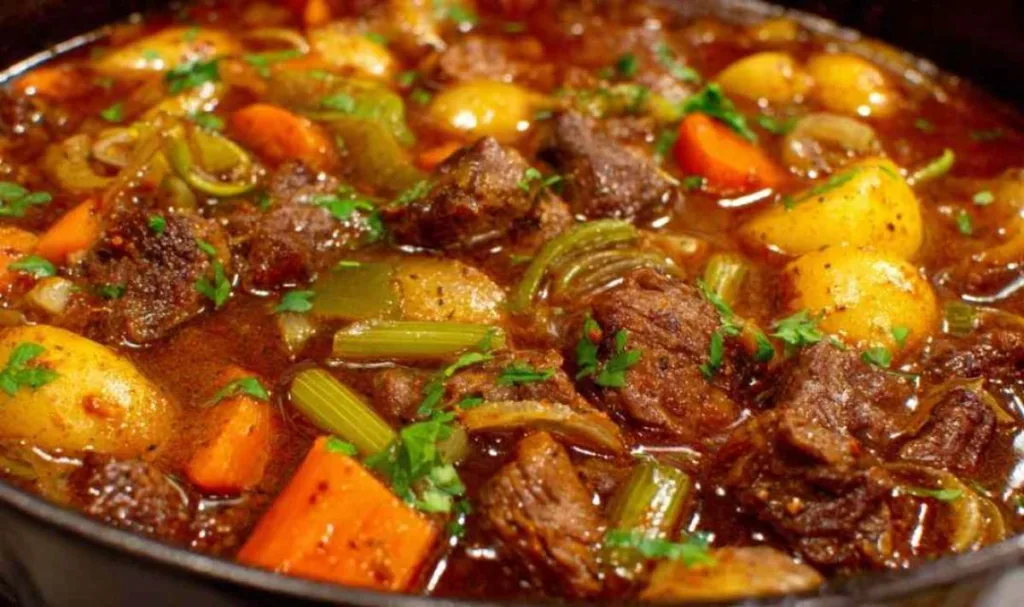
What Makes This Stove Top Beef Stew So Special
This isn’t just another beef stew recipe – it’s the result of years of Sunday dinners and cold-weather cooking in Betty’s kitchen. After making countless batches for family gatherings and weeknight meals, I’ve refined this recipe to deliver consistent, crowd-pleasing results every single time.
- Uses affordable chuck beef that becomes incredibly tender through slow cooking – no expensive cuts needed
- Comes together in one pot on your stove top, minimizing cleanup while maximizing flavor
- Delivers restaurant-quality depth thanks to the combination of beef base, red wine, and fresh herbs
- Adapts beautifully to your schedule since it needs minimal hands-on attention once it’s simmering
- Makes excellent leftovers that actually taste even better the next day as flavors continue to meld
- Feeds a crowd generously with hearty portions that satisfy even the biggest appetites
Ingredient Spotlight
Chuck beef provides the perfect balance of meat and marbling that breaks down during slow cooking, creating those tender, juicy bites that make this stew unforgettable. I always choose chuck roast cut into generous 1-inch cubes for the best texture.
Worcestershire sauce and browning sauce work together to add deep umami flavor and create that beautiful mahogany color that makes the stew look as good as it tastes.
Roast beef base paste (like Better Than Bouillon) is my secret weapon for building intense, concentrated beef flavor that regular broth alone simply can’t achieve. In my kitchen, I prefer keeping this pantry staple on hand for any recipe that needs a flavor boost.
Red cooking wine contributes complexity and helps tenderize the beef while adding subtle fruity notes that complement the savory elements. I’ve found that merlot or any dark red wine works beautifully without requiring an expensive bottle.
Fresh herb bundle of rosemary, thyme, and bay leaf infuses the stew with aromatic depth that dried herbs just can’t replicate. After years of making this, I learned that tying them together makes removal easy before serving.
Yukon gold potatoes hold their shape perfectly during the long cooking time while becoming creamy and tender, soaking up all that delicious gravy without falling apart.
Celery, onions, and garlic form the aromatic base that Betty always started with, creating the foundation of flavor that supports everything else in the pot.
How to Make Stove Top Beef Stew
Step 1. I’ve learned that properly seasoning the beef before searing makes all the difference – toss those chuck cubes with flour, Worcestershire sauce, browning sauce, and all the spices until every piece is well coated.
Step 2. Betty always started by heating the dutch oven until the oil shimmered, then searing the beef in batches without crowding the pan. After years of making this, I discovered that giving each piece 2-3 minutes per side creates that golden brown crust that adds incredible depth to the final stew.
Step 3. Once the beef is set aside, add the celery, onions, and garlic to that flavorful pan, letting them soften for about 3-4 minutes while scraping up all those delicious browned bits from the bottom.
Step 4. Stir in the tomato paste and beef base, letting them cook for 2-3 minutes until they darken slightly and become fragrant – this step caramelizes the paste and intensifies the flavor.
Step 5. Pour in the beef stock and red wine, add your herb bundle, then return the seared beef to the pot. The key I discovered is bringing everything to a gentle simmer before reducing the heat to medium-low.
Step 6. Cover the pot and let it work its magic for 2 full hours, checking occasionally to make sure it’s maintaining a gentle simmer. Through trial and error, I learned that patience during this stage is what transforms tough chuck into tender perfection.
Step 7. After 2 hours, add the carrots and potatoes, then continue cooking covered for another 30-45 minutes. My family prefers when I add the vegetables later because they stay perfectly tender without becoming mushy.
Step 8. The stew is ready when the beef is so tender it practically melts and the vegetables are cooked through but still hold their shape. Betty’s tip: if the gravy seems thin, simmer uncovered for the last 10 minutes to reduce it slightly.
Keeping This Stove Top Beef Stew Fresh
I typically store leftover beef stew in airtight containers in the refrigerator where it stays fresh for up to 3 days. The flavors actually deepen overnight, making day-two stew even more delicious than when it’s first made. Betty’s storage method works well because the thick gravy protects the meat and vegetables from drying out.
This stew freezes beautifully for up to 3 months when stored in freezer-safe containers, though I recommend leaving about an inch of headspace for expansion. Through experience, I’ve found that portioning the stew into individual or family-sized servings before freezing makes weeknight dinners incredibly convenient. The potatoes may change texture slightly after freezing, but the flavor remains excellent.
For the best texture, I reheat by transferring the stew to a pot on the stove over medium-low heat, stirring occasionally until heated through. You can also use the microwave in 2-minute intervals, stirring between each, but the stovetop method preserves the consistency better. If the stew seems too thick after storage, simply add a splash of beef broth while reheating to restore the perfect gravy consistency.

Perfect Partners for Stove Top Beef Stew
- Crusty artisan bread or dinner rolls provide the perfect vehicle for soaking up every last drop of that rich, flavorful gravy while adding textural contrast to the tender stew. Try this Easy Baked Potato Soup for another comforting meal idea.
- Simple green salad with vinaigrette cuts through the richness of the beef with bright, acidic notes and offers a fresh, crisp element to balance the hearty stew.
- Buttery mashed potatoes might seem like carbs on carbs, but many home cooks love serving stew over a bed of creamy mashed potatoes for an extra-comforting presentation. For another potato favorite, check out my Creamy Scalloped Potatoes.
- Roasted Brussels sprouts or green beans add a slightly caramelized, nutty flavor that complements the savory stew while providing a vegetable side that feels special enough for company.
- Egg noodles or rice work wonderfully as a base for the stew, especially when you want to stretch the recipe to feed a few extra people at the table.
For more hearty winter meals, explore my collection of Fall Dinner Recipes or try my Old Fashioned Vegetable Beef Soup.
FAQs
Can I use a different cut of beef for this
stew?
I recommend sticking with chuck roast because its marbling and
connective tissue break down beautifully during slow cooking,
creating that tender, juicy texture. Leaner cuts like sirloin will
become tough and dry with long cooking times.
Do I really need to sear the beef first?
Betty’s tested method shows that searing creates a flavorful crust
and develops those rich, caramelized bits on the bottom of the
pot that become the foundation of
your gravy. To prevent this common mistake, never skip the searing
step even though it adds a few extra minutes.
Can I make this beef stew in advance?
Many home cooks find success with making this stew a day ahead –
the flavors actually improve overnight as they have time to meld
together. Simply reheat gently on the stove before serving.
What if I don’t have red wine?
The best approach I’ve tested is replacing the wine with an equal
amount of additional beef stock plus a tablespoon of red wine
vinegar for acidity. The stew will still be delicious, just with
slightly less depth.
Why are my potatoes mushy?
To prevent this issue, make sure you’re adding the potatoes during
the last 30-45 minutes of cooking rather than at the beginning.
Yukon golds hold up better than russets, which tend to break down
more easily.
Can I use a slow cooker instead of the stove
top?
I’ve found that after searing the beef and sauteing the vegetables
on the stove, you can transfer everything to a slow cooker and cook
on low for 6-8 hours. Add the potatoes and carrots during the last
hour for best results.
Stove Top Beef Stew
Ingredients
Equipment
Method
-
Season the beef cubes with flour, Worcestershire sauce, browning sauce (if using), garlic powder, onion powder, Italian seasoning, salt, and pepper, tossing until well coated.
-
In a large dutch oven set over medium-high heat, add the vegetable oil. When the oil is hot, sear the beef on all sides for about 2 to 3 minutes per side until golden brown. Remove from the pan and set aside.
-
Add the celery, onions, and garlic to the dutch oven, and saute until soft, about 3-4 minutes, scraping up any browned bits from the bottom.
-
Stir in the tomato paste and beef base and simmer for 2 to 3 minutes until darkened and fragrant.
-
Add the broth, wine, fresh herbs, and return the seared beef to the pot. Bring to a gentle simmer, then reduce the heat to medium-low.
-
Cover and cook for 2 hours, checking occasionally to maintain a gentle simmer.
-
After 2 hours, add the potatoes and carrots and continue cooking covered on medium-low heat for an additional 30 to 45 minutes.
-
Once the beef is perfectly tender and vegetables are cooked through, remove herb bundle. Serve with rice, mashed potatoes, or crunchy toast.