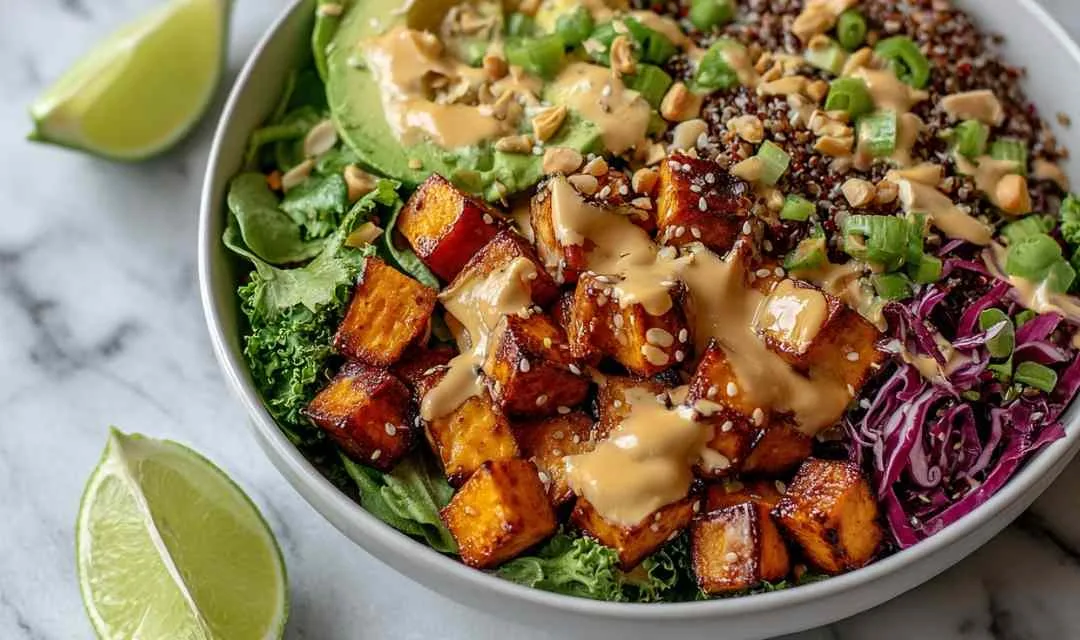
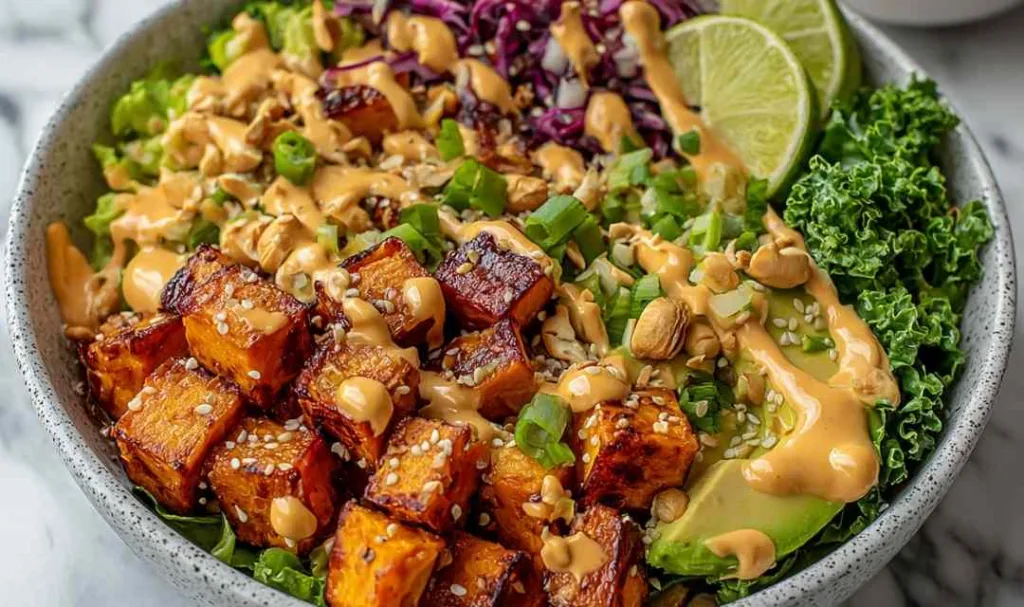
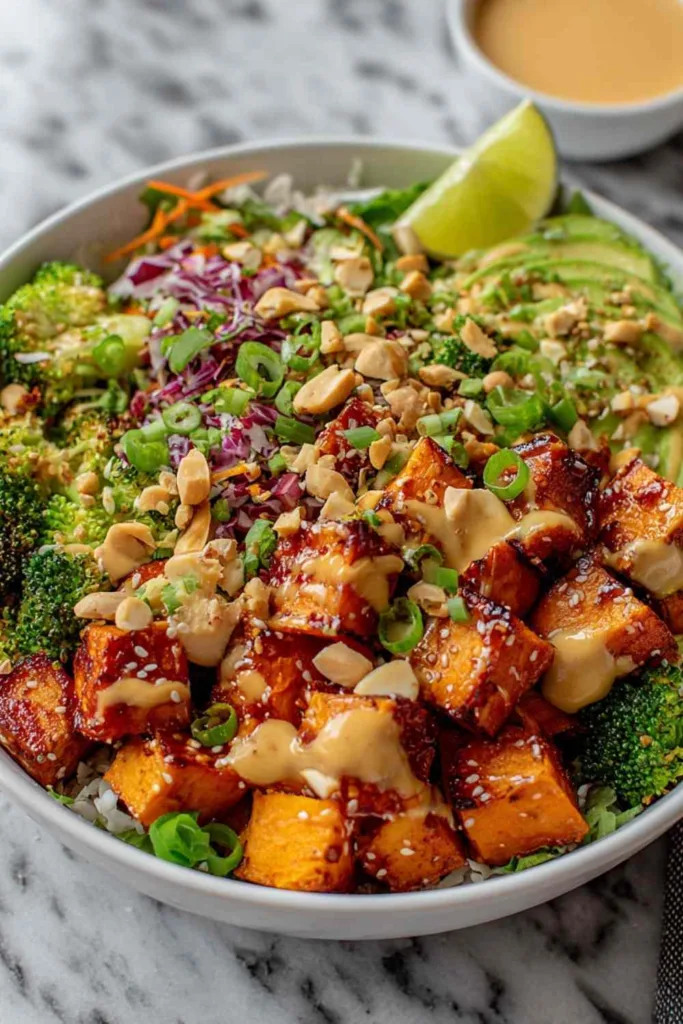
Thai Peanut Sweet Potato Buddha Bowl is one of those bowls that makes you feel good just looking at it. I remember the first time I put together a Buddha bowl in my kitchen—the colors alone had me convinced I was doing something right. This one combines roasted sweet potatoes with fresh vegetables and a creamy peanut sauce that ties everything together.
Growing up in my grandmother’s farmhouse kitchen, we always made the most of what we had. She’d say a good meal needs color, flavor, and something that sticks to your ribs. This bowl delivers on all three. The sweet potatoes roast up with crispy edges while you prep the other ingredients, and that peanut sauce? It’s the kind that makes you want to lick the spoon. Let’s get those sweet potatoes in the oven.
Why This Bowl Works Every Time
When I started making Buddha bowls regularly, I realized they’re perfect for using what you have on hand. This Thai-inspired version keeps things simple while delivering bold flavors that work together beautifully.
- Uses ingredients you can find at any grocery store
- Comes together in 45 minutes from start to finish
- Delivers vibrant flavors without complicated techniques
- Works great for meal prep throughout the week
- Adapts easily to whatever vegetables you prefer
- Provides satisfying texture contrast in every bite
What Goes Into This Bowl
Sweet potatoes form the hearty base of this bowl. I always choose medium-sized ones that roast evenly and develop those caramelized edges.
Broccoli florets add a fresh crunch. In my kitchen, I prefer smaller florets that you can eat in one bite.
Green cabbage brings a crisp texture that stands up well to the peanut sauce. Shredded thin, it adds volume without weighing down the bowl.
Avocado provides creamy richness that balances the peanut sauce. Choose one that gives slightly when you press it.
Peanut butter creates the foundation for the sauce. Natural peanut butter works best here, though any smooth variety will do.
Soy sauce adds the salty depth that makes the peanut sauce work. I’ve learned that a good soy sauce makes all the difference.
Lime juice brightens everything up. Fresh lime juice brings the kind of zing that bottled juice just can’t match.
Sesame oil contributes a nutty aroma that complements the peanut flavor without overwhelming it.
How to Make Thai Peanut Sweet Potato Buddha Bowl
Step 1. Start by prepping all your ingredients—dice the sweet potatoes into even cubes, chop the broccoli into bite-sized pieces, slice the avocado, and grate the carrots.
Step 2. I’ve found that preheating the oven to 400°F while you prep ensures it’s ready when you need it. Spread the diced sweet potatoes on a baking sheet, drizzle with olive oil, and season with salt and pepper.
Step 3. Roast the sweet potatoes for 25-30 minutes. Through trial and error, I learned they’re done when the edges turn golden-brown and crispy.
Step 4. While the sweet potatoes roast, combine the broccoli florets, shredded cabbage, grated carrots, and sliced avocado in a large bowl.
Step 5. For the peanut sauce, whisk together the peanut butter, soy sauce, maple syrup, lime juice, and sesame oil in a small bowl until smooth and creamy.
Step 6. My family prefers when I assemble the bowls with the mixed vegetables as the base, topped with the roasted sweet potatoes, then generously drizzle the peanut sauce over everything.
Step 7. Garnish with chopped cilantro and peanuts. The key I discovered is adding the garnish right before serving so everything stays fresh and crisp.
Making the Most of Leftovers
I typically store leftovers in an airtight container in the refrigerator where they’ll keep for up to 3 days. The trick is keeping the peanut sauce separate from the vegetables if you’re planning to save any for later—nobody wants soggy vegetables.
For the best texture, I reheat the sweet potatoes in a skillet over medium heat for a few minutes until they warm through. The vegetables are actually great cold, straight from the fridge. If the peanut sauce thickens up in the refrigerator, just whisk in a tablespoon of water to bring it back to drizzling consistency.
This bowl doesn’t freeze particularly well because of the fresh vegetables and avocado, but the roasted sweet potatoes and peanut sauce both freeze beautifully on their own.
Building the Perfect Plate
- Creamy butternut squash soup pairs nicely as a starter, offering another layer of vegetable sweetness that complements the bowl
- Serve alongside easy vegetable soup for a lighter accompaniment that balances the richness
- Top with additional ingredients like sesame seeds for extra crunch or a squeeze of lime for brightness
- Add grilled shrimp if you want extra protein to make this more substantial
- Include red pepper flakes if you prefer a hint of spice
- Fresh vegetable soup works as a warming side during colder months
FAQs
I recommend almond butter or cashew butter as direct substitutes that provide similar creaminess and flavor.
To prevent this issue, cut them into uniform pieces and spread them in a single layer on the baking sheet without overcrowding.
Many home cooks find success with prepping the components separately and assembling just before eating to maintain the best textures.

Thai Peanut Sweet Potato Buddha Bowl
Ingredients
Equipment
Method
-
Prepare all ingredients by dicing sweet potatoes, chopping broccoli, slicing avocado, and grating carrots
-
Preheat the oven to 400°F (200°C). Spread diced sweet potatoes on a baking sheet, drizzle with olive oil, and season with salt and pepper. Roast for 25-30 minutes until golden-brown and crispy
-
In a large bowl, mix broccoli florets, shredded cabbage, grated carrots, and sliced avocado
-
In a small bowl, whisk together peanut butter, soy sauce, maple syrup, lime juice, and sesame oil until smooth and creamy
-
Assemble the bowl with mixed vegetables as base, top with roasted sweet potatoes, and generously drizzle the peanut sauce over everything. Garnish with chopped cilantro and peanuts