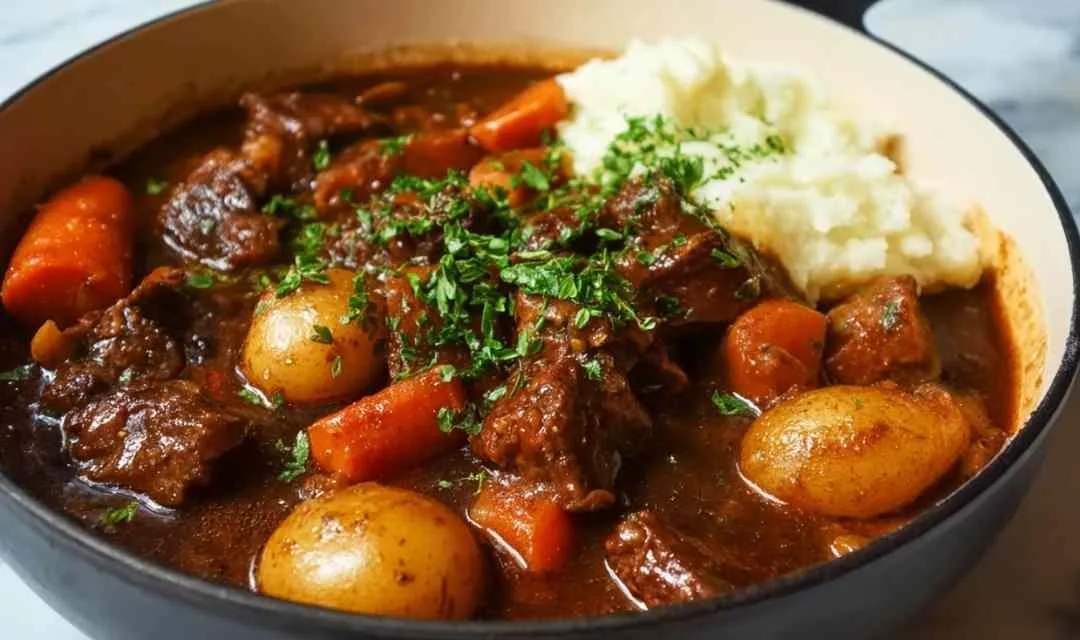
Anthony Bourdain’s Beef Bourguignon transforms humble ingredients into restaurant-quality comfort food right in your own kitchen. I still remember the first time I attempted this French classic – the rich aroma filling my Midwest kitchen reminded me of Sunday dinners at Grandma’s farm, except with a decidedly Continental flair. This isn’t just another beef stew; it’s the kind of dish that turns an ordinary evening into something memorable, where tender chunks of beef nestle in a wine-enriched sauce so good you’ll want to soak up every last drop with crusty bread.
What makes this recipe special is how Bourdain adapted traditional French technique for the home cook. While French cuisine can feel intimidating, this beef bourguignon proves that with patience and the right approach, anyone can create something extraordinary. The secret lies in building layers of flavor – searing the meat until deeply browned, letting onions caramelize into sweetness, and allowing everything to simmer slowly until the beef practically melts on your fork. I’ve made this for countless family gatherings, and it never fails to impress. The beauty is that it tastes even better the next day, making it perfect for entertaining or meal prep. Time to get our hands floury!
What Makes This Beef Bourguignon So Special
This isn’t your everyday weeknight dinner, and that’s exactly the point. Anthony Bourdain’s beef bourguignon represents the kind of cooking that brings people together around the table, where the time invested translates directly into unforgettable flavor. After making this recipe dozens of times for my own family, I’ve come to appreciate how it balances French technique with practical home cooking.
Here’s why this recipe belongs in your collection:
- Restaurant-quality results at home – You’ll achieve the same rich, complex flavors you’d pay premium prices for at a French bistro
- Pantry-friendly ingredients – Beyond the burgundy wine and optional demi-glace, everything else is likely already in your kitchen
- Perfect make-ahead meal – The flavors deepen overnight, making this ideal for entertaining or Sunday meal prep
- Impressive but achievable – While it requires time, the technique is straightforward enough for confident home cooks
- Comfort food at its finest – There’s something deeply satisfying about a dish that fills your home with incredible aromas for hours
- Scalable for crowds – Double the recipe easily for holiday gatherings or special celebrations
The genius of Bourdain’s approach is using four whole onions that break down completely during cooking, creating a naturally thickened sauce without relying on heavy cream or excessive flour. It’s this kind of thoughtful technique that separates good beef stew from truly exceptional beef bourguignon.
Ingredient Spotlight
Boneless beef shoulder or chuck: This cut contains enough marbling to stay tender during the long braise while developing deep, beefy flavor. I always choose chuck roast when I can find it well-marbled at the butcher counter.
Red burgundy wine (Pinot Noir): The wine isn’t just liquid – it’s what deglazes all those beautiful browned bits from the pot and infuses the sauce with complexity. Betty’s tip: use something you’d actually drink, but no need for an expensive bottle.
Medium onions (4 whole): These are the unsung heroes that cook down completely to create the sauce’s luxurious body. After years of making this, I’ve learned that yellow onions work best for their balance of sweetness and depth.
Carrots: Cut into substantial 1-inch pieces, they add natural sweetness and hold their shape beautifully throughout the long simmer. I prefer using whole carrots I peel myself rather than baby carrots for better texture.
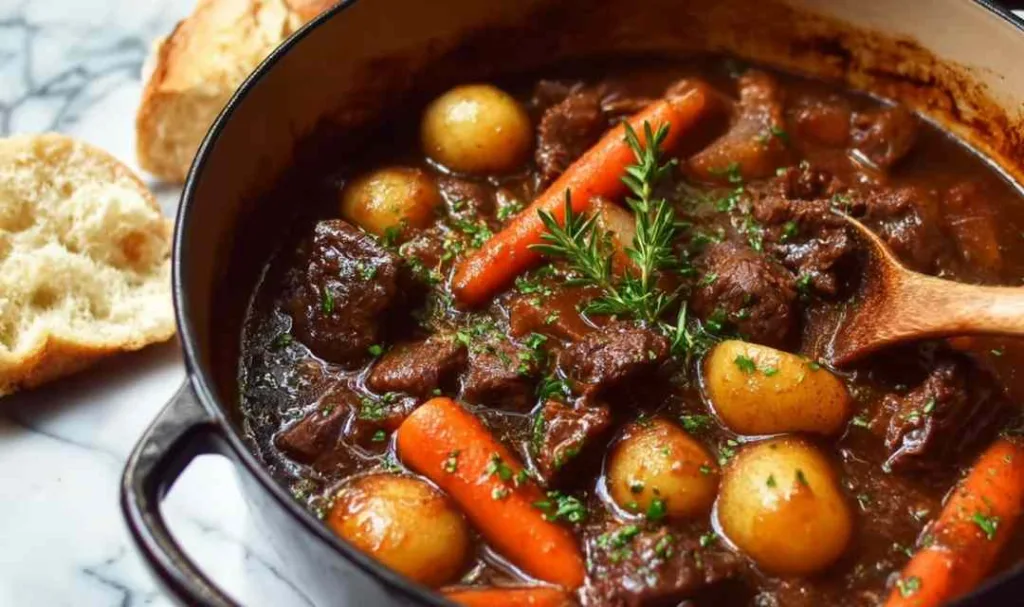
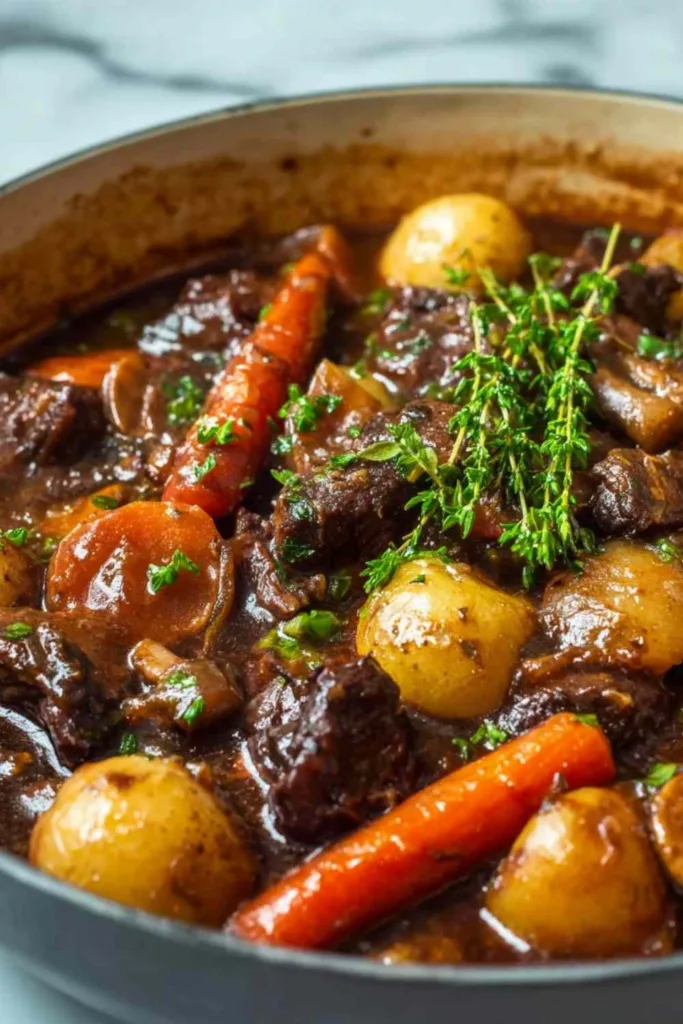
Bouquet garni: This traditional herb bundle (thyme, bay leaf, and parsley tied together) perfumes the entire stew. I’ve found that making your own with kitchen twine gives you control over the herb intensity.
Demi-glace: While optional, this concentrated stock adds a restaurant-level richness that’s worth seeking out on Amazon or specialty stores. In my kitchen, I prefer to include it when making this for special occasions.
Olive oil: You’ll use this in batches to properly sear the meat – don’t skimp here, as good browning equals good flavor in beef bourguignon.
How to Make Anthony Bourdain’s Beef Bourguignon
Step 1. Betty always starts by thoroughly drying the beef with paper towels – I’ve learned that moisture is the enemy of a good sear, and we want deep caramelization on every piece.
Step 2. Heat half your olive oil in the Dutch oven over high heat until it shimmers, then sear the beef in batches without crowding the pan. My family prefers when I resist the urge to move the meat around; let it develop that gorgeous brown crust, about 3-4 minutes per side.
Step 3. After transferring the browned beef to a plate, reduce heat to medium-high and add the onions with remaining oil. Through trial and error, I learned to cook these for the full 10 minutes until they turn golden – this sweetness is crucial to the sauce.
Step 4. Sprinkle the flour over the onions and stir occasionally for 4-5 minutes until the mixture thickens and loses its raw flour taste. The key I discovered is not rushing this step; it helps prevent a floury-tasting sauce.
Step 5. Pour in the burgundy wine and use your wooden spoon to scrape every browned bit from the pot bottom – this deglazing step captures all that concentrated beef bourguignon flavor we’re building.
Step 6. Once the wine boils, return the beef and its juices to the pot along with carrots, garlic, bouquet garni, 1½ cups water, and demi-glace if using. I’ve found that bringing this to a full boil before reducing heat ensures everything incorporates properly.
Step 7. Reduce heat to medium-low and simmer uncovered for 2 to 2½ hours, checking every 15-20 minutes to stir and scrape the bottom. Betty’s tip: set a timer so you don’t forget – this prevents scorching and ensures even cooking.
Step 8. As you check the stew, gradually add water (¼ to ½ cup at a time, up to 3 cups total) to maintain enough liquid for the sauce to concentrate. After years of making this, I’ve learned to add water whenever the liquid level drops below halfway up the ingredients.
Step 9. The stew is done when the beef tears apart easily with a fork and the onions have completely dissolved into a thick, glossy sauce that coats the meat beautifully.
Step 10. Remove the bouquet garni, taste for seasoning, and adjust salt as needed. I typically garnish generously with fresh parsley – it adds a bright pop against all that rich, savory depth.
Keeping This Beef Bourguignon Fresh
I typically store leftover beef bourguignon in airtight containers in the refrigerator for up to 4 days, where the flavors actually deepen and improve. The sauce will thicken as it cools, which is completely normal – it returns to perfect consistency when reheated. Betty’s storage method works well because she lets the stew cool completely before refrigerating, which prevents condensation from diluting the sauce.
This dish freezes beautifully for up to 3 months in freezer-safe containers, making it ideal for batch cooking. Through trial and error, I learned to leave about an inch of headspace in containers to allow for expansion, and to label each container with the date. For the best texture after freezing, thaw overnight in the refrigerator rather than at room temperature.
For the best texture, I reheat by warming the stew gently on the stovetop over medium-low heat, stirring occasionally and adding a splash of water or beef broth if needed to loosen the sauce. The microwave works in a pinch (use 50% power in 2-minute intervals), but the stovetop preserves the meat’s tender texture better. My family prefers when I reheat only what we’ll eat that day, as repeated reheating can make the beef stringy.
Perfect Partners for Beef Bourguignon
Crusty French bread or baguette – Essential for soaking up every drop of that wine-enriched sauce; I always warm it slightly before serving for the best texture.
Creamy mashed potatoes – The ultimate comfort food pairing that provides a neutral, buttery base to complement the rich beef and creates beautiful plate presentation. If you’re looking for the perfect side, try my creamy scalloped potatoes recipe.
Buttered egg noodles – A traditional accompaniment that’s Betty’s go-to when feeding a crowd; the noodles cradle the sauce perfectly and make the meal feel more substantial.
Simple green salad with vinaigrette – The bright acidity cuts through the richness of the beef bourguignon and adds freshness to balance the hearty stew.
Roasted root vegetables – Parsnips, turnips, or Brussels sprouts add earthy sweetness and different textures while keeping the meal seasonal and cohesive.
Steamed green beans with garlic – A lighter vegetable option that won’t compete with the complex flavors of the stew while adding color and nutrients to your plate.
FAQs
I recommend using any dry red wine like Pinot Noir, Merlot, or Côtes du Rhône – the key is avoiding sweet wines that will throw off the savory balance of the dish.
To prevent this issue, make sure you’re cooking at a gentle simmer (not a rolling boil) and giving it the full 2-2½ hours; chuck roast needs time to break down its connective tissue.
Many home cooks find success making this 1-2 days ahead – the flavors meld beautifully, and you simply reheat gently before serving.
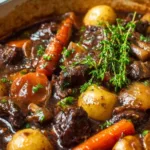
Anthony Bourdain’s Beef Bourguignon
Ingredients
Equipment
Method
-
Thoroughly pat the meat dry with paper towels and generously season it with salt and pepper.
-
In a Dutch oven over high heat, heat half of the oil until shimmering. Working in several batches without moving the meat much, sear the meat on all sides until well browned, about 3-4 minutes per side, adding more oil as needed. Transfer browned meat to a plate.
-
Reduce the heat to medium-high and add the onions and any remaining oil to the pot. Cook, stirring occasionally, until the onions have softened and turn golden, about 10 minutes.
-
Sprinkle the flour on top and cook, stirring occasionally, until thickened, 4 to 5 minutes.
-
Add the wine and, using a wooden spoon, stir and scrape up all the browned bits off the bottom of the pot.
-
Bring to a boil, then reduce the heat to medium-low and cook, uncovered, until the meat is tender, 2 to 2 1/2 hours, skimming off any foam or oil that might accumulate on the surface.
-
Check on the stew every 15 to 20 minutes, stirring and scraping the bottom of the pot to prevent scorching or sticking. Continue adding 1/4 cup to 1/2 cup water as needed, up to 2 1/2 to 3 cups total.
-
If the stew begins to stick, reduce the heat to low. The onions should fall apart, creating a thick, rich sauce that coats the meat.
-
When the stew is done, discard the bouquet garni, taste and season with more salt if desired. Garnish with the chopped parsley and serve.