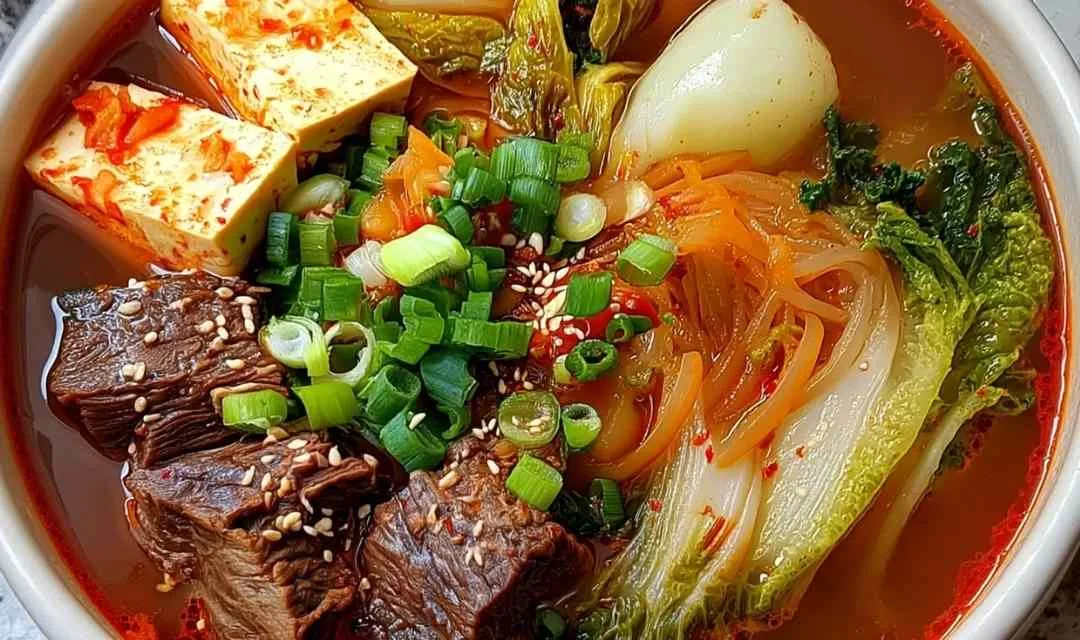
Korean Winter Soup is the kind of dish that wraps around you like a warm blanket on the coldest January evening. I still remember the first time I tasted something similar at a neighbor’s house – the way that spicy, aromatic broth cut through the winter chill and made everything feel right again. Even though this isn’t a recipe from my Midwest roots, it’s become a staple in my kitchen because it does exactly what good food should do: it brings people together around the table.
There’s something magical about watching beef brisket transform in a bubbling pot, turning from tough to tender while the broth deepens into something rich and nourishing. The gochujang and gochugaru create this beautiful balance of heat and depth that I’ve come to crave on winter nights. My grandkids started requesting this soup after I made it one Sunday, and now it’s in our regular rotation alongside the pot roasts and stews. The daikon radish softens just right, the tofu soaks up all those gorgeous flavors, and when you ladle it over steaming rice – well, that’s when you know you’ve made something special. Time to get our hands floury and our pots simmering!
What Makes This Korean Winter Soup So Special
This Korean Winter Soup has earned its place in my recipe box because it combines everything I look for in cold-weather cooking. The technique is straightforward enough for weeknight cooking, but the results taste like you’ve been simmering it all day at grandma’s farmhouse.
- Uses accessible ingredients you can find at most grocery stores or Asian markets without hunting down specialty items
- Comes together in about an hour making it practical for busy evenings when you need something warming and substantial
- Delivers consistent, crowd-pleasing results with that perfect balance of spicy, savory, and comforting flavors
- Adapts easily to spice preferences by adjusting the gochujang and gochugaru to suit your family’s taste
- Creates tender, melt-in-your-mouth beef through a simple simmering process that requires minimal attention
- Provides complete nutrition with protein from beef and tofu, plus vegetables that add vitamins and texture
I’ve found that recipes like this Korean Winter Soup bridge different food traditions beautifully – it’s got that same soul-warming quality as my grandmother’s chicken soup, just with bolder, spicier notes.
Ingredient Spotlight
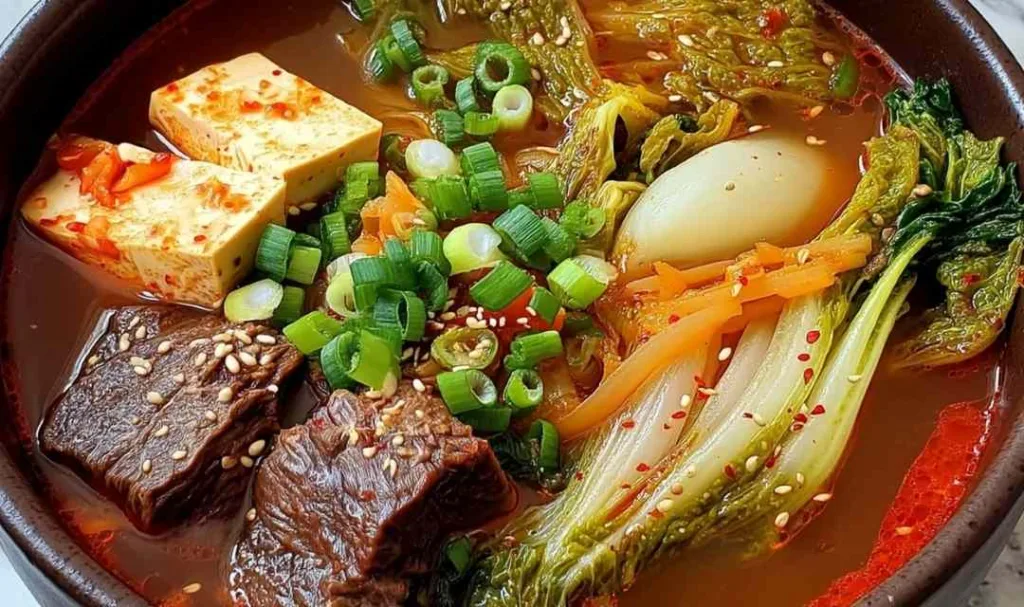
Beef Brisket serves as the foundation of this soup, breaking down during simmering to create incredibly tender pieces of meat that practically dissolve on your tongue. I always choose brisket for soups like this because it has enough marbling to stay moist and flavorful even after long cooking.
Gochujang (Korean Red Pepper Paste) provides the signature depth and complexity that makes Korean Winter Soup so distinctive. This fermented paste brings sweetness, heat, and umami all at once – it’s what transforms simple broth into something memorable.
Gochugaru (Korean Red Pepper Powder) adds a different dimension of heat than gochujang, creating layers of spiciness rather than one-note fire. I prefer using both because they work together to build that characteristic Korean soup flavor.
Daikon Radish contributes a subtle sweetness and crisp texture that balances the richness of the beef. In my kitchen, I’ve learned that daikon also helps tenderize the meat and adds a clean, refreshing element to the broth.
Firm Tofu acts like a flavor sponge, absorbing all those spicy, savory notes while adding plant-based protein. I always cube it into bite-sized pieces so there’s tofu in every spoonful.
Napa Cabbage wilts into silky tenderness and adds a gentle sweetness that mellows the heat just enough. Betty’s tip: Don’t add it too early or it’ll turn mushy – timing matters with leafy vegetables.
Sesame Oil brings that nutty, toasted aroma that signals “this is going to be good” the moment you drizzle it in. I heat mine with green onions at the end for an extra aromatic punch that lifts the entire dish.
Garlic and Onions form the aromatic base that weaves through every element of this soup. After years of making Korean Winter Soup, I’ve learned that mincing the garlic fine helps it dissolve into the broth while larger onion pieces add texture.
How to Make Korean Winter Soup Step by Step
Step 1. I always start by bringing the beef brisket and water to a rolling boil in a large pot, then immediately reduce it to a gentle simmer – this initial boil helps release impurities while the slow simmer makes the meat tender over the next 30 minutes.
Step 2. Betty’s method for crystal-clear broth involves using a fine-mesh skimmer to remove the foam and impurities that rise to the surface during the first 10-15 minutes of simmering.
Step 3. After the beef has softened, I stir in the soy sauce, gochujang, gochugaru, and minced garlic, making sure the red pepper paste dissolves completely so the broth turns that beautiful reddish-orange color throughout.
Step 4. I’ve found that adding the chopped onion, napa cabbage, tofu cubes, and daikon radish all at once works perfectly – they need about 20 minutes to reach that ideal tender-but-not-mushy texture.
Step 5. The key I discovered is to prepare the sesame oil and green onions separately in a small pan, heating them until fragrant (about 1-2 minutes), then pouring this aromatic mixture into the soup right before serving.
Step 6. Through trial and error, I learned to taste and adjust the seasoning at the end – sometimes you need an extra splash of soy sauce for depth, or a pinch more gochugaru if your family likes extra heat.
Step 7. Betty always serves this Korean Winter Soup piping hot with steamed white rice on the side, letting everyone add rice to their bowl so it soaks up that incredible spicy broth with every bite.
Keeping This Korean Winter Soup Fresh
This soup actually improves as it sits, making it perfect for meal prep. I typically store leftovers in airtight containers in the refrigerator where they’ll stay fresh for up to 3 days. The flavors meld together beautifully overnight – many home cooks find the soup tastes even better the next day.
Betty’s freezing method works well for this recipe if you want to make a big batch. Divide the cooled soup into individual-serving containers or heavy-duty freezer bags, leaving about an inch of headspace for expansion. It’ll keep frozen for up to 4 weeks, and I always label mine with the date. Thaw overnight in the refrigerator before reheating for the best texture.
For reheating, I pour the cold soup into a pot and warm it over medium-low heat, stirring occasionally to prevent sticking. The soup may thicken as it sits, so I add a splash of water or broth to bring it back to the right consistency. If the vegetables have softened too much during storage, toss in a handful of fresh napa cabbage or green onions during reheating to add back that crisp texture.
Perfect Partners for Korean Winter Soup
- Steamed white rice or brown rice serves as the essential foundation – the grains soak up the spicy broth and provide a neutral base that balances the heat
- Homemade kimchi adds tangy, fermented notes that complement the soup’s richness while providing that classic Korean flavor contrast
- Cucumber salad with rice vinegar offers cool, crisp relief from the spiciness and adds refreshing crunch to the meal
- Steamed or sauteed bok choy contributes additional greens without overwhelming the main dish’s bold flavors, similar to how vegetables complement my Asian Ground Beef Lettuce Wraps
- Pan-fried dumplings (potstickers) make this a more substantial meal, especially when you’re feeding a hungry crowd – try my Potsticker Soup for another dumpling-inspired dinner
- Seasoned bean sprouts (kongnamul) provide a light, crunchy side that’s traditional in Korean meals and takes just minutes to prepare
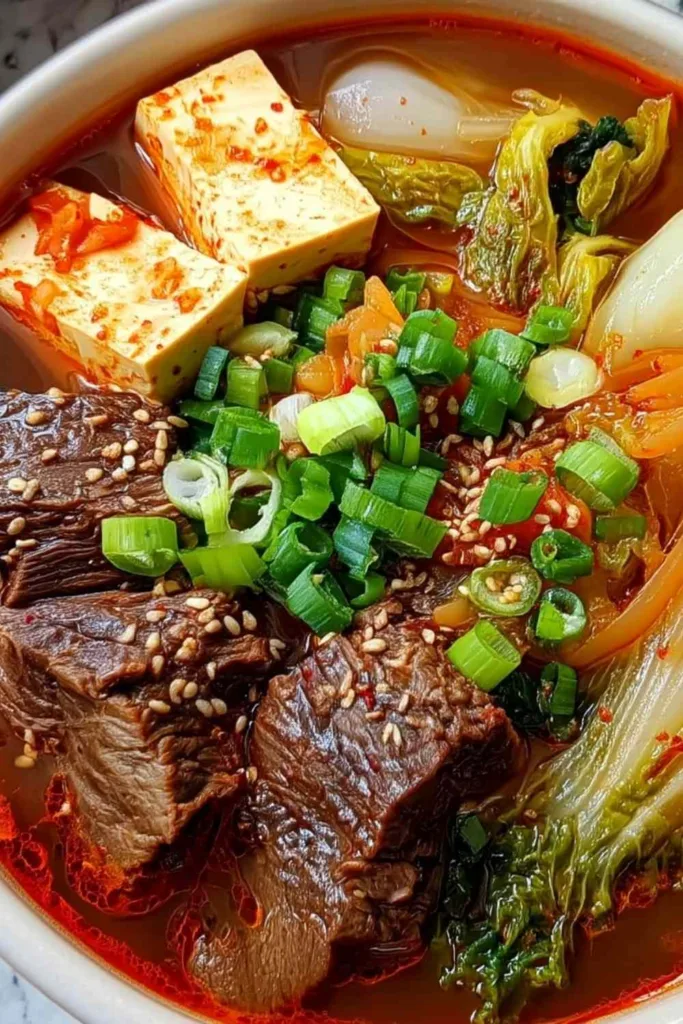
My family particularly loves pairing this Korean Winter Soup with rice and kimchi – it creates that perfect combination of hot, spicy, tangy, and comforting that makes winter dinners special. For another Korean-inspired bowl, check out my Quick Easy Korean Ground Beef Bowl.
FAQs
I recommend chuck roast or short ribs as alternatives both have enough marbling to stay tender during simmering and will give you similarly rich results.
Betty’s solution is to reduce both the gochujang and gochugaru by half, then offer extra chili paste on the side for adults who want more heat.
Many home cooks find success making this soup a day ahead the flavors actually improve overnight, and you just need to reheat it gently on the stove before serving.
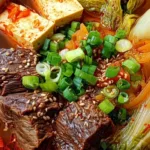
Korean Winter Soup
Ingredients
Equipment
Method
-
In a large pot, add the beef brisket and water. Bring to a boil over high heat, then reduce to a simmer for about 30 minutes until the beef is tender. Keep the lid slightly ajar to prevent overflows and stir occasionally.
-
Skim off any impurities that rise to the surface using a fine-mesh skimmer. Gently skim the top every few minutes until the broth is clear and free of foam.
-
Add the chopped onion, napa cabbage, tofu cubes, and daikon radish. Continue to simmer the soup for another 20 minutes, allowing the vegetables to soften and the tofu to absorb the spicy, savory flavors.
-
In a small pan, heat the sesame oil over medium heat. Add the sliced green onions and saute until fragrant, about 1-2 minutes. Pour this aromatic oil and onion mixture into the soup.
-
Season the soup with salt and pepper to taste. Adjust as necessary – add more soy sauce for depth or a pinch of gochugaru for extra heat.