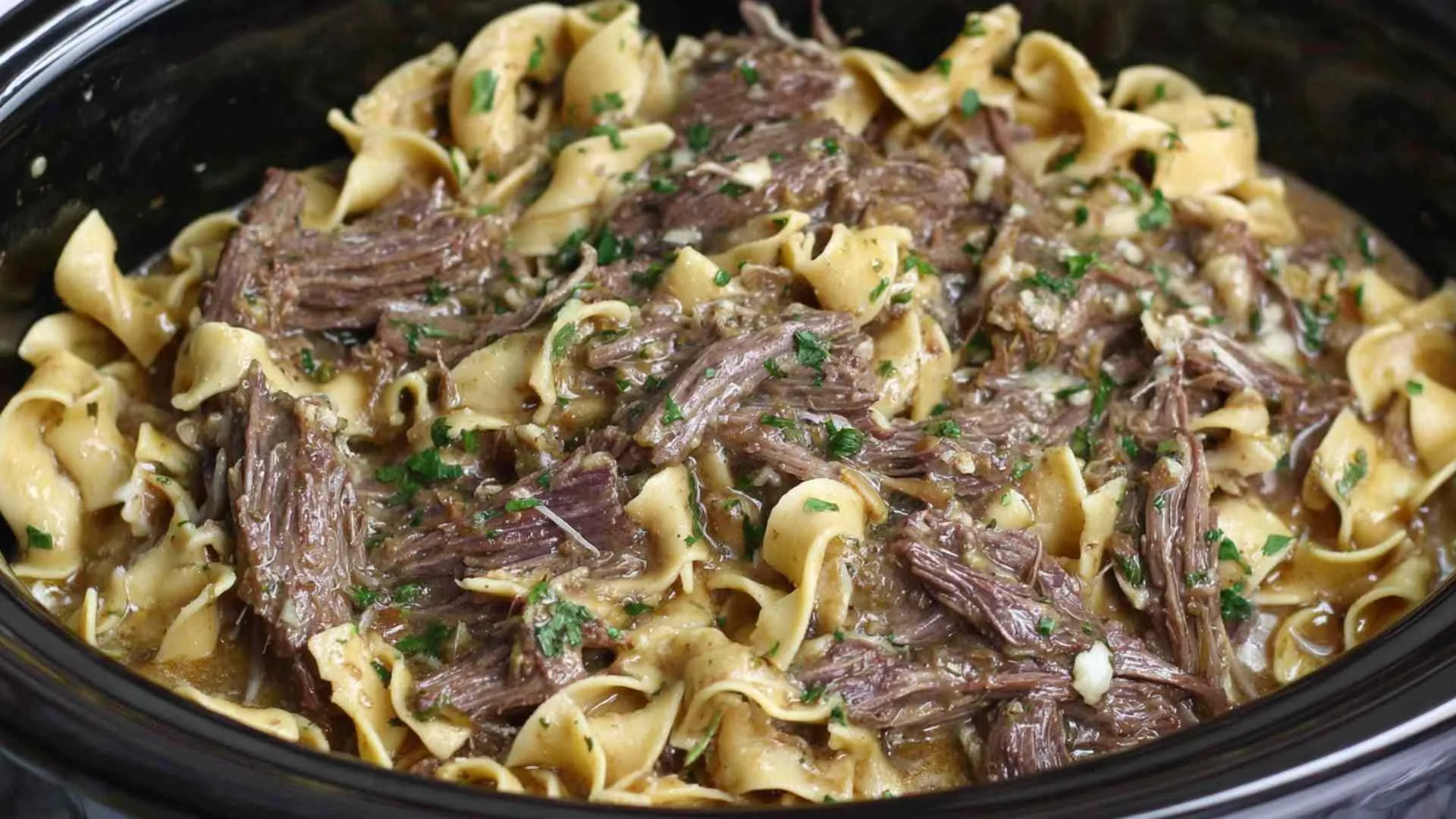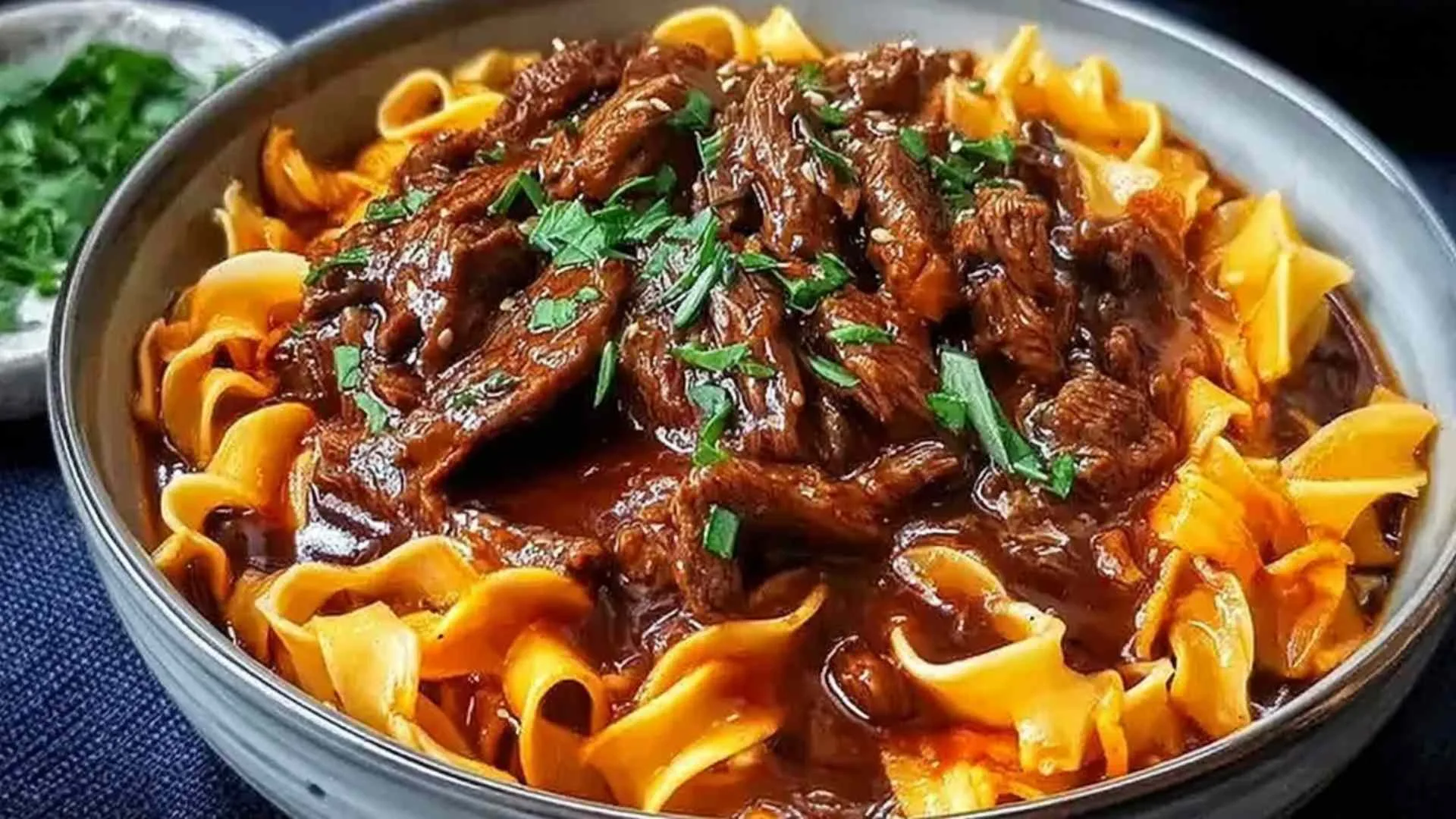
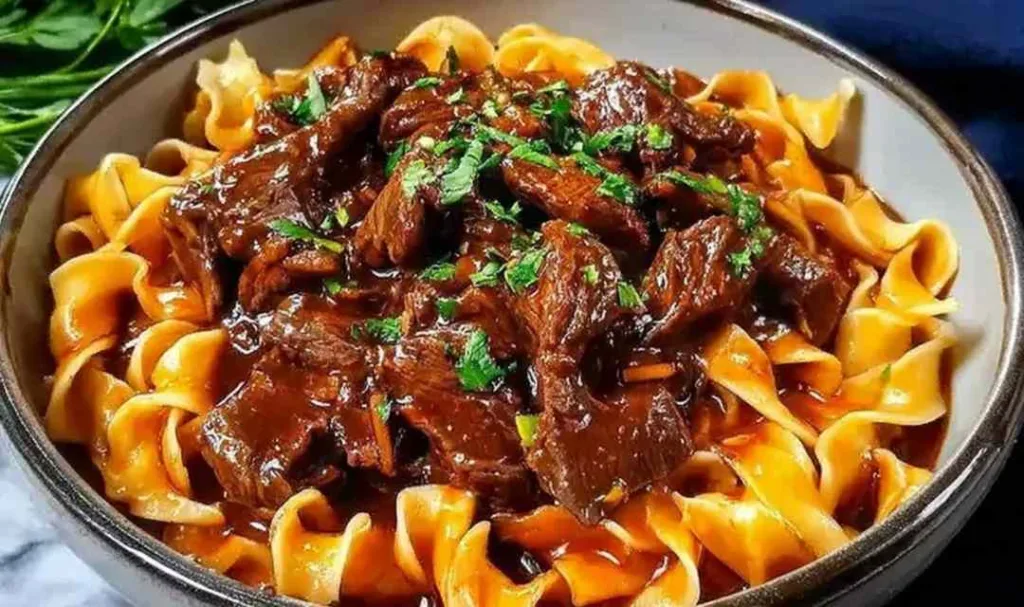
Korean beef noodles have a way of stopping people in their tracks the moment the smell hits them. I was making this recipe on a cold Tuesday last winter when my neighbor knocked on the door and asked what I was cooking, because the aroma had drifted right out into the hallway. That is the kind of dish this is.
Growing up in a small Midwest farmhouse, my mother kept a slow cooker going three or four days a week. She always said that the best suppers were the ones that took care of themselves while you went about your day. This recipe lives by that same idea. Tender chunks of beef chuck simmer for hours in a rich broth of soy sauce, brown sugar, fresh ginger, garlic, and gochujang. By the time the noodles go in and the green onions get scattered on top, you have a bowl so satisfying that nobody reaches for seconds, they reach for thirds. Your kitchen is about to smell incredible.
What Makes These Korean Beef Noodles So Special
I have made a lot of slow cooker dinners in my years of home cooking, and this Korean beef noodle recipe sits at the top of the list. It asks very little of you and gives back a great deal.
- Uses pantry staples you likely have on hand, including soy sauce, garlic, ginger, and brown sugar
- Only 20 minutes of active prep before the slow cooker takes over for the rest of the day
- Completely hands-off cooking once the beef is in the pot, low heat does all the work
- Adapts easily to gluten-free, vegetarian, or spicier versions without any fuss
- Produces fork-tender beef and silky, broth-soaked noodles every single time
- Feeds six people and stores beautifully for meals later in the week
If you enjoy Asian-inspired slow cooker meals, my Slow Cooker Kung Pao Chicken uses the same set-it-and-forget-it approach with bold, layered flavors.
Key Players in This Recipe
Every ingredient here earns its place. Here is what I have learned after making Korean beef noodles more times than I can count.
Beef Chuck: This cut is the right choice for slow cooking because the connective tissue breaks down over hours of low heat, producing fork-tender, juicy pieces. Cut into 1-inch chunks for even cooking throughout.
Soy Sauce: The backbone of the broth. It builds deep umami flavor and saltiness. Use a low-sodium variety if you prefer more control over salt. For a gluten-free version, tamari works perfectly.
Gochujang: Korean chili paste that gives the broth its warmth and depth. Start with one tablespoon and adjust from there. It adds complexity, not just heat.
Fresh Ginger and Garlic: I always use fresh here, not jarred. The difference in fragrance and flavor once they hit the hot broth is significant. Two tablespoons of minced ginger and four cloves of garlic is the right balance.
Sesame Oil: One tablespoon added to the sauce rounds everything out with a nutty, toasty finish. Do not skip it.
Brown Sugar: Balances the saltiness of the soy sauce and the heat of the gochujang. A quarter cup gives the perfect sweet-savory note without making the dish taste like dessert.
Beef Broth and Water: Four cups of beef broth provide a savory base, while two cups of water loosen the sauce so the noodles have plenty of broth to absorb at the end.
Udon or Ramen Noodles: Both work well. Udon is thicker and chewier, ramen is lighter. Cook them separately and stir them in just before serving so they do not get mushy.
How to Make Korean Beef Noodles Step by Step
- Season the beef: Coat the beef chuck chunks evenly with black pepper. This small step adds a layer of flavor that carries through the whole dish.
- Mix the sauce: In a large bowl, combine beef broth, water, soy sauce, brown sugar, minced ginger, minced garlic, sesame oil, and gochujang. Whisk until the sugar fully dissolves.
- Load the slow cooker: Place the seasoned beef in the slow cooker and pour the sauce evenly over the top. Make sure every piece of beef is coated.
- Cook: Cover and cook on low for 6 to 8 hours or on high for 3 to 4 hours, until the beef is completely tender and starts to pull apart with a fork.
- Cook the noodles separately: About 15 to 20 minutes before serving, cook your udon or ramen noodles according to package instructions. Drain well and set aside. Cooking them separately prevents them from turning to mush.
- Combine: Once the beef is tender, stir the drained noodles into the slow cooker. Let them sit for a few minutes to absorb the broth.
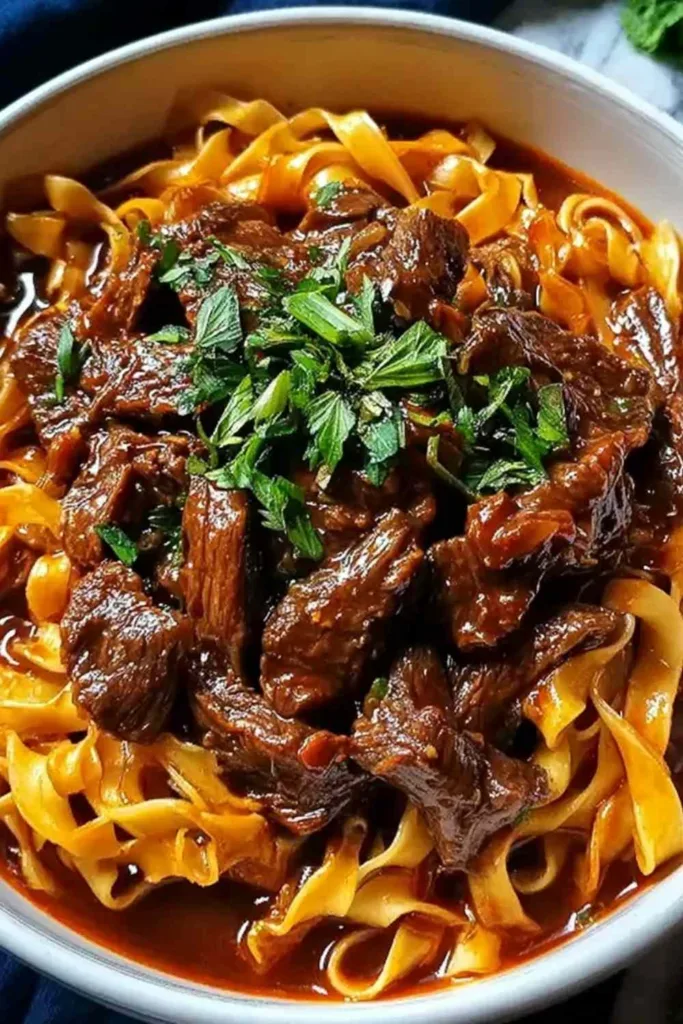
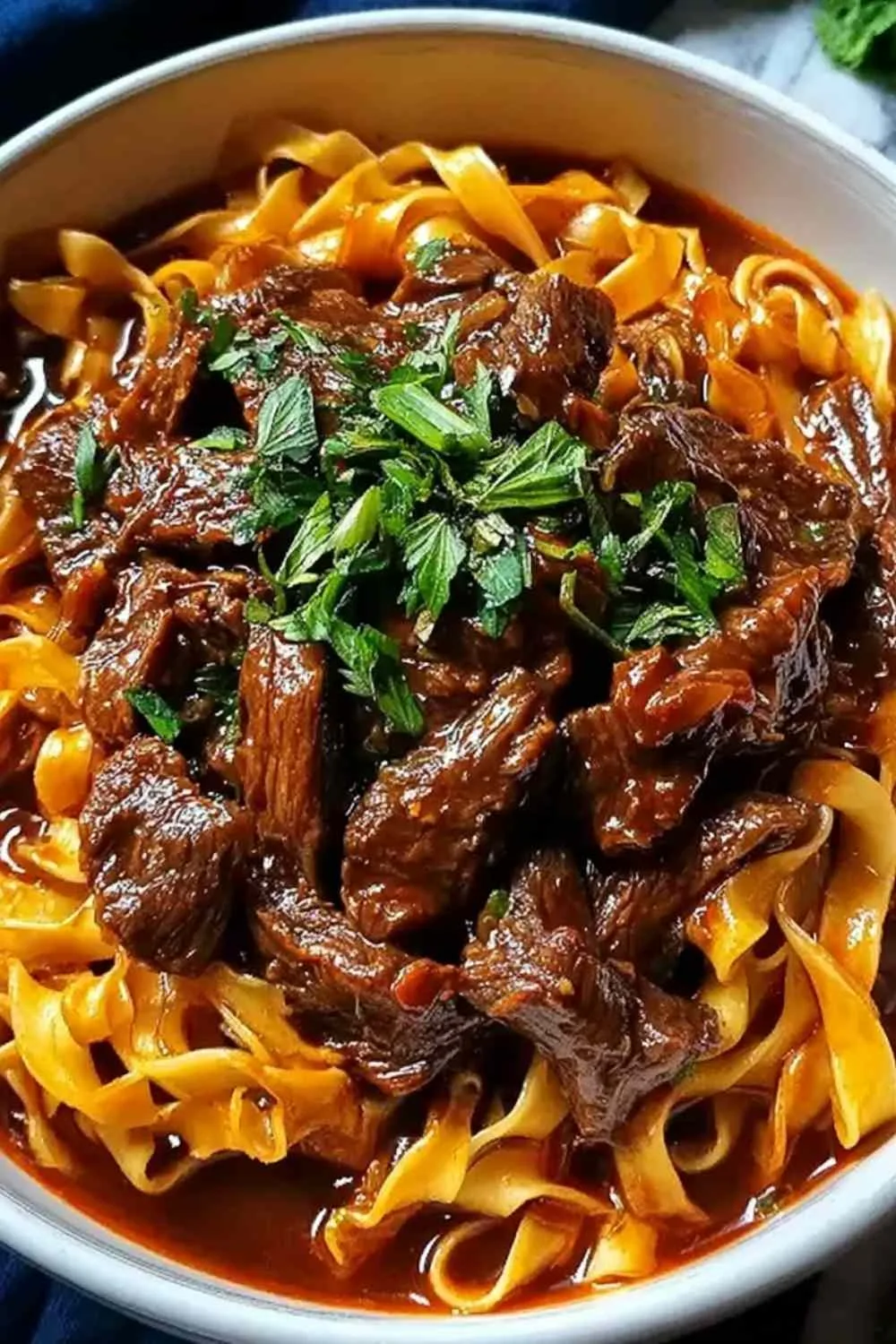
- Serve: Ladle into deep bowls and top with sliced green onions, sesame seeds, and fresh cilantro if desired.
Note: The recipe includes 2 cups of water in addition to 4 cups of beef broth. Both go into the slow cooker with the sauce mixture in step 2.
Tips for Best Results
- Taste the broth halfway through cooking and adjust with a small splash of soy sauce or a pinch of brown sugar if needed
- Let the beef sit for a few minutes after the slow cooker turns off before adding the noodles, this redistributes the juices
- Warm your serving bowls with hot water for a minute before ladling in the noodles, it keeps everything hotter longer
- Use fresh ginger and garlic rather than jarred for noticeably better aroma and flavor
- For a richer broth, use only beef broth and skip the water, though the sauce will be saltier
Storage and Reheating Tips
This dish stores really well. I keep leftovers in an airtight container in the refrigerator for up to 4 days. The broth deepens in flavor overnight, so the next day is often even better than the first.
For longer storage, freeze portions in airtight containers for up to 3 months. I recommend storing the beef and broth separately from the noodles when freezing, since noodles soften significantly after thawing. Cook a fresh batch of noodles when you reheat.
To reheat, warm the beef and broth in a saucepan over medium heat until hot, then add freshly cooked noodles. You can also microwave individual portions in 90-second intervals, stirring between each round, until heated through.
What to Serve with Korean Beef Noodles
These noodles are a satisfying meal on their own, but a few well-chosen sides make the meal feel complete.
- Kimchi or quick-pickled cucumbers for a tangy, acidic contrast to the rich broth
- My Crispy Garlic Parmesan Brussels Sprouts make an excellent crunchy side that holds up next to the savory noodle bowl
- For another bowl meal in the same flavor family, try my Korean Ground Beef Bowl on a weeknight when you need something faster
- The Caramelised Soy Chicken in Garlic Ginger Broth with Rice uses similar aromatic flavors and works well as a companion dish when feeding a larger group
- Soft-boiled eggs sliced in half and placed on top of the bowl for extra richness and protein
- Steamed bok choy or wilted spinach stirred directly into the bowl for added greens
Recipe Variations Worth Trying
- Spicy version: Increase the gochujang to 2 tablespoons or add sliced fresh red chilies
- Vegetable boost: Stir in bok choy, mushrooms, or bell peppers during the last hour of slow cooking
- Alternative proteins: Bone-in chicken thighs or firm tofu work well in place of beef chuck
- Pressure cooker: Cook the beef on high pressure for 45 minutes for the same tender results in a fraction of the time
- Noodle swap: Serve the broth and beef over steamed rice instead of noodles for a different texture
If you love quick beef and noodle combinations, my Beef and Broccoli Ramen Stir Fry comes together in 30 minutes on the stovetop and uses a similar flavor profile.
FAQs
Yes. Cook the beef and broth the day before, refrigerate overnight, and cook fresh noodles right before serving. The broth develops even more flavor after resting.
Both udon and ramen work well. Udon gives a thicker, chewier bite. Ramen is lighter. The key is cooking them separately and adding them just before serving.
Swap regular soy sauce for tamari or certified gluten-free soy sauce. All other ingredients are naturally gluten-free.
Korean Beef Noodles
Ingredients
Equipment
Method
- Season the beef chuck pieces with black pepper.
- Add the seasoned beef to the slow cooker and pour the sauce mixture evenly over the top.
- Cover and cook on low for 6 to 8 hours or on high for 3 to 4 hours, until the beef is very tender.
- About 15 to 20 minutes before serving, cook the noodles according to package instructions. Drain well and set aside.
- Once the beef is tender, add the drained noodles to the slow cooker. Stir gently to combine and let them absorb the broth for a few minutes.