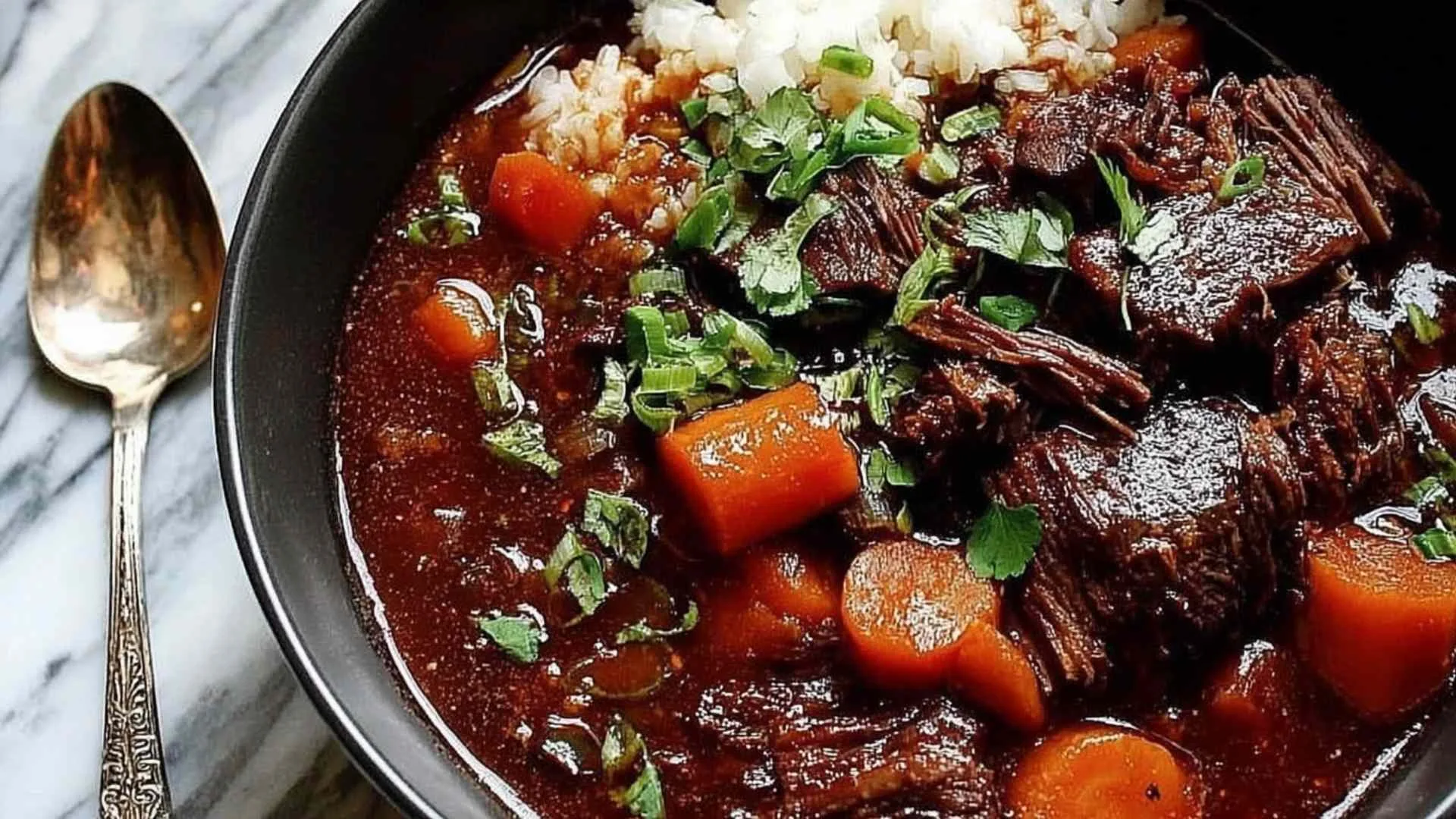
Korean Style Pot Roast has been one of those recipes that stopped me in my tracks the first time I made it. The smell alone — that deep, savory mix of garlic, ginger, and a hint of chili — is enough to bring everyone wandering into the kitchen before dinner is even close to ready. I remember standing at my Dutch oven thinking, this is exactly the kind of meal my grandmother would have loved, just with a whole new layer of bold, beautiful flavor.
Growing up on the farm, Sunday pot roast was sacred. My mama would set it on the stove early in the morning, and by the time we came in from the yard, the whole house smelled like comfort. Over the years I started playing with that classic recipe, adding ingredients I discovered at our little Asian grocery in town, and somewhere along the way this Korean-inspired version became a new family favorite. The gochujang gives it this warm, smoky heat that builds slowly, and the soy sauce adds a depth that regular pot roast just does not have. The first time I set it on the table, my youngest son scraped the pan clean. Now every time there is a chill in the air, this is what my family asks for. Your kitchen is about to smell absolutely incredible.
Why This Korean Style Pot Roast Belongs in Your Recipe Box
Over the years I have tested a lot of braised beef recipes in my kitchen, and what makes this Korean Style Pot Roast stand out is how effortlessly it delivers big, restaurant-quality flavor without any fuss. It fits right into the same tradition of low-effort, high-reward cooking that I grew up with, just with a more exciting flavor profile.
Here is why this recipe works every time:
- Bold umami-rich flavor from gochujang, soy sauce, garlic, and ginger creates a braising liquid that doubles as an incredible sauce
- Fall-apart tender beef every single time thanks to the low and slow braising method that breaks down the chuck roast perfectly
- One-pot convenience means fewer dishes and less cleanup on a busy weeknight
- Ready to serve after just 20 minutes of active prep, then the oven does all the work
- Versatile enough to serve over rice, mashed potatoes, in lettuce wraps, or tucked into tacos
- Tastes even better the next day as the flavors continue to meld and deepen overnight
This is the kind of recipe that earns a permanent spot in your rotation.
Key Players in This Recipe
Understanding what each ingredient brings to this dish helps you cook it with more confidence and get the best results every time.
Chuck roast is the foundation of this recipe. I always choose a well-marbled chuck roast because all that fat slowly renders during the long braise, keeping the meat incredibly moist and giving the sauce a rich, silky body. Brisket or beef shoulder can work in a pinch, but chuck is my first choice.
Gochujang is the ingredient that makes this pot roast unmistakably Korean. It is a fermented Korean chili paste with a smoky, slightly sweet heat that is nothing like plain hot sauce. I use 2 tablespoons for a balanced heat level, but you can go up or down based on your family’s preference.
Soy sauce builds the umami backbone of the braising liquid. In my kitchen I prefer low-sodium soy sauce so I can control the salt level without the dish becoming overpowering by the end of the long cook time.
Fresh ginger and garlic are non-negotiable here. I always use fresh rather than powdered because the aromatics bloom in the hot pan and create a depth of flavor that dried versions simply cannot match.
Brown sugar balances out the heat from the gochujang and the saltiness of the soy sauce. It also helps the braising liquid reduce into a glossy, caramel-like glaze on the beef.
Rice vinegar is a small but important addition. That touch of acidity brightens the whole dish and keeps the rich braising liquid from feeling heavy.
Sesame oil goes in at the very end, not during cooking. I have learned over many batches that adding it too early causes it to lose its nutty fragrance. A drizzle at the finish makes the whole dish come alive.
Beef broth keeps the roast submerged and moist through the long braise while adding another layer of savory depth to the sauce.
Betty’s Tested Technique for Korean Style Pot Roast
Step 1. Pat the chuck roast completely dry with paper towels on all sides, then season generously with salt and pepper. Dry meat sears instead of steams, and that golden-brown crust is where so much of the flavor lives.
Step 2. Heat a drizzle of oil in your Dutch oven over medium-high heat until it just begins to shimmer. Sear the roast on all sides for 3 to 4 minutes per side until deeply browned. I have found that the patience you put into this step pays off in every single bite. Remove the roast and set it aside.
Step 3. In the same pot without wiping it out, add the sliced onion, minced garlic, and ginger. Saute for 3 to 4 minutes, stirring often, until softened and fragrant. Those browned bits on the bottom of the pot will start releasing as the onions release their moisture.
Step 4. Stir in the gochujang, soy sauce, brown sugar, and rice vinegar. Let everything come together for about a minute so the gochujang blooms in the heat.
Step 5. Pour in the beef broth and stir well to fully deglaze the pan. Scrape up every bit from the bottom. Through trial and error I learned that skipping this step leaves a lot of flavor behind.
Step 6. Return the seared roast to the pot and nestle the carrot chunks around it. The carrots absorb the braising liquid beautifully and become meltingly tender by the time the beef is done.
Step 7. Cover the Dutch oven with a tight-fitting lid and transfer to a 325 degree F oven. Braise for 3 to 3.5 hours until the beef shreds easily when pressed with a fork.
Step 8. Remove the pot from the oven. Skim any excess fat from the surface of the braising liquid. My family prefers when I take an extra few minutes here because it gives the sauce a cleaner, more polished finish.
Step 9. Drizzle the sesame oil over the top and let it sit for a few minutes before serving. Slice or shred the beef directly in the pot so it soaks up all that sauce.
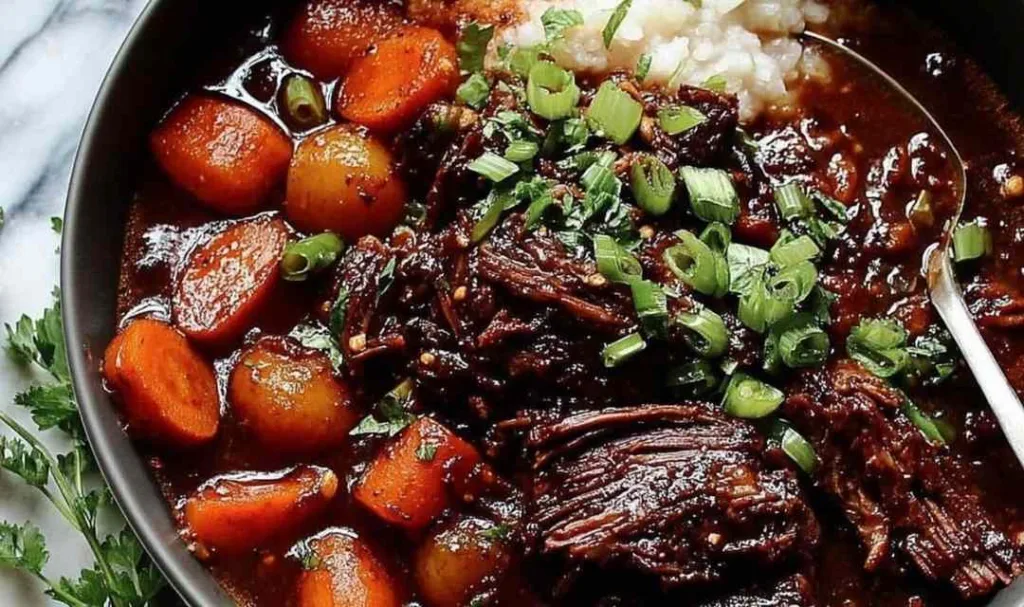
Step 10. Garnish with chopped green onions and fresh cilantro if using. Serve hot over steamed rice, creamy mashed potatoes, or tucked into lettuce wraps.
Making the Most of Leftovers
I typically store leftover Korean Style Pot Roast in an airtight container with plenty of the braising liquid poured right over the beef. Keeping the meat submerged in that sauce is the key to making sure it stays moist and tender rather than drying out in the fridge. It keeps beautifully for up to 4 days, and I will be honest with you, it tastes even better on day two once the flavors have had more time to come together.
For freezing, Betty’s method is to portion the beef and sauce together into individual freezer-safe containers before freezing. That way you are pulling out exactly what you need rather than thawing the whole batch. Stored this way it keeps well for up to 2 months. Let it thaw overnight in the refrigerator before reheating.
For the best texture, I reheat leftovers gently on the stovetop over low heat with a splash of beef broth stirred in. This loosens the sauce back to its original consistency without overcooking the meat. Avoid microwaving on high power, which can make the beef tough and stringy.
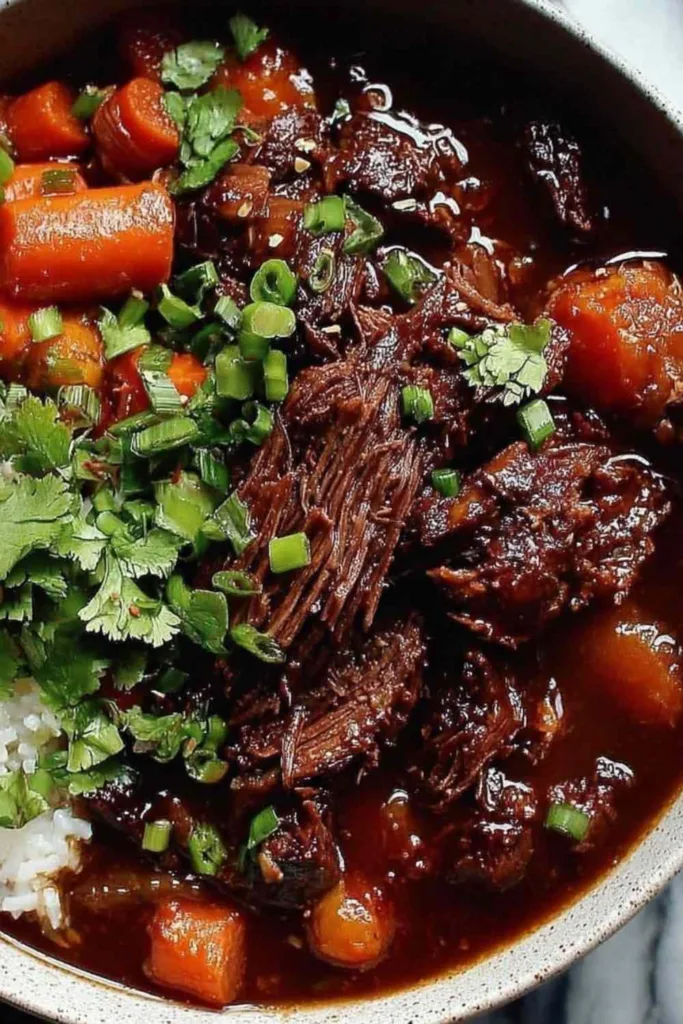
Perfect Partners for Korean Style Pot Roast
This dish is rich and boldly flavored, so the sides you choose are a great opportunity to add some freshness, texture contrast, or something light to balance the plate.
- Steamed jasmine or white rice is the most natural pairing and the way I serve it most often at home. The rice soaks up the braising sauce and makes every bite more satisfying.
- Creamy mashed potatoes turn this into a full Midwest-style Sunday dinner with a Korean twist, which is exactly the kind of cooking I love most.
- Kimchi adds a bright, tangy, fermented contrast that cuts beautifully through the richness of the braised beef.
- Simple cucumber salad dressed with a little rice vinegar and sesame oil keeps things light and fresh alongside the bold pot roast flavors.
- These Maple Glazed Carrots and Brussels Sprouts make a wonderful roasted vegetable side that complements the savory braising sauce with a touch of natural sweetness.
- For a full Korean-inspired spread, pair it alongside this Korean Ground Beef Bowl Recipe for a fun mix-and-match dinner.
If you love this style of slow-cooked beef, you will also want to try this Red Wine Pot Roast and this Slow Braised Pot Roast with Creamy Parmesan Risotto for your next cozy dinner night.
FAQs
The gochujang adds a gentle, well-balanced heat that most families find approachable. I recommend starting with 1 tablespoon if you are cooking for spice-sensitive eaters and adding more next time once you know how your family likes it.
Absolutely. After searing the meat and sauteing the aromatics on the stovetop, transfer everything to a slow cooker and cook on low for 8 hours or on high for 4 to 5 hours until fall-apart tender.
Chuck roast is my top choice every time because the fat marbling breaks down beautifully during the long braise. Brisket and beef shoulder are solid backup options if chuck is unavailable.
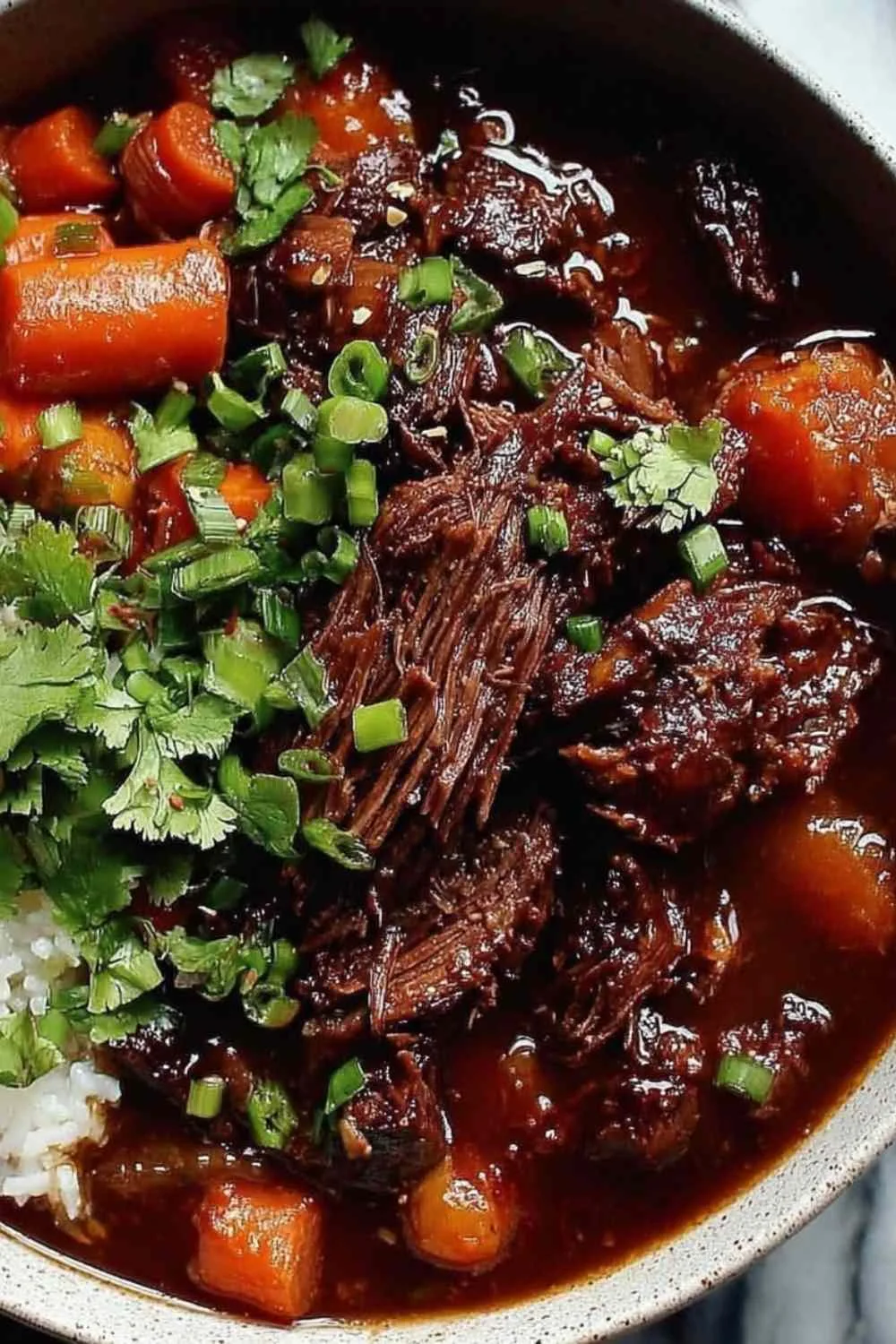
Korean Style Pot Roast
Ingredients
Equipment
Method
- Pat the chuck roast completely dry with paper towels and season generously with salt and pepper on all sides.
- Heat a drizzle of oil in a Dutch oven over medium-high heat. Sear the roast on all sides for 3 to 4 minutes per side until deeply browned. Remove and set aside.
- In the same pot, add the sliced onion, minced garlic, and ginger. Saute for 3 to 4 minutes, stirring often, until softened and fragrant.
- Stir in the gochujang, soy sauce, brown sugar, and rice vinegar. Let cook for about 1 minute so the gochujang blooms in the heat.
- Pour in the beef broth and stir well to fully deglaze the pan, scraping up all browned bits from the bottom.
- Return the seared roast to the pot and nestle the carrot chunks around it.
- Cover with a tight-fitting lid and braise in a 325 degree F oven for 3 to 3.5 hours until the beef shreds easily with a fork.
- Remove from the oven and skim any excess fat from the surface of the braising liquid.
- Drizzle sesame oil over the top and let rest for a few minutes. Slice or shred the beef directly in the pot.
- Garnish with chopped green onions and cilantro. Serve hot over steamed rice, mashed potatoes, or in lettuce wraps.