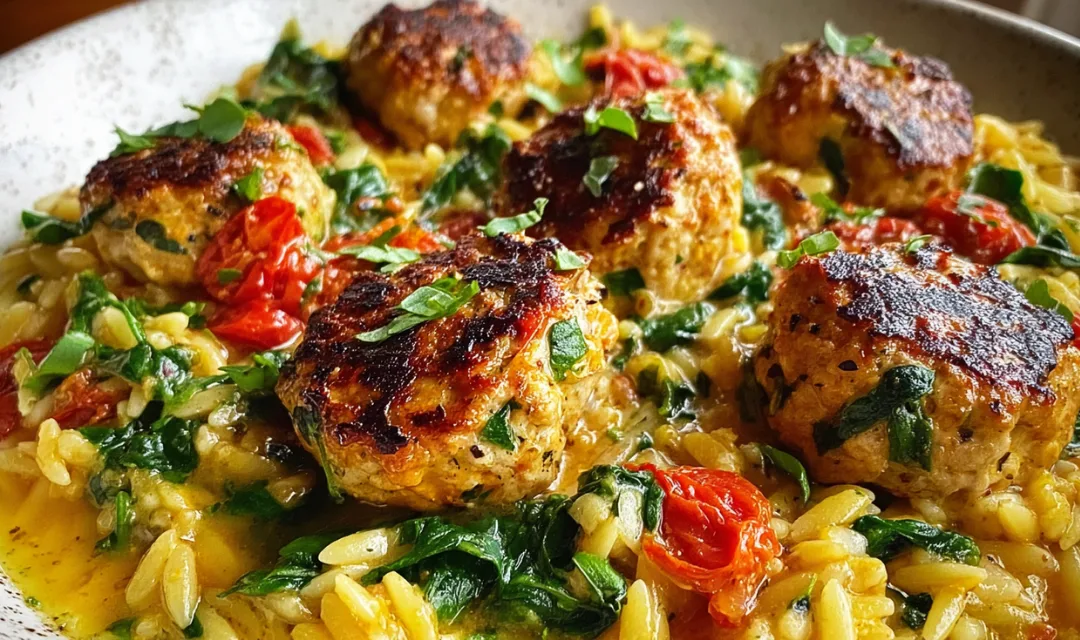
One Pan Tuscan Chicken Meatballs and Orzo is the kind of meal that makes a Tuesday night feel like something worth celebrating. The first time I pulled this skillet off the stove, my whole kitchen smelled like a little trattoria had taken over my Midwest farmhouse — and honestly, nobody was complaining. Betty always says the best weeknight dinners are the ones that do all the work for you, and this one is a living example of that kitchen truth.
I can still picture Sunday afternoons at my grandmother’s farmhouse, where a big pot of something fragrant always bubbled away on the stove. She’d toss pasta right into the sauce, stirring everything together in one well-seasoned skillet, and the simplicity of it was pure magic. That’s exactly the spirit behind this recipe — tender chicken meatballs seasoned with Italian herbs, toasted orzo soaking up a rich tomato-cream broth, and a handful of fresh spinach stirred in at the very end. The whole skillet comes together in under an hour with barely any cleanup. Your kitchen’s about to smell incredible!
Why This Tuscan Chicken Orzo Belongs in Your Recipe Box
Betty has made a lot of one-pan dinners over the years, but this Tuscan chicken meatball and orzo skillet earns a permanent spot in the weekly rotation. It draws from the same Italian-American cooking traditions she grew up with — bold herbs, bright tomato, a splash of cream — while keeping things perfectly practical for real weeknight life.
Everything cooks in a single skillet, which means minimal cleanup and maximum flavor from those browned bits at the bottom of the pan.
On the table in 50 minutes total — 15 minutes of prep, 30 minutes of cooking, and 5 minutes of resting.
The chicken meatballs are seasoned with Parmesan, fresh basil, and Italian herbs for reliably delicious results every single time.
Orzo soaks up the creamy Tuscan-style tomato broth, giving you a dish that’s hearty without feeling heavy.
Reheats beautifully, making it a top choice for meal prep and next-day lunches.
Endlessly adaptable — swap the protein, the greens, or the pasta to suit your family’s tastes.
In my kitchen, a dish that feeds the family, sparks conversation, and leaves almost nothing to wash is the highest honor. This one earns all three.
Key Players in This Recipe
Understanding what each ingredient brings to the skillet helps you cook with confidence and make smart swaps when needed. Here’s what goes into this one pan Tuscan chicken meatballs and orzo and why each piece matters.
Ground Chicken: The lean, mild base of the meatballs. In my kitchen, I prefer ground chicken thigh for slightly more fat and flavor, but ground breast works well too. Avoid overpacking the meat to keep the texture tender.
Breadcrumbs: They act as a binder and keep the meatballs light and moist. I always choose plain breadcrumbs so the Italian seasoning and herbs take center stage — panko works beautifully for a slightly airier texture.
Grated Parmesan Cheese: Adds a savory, nutty depth to both the meatballs and the finished dish. I recommend freshly grated over pre-shredded for the best melt and flavor payoff.
Fresh Basil: Brings a bright, aromatic lift that dried basil simply can’t replicate. Betty always keeps a small pot of basil on the windowsill just for moments like this.
Orzo Pasta: This small, rice-shaped pasta is perfect for one-pan cooking because it absorbs the broth and tomato juices as it simmers, becoming thick and creamy without any extra work.
Diced Tomatoes (with juices): The tomato juices become part of the cooking liquid and help develop that rich, Tuscan-style sauce. Don’t drain them — every drop counts here.
Chicken Broth: Provides the flavorful base for cooking the orzo. I’ve found that low-sodium broth gives you better control over the final seasoning.
Heavy Cream: Stirred in at the very end, it transforms the dish into a silky, restaurant-worthy sauce. For a lighter option, half-and-half works, though the sauce will be a bit thinner.
Fresh Spinach: Wilts down quickly and adds color, nutrition, and a gentle earthiness. Kale is a heartier swap if you prefer a more robust green.
Italian Seasoning & Onion Powder: These pantry workhorses build the backbone of the meatball flavor. Betty always toasts dried herbs briefly in olive oil before using them for maximum aroma — a trick worth borrowing.
How to Make One Pan Tuscan Chicken Meatballs and Orzo
Betty always says that the secret to a great one-pan dinner is giving each step its proper moment before rushing on to the next. Follow these steps carefully and you’ll have a skillet dish that tastes like it took twice the effort it actually did.
Step 1: Mix the Meatballs
In a large bowl, combine ground chicken, breadcrumbs, grated Parmesan, chopped basil, egg, minced garlic, onion powder, Italian seasoning, and a pinch of salt and pepper. I’ve found that using your hands for just 30 seconds of mixing — no more — keeps the meatballs light and tender instead of dense.
Step 2: Form the Meatballs
Roll the mixture into meatballs about 1 inch in diameter and set them on a plate. Betty’s tip: wet your hands lightly with cold water to prevent sticking and get a smooth, even shape every time.
Step 3: Brown the Meatballs
Heat olive oil in a large skillet over medium heat. Once the oil shimmers, add the meatballs without overcrowding the pan. Through trial and error, I learned that giving each meatball space is what creates that beautiful golden crust instead of steaming.
Step 4: Sear and Remove
Cook the meatballs for about 5–6 minutes, turning to brown all sides. They don’t need to be fully cooked through at this stage — just nicely browned. Remove and set aside while you build the sauce.
Step 5: Toast the Orzo
In the same skillet (don’t wipe it!), add the dry orzo and let it toast for 1–2 minutes, stirring frequently. I’ve found that this one small step adds a surprising depth of nuttiness that makes the whole dish taste richer.
Step 6: Add Tomatoes and Broth
Pour in the diced tomatoes with their juices and the chicken broth. Stir well, scraping up every browned bit from the bottom of the pan — that’s pure flavor. Bring to a gentle boil.
Step 7: Return the Meatballs
Reduce the heat to a simmer and nestle the browned meatballs back into the orzo. Cover the skillet and cook for 10–12 minutes, stirring occasionally to prevent the orzo from sticking to the bottom.
Step 8: Finish with Cream and Spinach
Once the orzo is tender and most of the liquid is absorbed, stir in the fresh spinach and heavy cream. Cook for an additional 2–3 minutes until the spinach wilts and the cream heats through. The internal temperature of the meatballs should reach 165°F.
Step 9: Season and Rest
Taste and adjust seasoning with salt and pepper. Let the skillet rest for 5 minutes before serving — my family prefers it slightly rested because the flavors meld beautifully and the sauce thickens just perfectly.
Step 10: Serve and Garnish
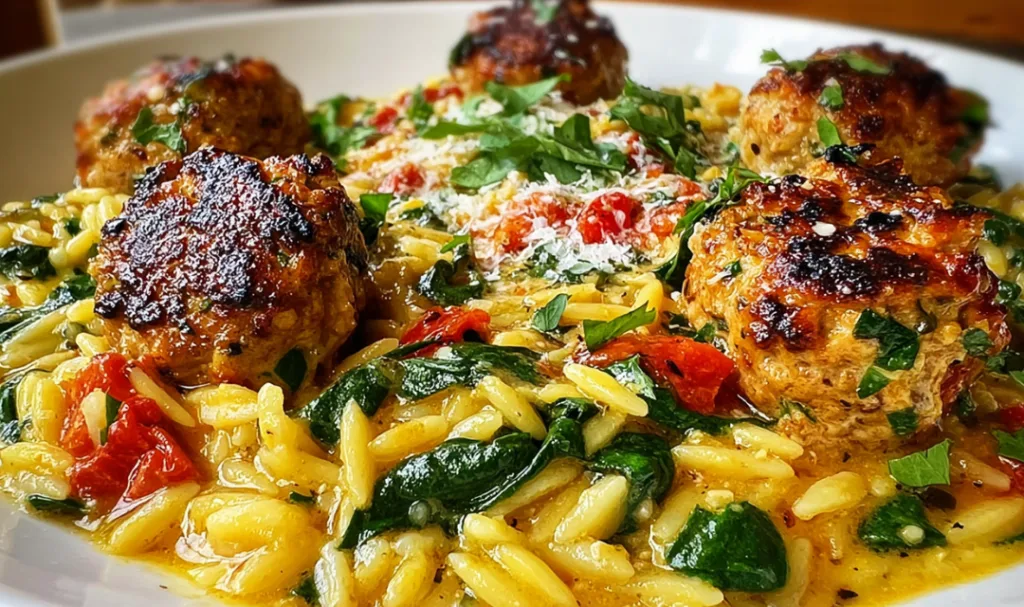
Serve hot, garnished with extra grated Parmesan and fresh basil leaves. Betty always sets the whole skillet on the table for a rustic, communal feel that everyone loves.
Making the Most of Leftovers
I typically store leftovers in a tightly sealed airtight container in the refrigerator, where they keep beautifully for up to 3–4 days. The orzo will absorb more liquid overnight, so the texture becomes even creamier and almost risotto-like by the next day — which honestly my kids prefer. Give it a good stir and add a small splash of chicken broth or water when reheating to loosen it back up.
If you want to freeze this dish, Betty’s freezing method works best when you freeze it before stirring in the heavy cream. Cream-based sauces can separate in the freezer and turn grainy when reheated. Portion the cooked meatballs and orzo (without the cream) into freezer-safe containers and freeze for up to 3 months. Thaw overnight in the refrigerator and stir in fresh cream during reheating for a sauce that tastes freshly made.
For the best texture, I reheat leftovers on the stovetop over medium-low heat with a splash of broth, stirring gently until warmed through. The microwave works in a pinch — heat in 1-minute intervals, stirring between each to distribute heat evenly and avoid rubbery meatballs. For entertaining, reheat covered in a 350°F oven for 15–20 minutes for an effortlessly hands-off option.
Delicious Variations Worth Trying
One of the things Betty loves most about this recipe is how naturally it adapts to whatever you have on hand or what your family prefers. Here are some of our favorite tested variations:
Swap ground chicken for ground turkey for a nearly identical result with a slightly richer flavor, or use ground beef for a heartier, more robust meatball.
Replace orzo with a gluten-free small pasta or even white rice for a completely gluten-free version of this dish. Add the rice a bit earlier and adjust liquid as needed.
Add a pinch of red pepper flakes to the oil when toasting the orzo for a gentle spicy kick that pairs beautifully with the cream.
Use kale instead of spinach for heartier, more substantial greens that hold up better to long simmering.
Stir in a small handful of sun-dried tomatoes along with the canned tomatoes for an extra layer of concentrated Italian flavor that really elevates the whole dish.
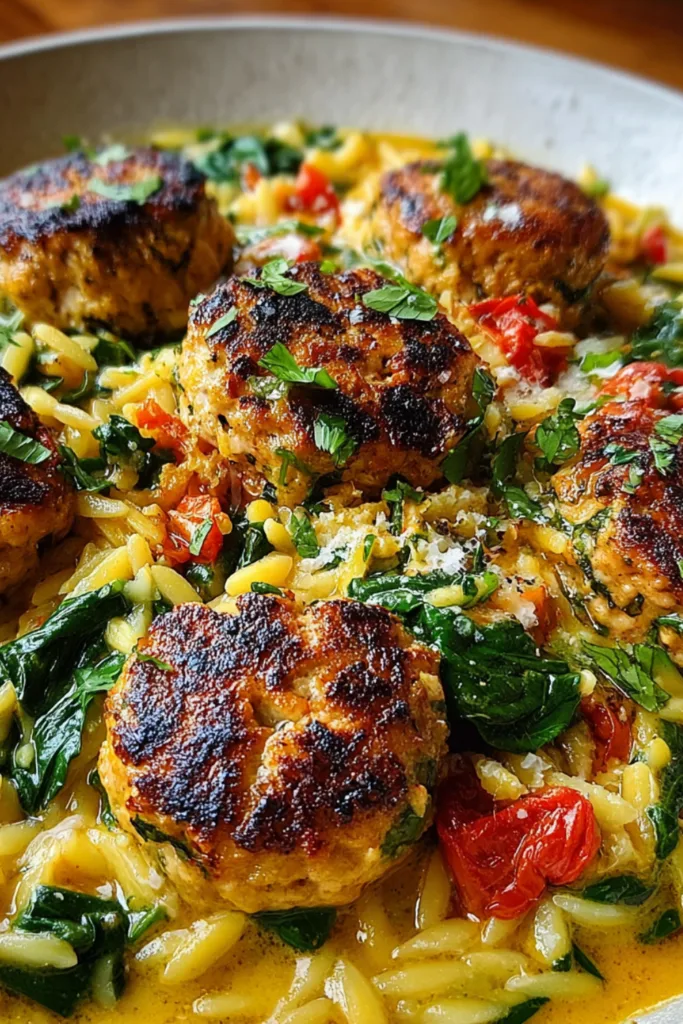
Perfect Partners for This Tuscan Chicken Skillet
This dish is hearty and comforting enough to stand entirely on its own, but a few well-chosen sides can turn a weeknight dinner into a proper feast. Here’s what we love to serve alongside it in Betty’s kitchen:
Crusty Italian Bread or Garlic Bread: The obvious (and absolutely correct) choice. A thick slice of toasted garlic bread soaks up the creamy tomato orzo sauce beautifully and keeps cleanup even simpler.
Simple Green Salad with Lemon Vinaigrette: A fresh, acidic salad cuts through the richness of the cream sauce and brings the whole plate into balance. Arugula with lemon juice and a drizzle of olive oil is Betty’s go-to.
Roasted Broccolini or Asparagus: Slightly charred green vegetables add a bitter-savory contrast that plays wonderfully against the Tuscan herb profile of the meatballs. Roast at 425°F for 12–15 minutes.
Caprese Salad: Fresh mozzarella, ripe tomatoes, and basil echo the Italian flavors in the main dish without competing. A beautiful starter or side for dinner parties.
A Glass of White Wine: A crisp Pinot Grigio or lightly oaked Chardonnay pairs wonderfully with the cream and tomato in the sauce. Betty always says a splash in the cook’s glass is just as important as the ones on the table.
FAQs
Can I make the meatballs ahead of time?
Yes! I recommend forming the meatballs up to 24 hours in advance and storing them covered in the refrigerator. This actually helps them hold their shape better during browning.
Why are my meatballs falling apart?
To prevent this issue, make sure you’re using a full egg as binder, not overmixing the meat, and chilling the formed meatballs for 15–30 minutes before cooking if they feel too soft.
Can I use dried basil instead of fresh?
Many home cooks find dried basil works in a pinch — use about 1 teaspoon in place of 1/4 cup fresh. That said, Betty’s solution is always fresh basil when possible because the flavor difference is genuinely noticeable./
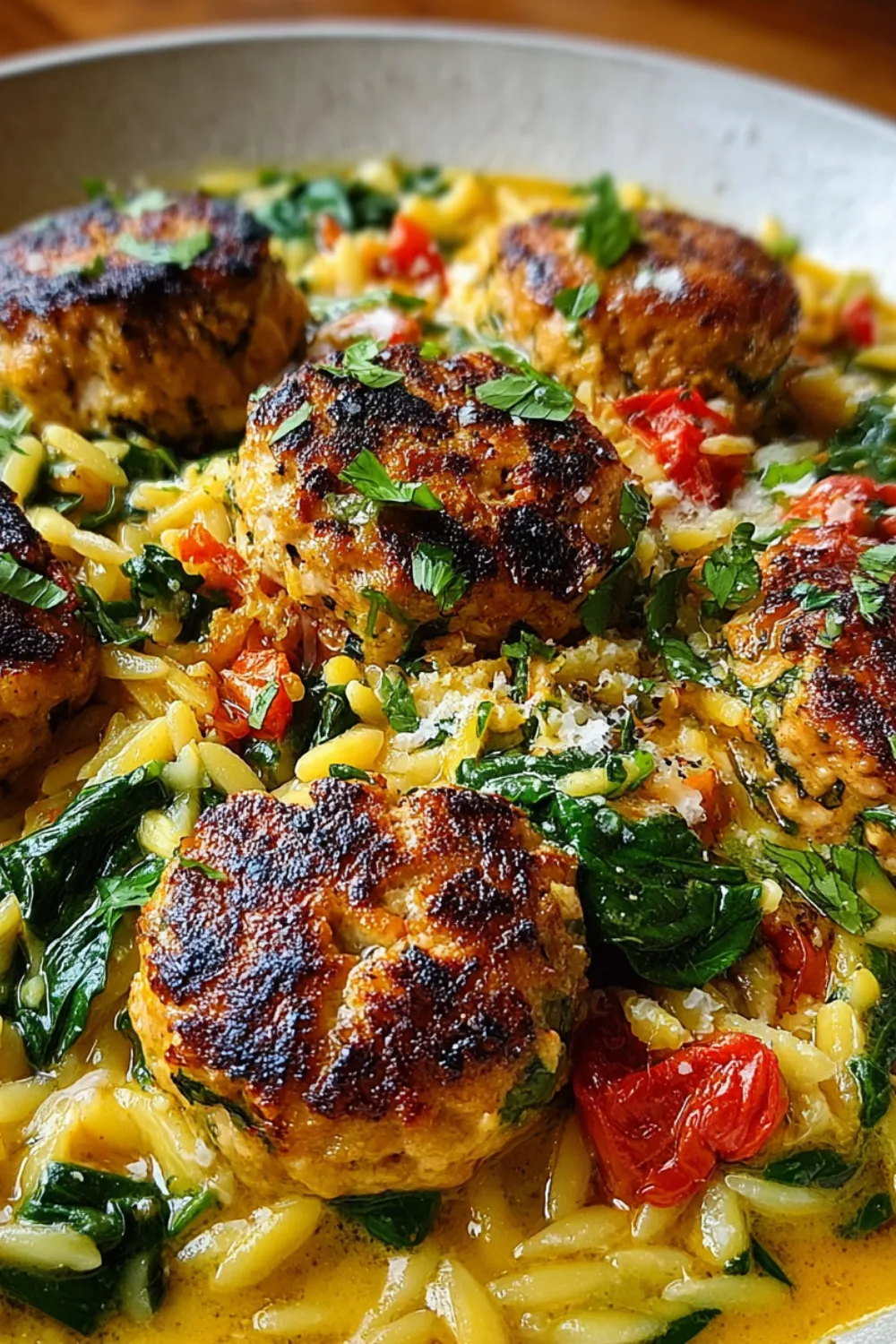
One Pan Tuscan Chicken Meatballs and Orzo
Ingredients
Equipment
Method
- In a large bowl, combine ground chicken, breadcrumbs, Parmesan, basil, egg, garlic, onion powder, Italian seasoning, salt and pepper. Mix until just combined — do not overmix.
- Form mixture into 1-inch meatballs and set aside on a plate.
- Heat olive oil in a large skillet over medium heat. Add meatballs in a single layer without overcrowding.
- Brown meatballs on all sides, about 5–6 minutes. Remove from skillet and set aside.
- In the same skillet, add orzo and toast for 1–2 minutes until slightly golden, stirring constantly.
- Pour in diced tomatoes with juices and chicken broth. Stir well, scraping up browned bits. Bring to a gentle boil.
- Reduce heat to a simmer. Nestle meatballs back into orzo. Cover and cook 10–12 minutes until orzo is tender and liquid mostly absorbed, stirring occasionally.
- Stir in fresh spinach and heavy cream. Cook 2–3 minutes until spinach wilts and cream heats through. Meatball internal temp should reach 165°F.
- Taste and adjust seasoning. Let rest 5 minutes before serving.
- Serve hot garnished with extra Parmesan and fresh basil.