Gordon Ramsay beef stroganoff brings restaurant elegance to your weeknight table without the fuss. I’ve made this silky, mushroom-rich classic more times than I can count, and it never fails to turn a regular Tuesday into something special – tender rib-eye, golden cremini mushrooms, and that signature sour cream sauce that coats every noodle just right.
There’s something about a good stroganoff that takes me back to Betty’s farmhouse kitchen on chilly autumn evenings. She’d have a cast-iron skillet going on the stove, the smell of browned beef and buttery mushrooms filling every corner of that old house. We’d gather around her worn wooden table, and she’d serve it over thick egg noodles with a generous sprinkle of fresh chives from her garden. The sauce was always velvety, never split or grainy, because Betty taught me her secret: pull that pan off the heat before stirring in the sour cream. That one trick changed everything for me. Your kitchen’s about to smell incredible!
What Makes This Beef Stroganoff So Special
Gordon Ramsay’s approach to this Russian-turned-American classic respects both speed and technique, something I’ve come to appreciate after years of weeknight cooking. This beef stroganoff recipe delivers the kind of results you’d expect from a high-end bistro, but it happens in your own kitchen with ingredients you probably already have.
Here’s why this stroganoff belongs in your recipe box:
- Ready in just 30 minutes from start to finish, perfect for busy families who still want a proper dinner
- Uses accessible rib-eye steak that cooks quickly when pounded thin and sliced right
- Creates a sauce that never splits thanks to the off-heat sour cream technique
- Delivers tender, pink beef instead of the grey, overcooked strips you find in lesser recipes
- Builds incredible flavor by deglazing all those caramelized bits stuck to your pan
- Adapts beautifully to whatever pasta you have on hand – egg noodles, tagliatelle, even pappardelle work wonderfully
I love that this recipe doesn’t require exotic ingredients or special equipment. It’s honest cooking that relies on good technique rather than shortcuts, which is exactly how Betty taught me to approach the kitchen.
Ingredient Spotlight
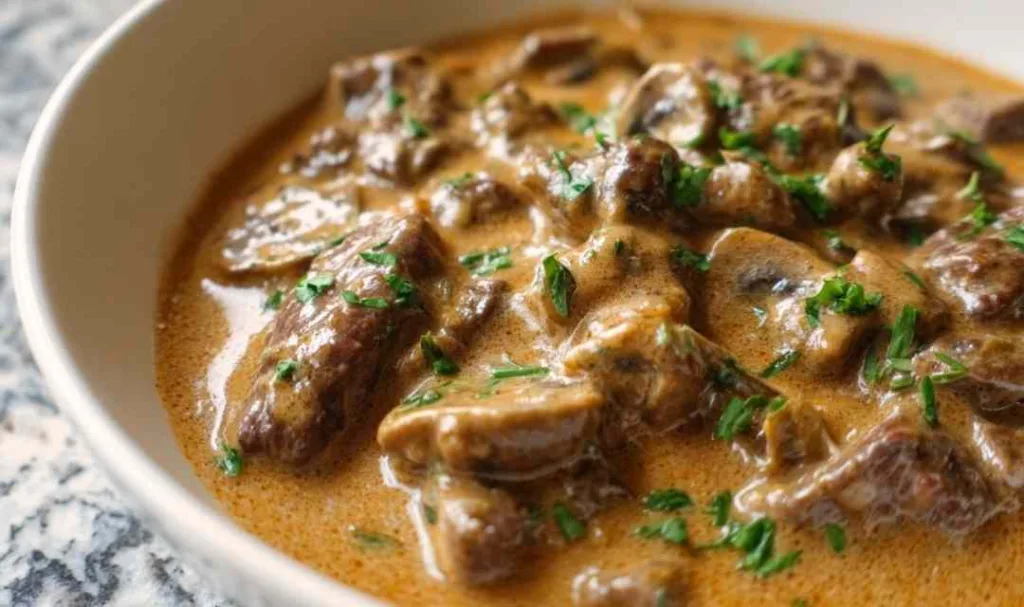
Rib-eye steak is Gordon’s choice here because it’s naturally tender and has just enough marbling to stay juicy during the quick sear. I always choose steaks that are about ¾ cm thick after pounding – this ensures they cook evenly and stay pink inside.
Cremini mushrooms bring an earthy, meaty depth that white button mushrooms just can’t match. Slice them uniformly at ⅛-inch thickness so they brown evenly and develop those gorgeous golden edges.
Full-fat sour cream creates the signature tangy richness of stroganoff. In my kitchen, I prefer full-fat over reduced-fat versions because it has better stability and won’t separate when you stir it into the warm sauce.
Low-salt beef broth forms the base of your sauce and picks up all those browned bits from searing the beef. Betty always kept homemade stock in her freezer, but a quality store-bought version works beautifully when you’re pressed for time.
Dijon mustard adds subtle heat and complexity without overpowering the creamy sauce. I’ve found that a full tablespoon gives you just the right amount of zing to balance the richness.
Butter and neutral oil work together for the perfect sear – the oil handles high heat without burning while the butter adds nutty flavor to your mushrooms and onions.
Plain flour thickens the sauce just enough to coat the back of a spoon. After years of making this, I learned that cooking it for a full minute eliminates any raw flour taste.
How to Make Gordon Ramsay Beef Stroganoff
Step 1. I always start by pounding the rib-eye to an even ¾ cm thickness using a meat mallet, which ensures every piece cooks at the same rate and stays tender.
Step 2. Betty taught me to slice beef across the grain into finger-width strips – this shortens the muscle fibers and guarantees melt-in-your-mouth texture.
Step 3. I’ve learned that patting the beef completely dry with paper towels before seasoning creates a better sear and prevents steaming in the pan.
Step 4. Heat your first tablespoon of oil in a wide stainless or cast-iron skillet until it shimmers, then lay half the beef strips flat without crowding – Betty’s tip: give each piece its own space for proper browning.
Step 5. Sear for just 30 seconds per side until you see golden edges but the center stays pink; your instant-read thermometer should show 46-48 degrees Celsius for perfect medium-rare.
Step 6. After years of making this, I learned to repeat the searing process with the remaining oil and beef, then set everything aside to rest while you build the sauce.
Step 7. Lower the heat slightly and melt butter in the same pan, add your sliced onion for one minute, then scatter mushrooms in a single layer – the key I discovered is leaving them untouched for two full minutes so they develop that deep caramelization.
Step 8. Sprinkle flour over the vegetables and stir for a minute to cook off the raw taste, creating a light roux that will thicken your sauce beautifully.
Step 9. I’ve found that deglazing with 125 ml of broth first, scraping up all those flavorful brown bits, creates the foundation of restaurant-quality sauce.
Step 10. Whisk in the remaining broth and Dijon mustard, then simmer for five minutes until the sauce coats the back of your spoon with a silky, velvety texture.
Step 11. Through trial and error, I learned the most important step: remove the pan from heat completely before stirring in the sour cream – this prevents splitting and keeps your sauce smooth.
Step 12. Betty always finished by sliding the seared beef and its accumulated juices back into the pan, warming everything together on low heat for just one minute without overcooking.
Keeping This Stroganoff Fresh
I typically store leftover stroganoff in an airtight container in the refrigerator where it stays delicious for up to three days. The sauce may thicken as it cools, but that’s completely normal – just loosen it with a splash of beef broth when reheating. Betty’s storage method always involved letting the stroganoff cool to room temperature first before sealing it up, which prevents condensation and keeps the texture better.
For longer storage, Betty’s freezing method works well because stroganoff handles freezing surprisingly well despite the cream. Portion it flat in zip-top freezer bags, press out the air, and label with the date – it keeps beautifully for up to two months. I’ve found that freezing in single-serving portions makes weeknight dinners even easier when life gets hectic.
For the best texture, I reheat stroganoff gently on the stovetop over low heat, stirring occasionally and adding a few tablespoons of broth or pasta water to restore that silky consistency. My family prefers when I reheat it slowly rather than blasting it in the microwave, which can make the beef tough and cause the sauce to separate. The oven works too – cover the dish with foil and warm at 150 degrees Celsius for about 15 minutes, stirring halfway through.
Perfect Partners for Beef Stroganoff
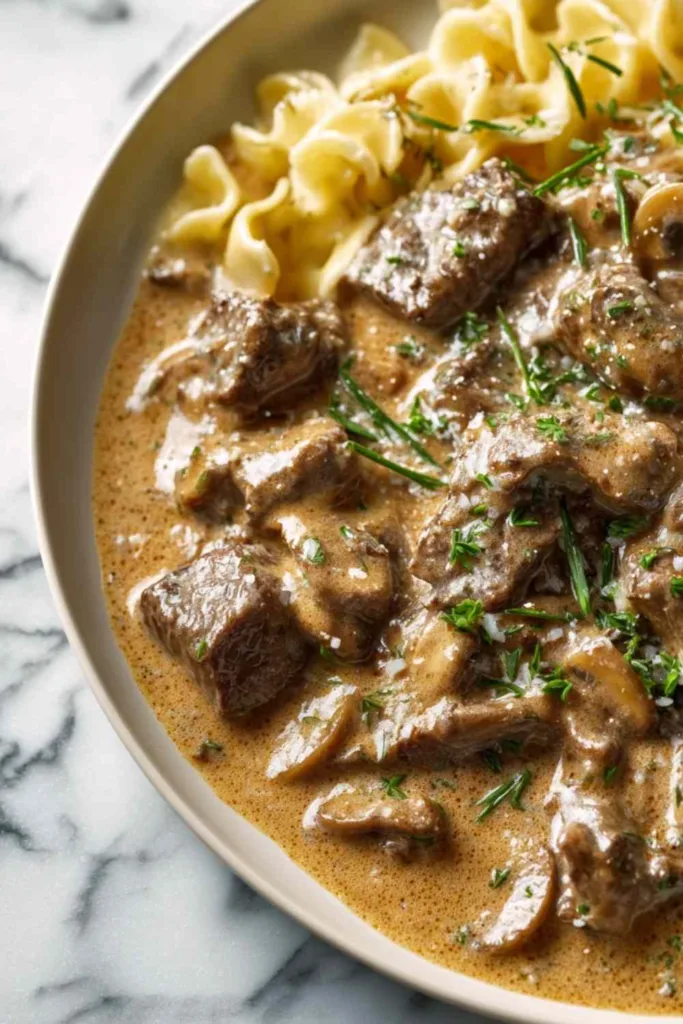
Buttered egg noodles or tagliatelle are the classic base for stroganoff, and for good reason – their wide, flat shape catches every bit of that creamy sauce. I always toss mine with a generous pat of butter and a pinch of salt before spooning the stroganoff on top.
Simple green salad with vinaigrette cuts through the richness beautifully. Betty loved serving a crisp romaine salad with lemon-Dijon dressing alongside – the bright acidity balances the cream perfectly.
Roasted green beans add a fresh, slightly crisp element that contrasts wonderfully with the tender beef and silky sauce. I toss them with olive oil, minced garlic, and a squeeze of lemon just before serving.
Crusty sourdough bread is perfect for mopping up every last drop of sauce. In my kitchen, I prefer a good artisan loaf, warmed in the oven and served with salted butter.
Pickled vegetables or cornichons bring a tangy crunch that’s traditional with stroganoff in many European households. Even a simple dish of dill pickles on the side adds a nice contrast.
Garlic parmesan roasted potatoes work when you want something hearty and substantial alongside. The crispy edges and creamy centers complement the rich sauce beautifully.
For a complete meal, try serving this alongside creamy mashed sweet potatoes or even spooned over buttered orzo pasta for a fun twist on the traditional presentation.
FAQs
I recommend sirloin or tenderloin as alternatives – both cook quickly and stay tender when sliced thin. Betty’s solution for tougher cuts like chuck is to slice them extra thin and reduce the searing time to 20 seconds per side.
To prevent this issue, always remove the pan from heat before adding sour cream and stir it in gently off the burner. The best approach I’ve tested is letting the sauce cool for 30 seconds after simmering, which brings the temperature down just enough to be safe.
Many home cooks find success with preparing the beef and sauce separately, then combining them just before serving. I recommend searing the beef and making the sauce base up to one day ahead, storing them separately, then warming everything together when ready to eat.
Gordon Ramsay Beef Stroganoff
Ingredients
Equipment
Method
-
Pound rib-eye to ¾ cm thickness using a meat mallet. Slice into finger-width strips across the grain. Pat dry with paper towels, then season generously with salt and pepper. Let sit for 10 minutes at room temperature.
-
Heat 1 Tbsp oil in a 30 cm skillet over high heat until shimmering. Lay half the beef strips flat in a single layer; cook 30 seconds per side until golden but still pink inside (internal temp 46-48 degrees Celsius). Transfer to a plate.
-
Add remaining 1 Tbsp oil to the pan and repeat with the second batch of beef. Set aside with the first batch.
-
Lower heat to medium. Melt butter in the same pan, add sliced onion and cook for 1 minute. Scatter mushrooms in one layer; leave untouched for 2 minutes, then stir and cook 2 more minutes until deep golden. Season lightly with salt and pepper.
-
Sprinkle flour over the vegetables and stir for 1 minute to cook off the raw taste and create a light roux.
-
Remove pan from heat completely. Stir in sour cream until the sauce turns velvety and smooth. Do not return to heat or boil.
-
Slide seared beef and its accumulated juices back into the pan. Set heat to low and warm for 1 minute without further cooking.
-
Serve stroganoff over buttered egg noodles or tagliatelle. Sprinkle with chopped chives and a final grind of black pepper.