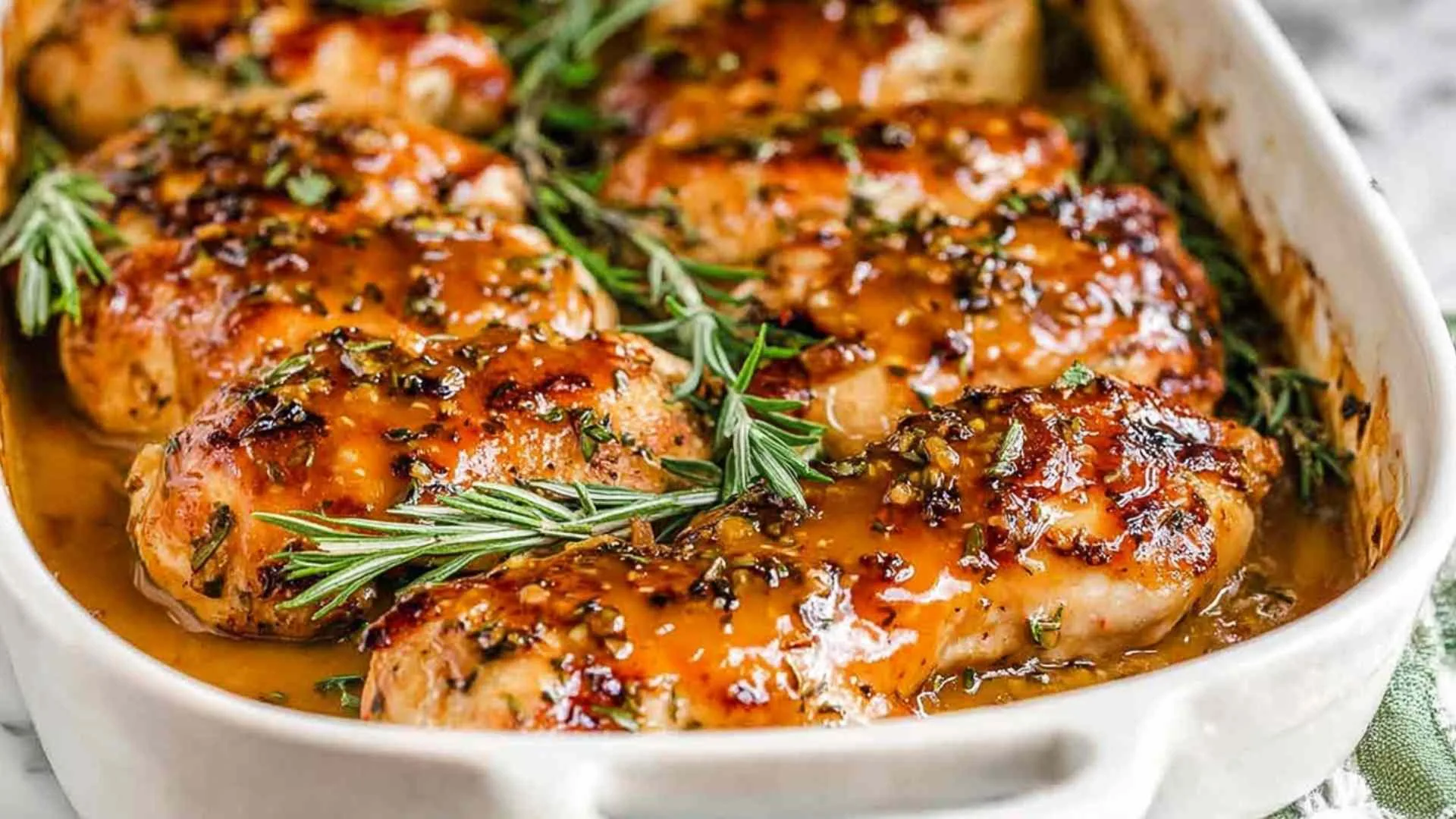
Baked Honey Mustard Chicken is one of those weeknight dinners that earns a permanent spot in your rotation after the very first bite. I still remember the first time I pulled this dish out of the oven on a Tuesday evening at the farmhouse. The whole kitchen smelled of warm honey and tangy mustard, and my kids were at the table before I even called them.
Growing up in a small Midwest town, my mother had a saying: a good sauce can carry any chicken. She learned that from my grandmother, who spent decades perfecting the kind of cooking that brought every person in the house to the table without being asked. This baked honey mustard chicken recipe carries that same spirit. It is built around a three-mustard blend coated over browned chicken breasts, then baked until the sauce caramelizes into a golden, sticky glaze. Sweet from the honey, sharp from the Dijon, and rustic from the wholegrain mustard, this recipe delivers every time. Whether it is a busy weeknight or a casual family dinner, your kitchen is about to smell incredible.
5 Reasons This Baked Honey Mustard Chicken Belongs in Your Recipe Box
I have been making this recipe for years, and I can tell you with confidence it earns its place on the dinner table every single time. Here is why home cooks keep coming back to it:
- Effortless preparation. There is no complicated technique here. Season the chicken, sear it for a few minutes, mix the sauce, bake, and done. Even beginner cooks can nail this on the first try.
- Irresistible sweet and tangy flavor. The combination of honey and three mustards creates a sauce that is layered and satisfying. It is sweet without being cloying and sharp without being harsh.
- Customizable ingredients. No wholegrain mustard on hand? Use just Dijon. Prefer chicken thighs over breasts? Go for it. This recipe adapts to what you have.
- Ready in about 50 minutes. From cold chicken to dinner on the table, you are looking at roughly 15 minutes of prep and 35 minutes in the oven. That fits any weeknight schedule.
- High-protein and satisfying. Each serving delivers approximately 40 grams of protein, making this a genuinely filling meal the whole family will enjoy.
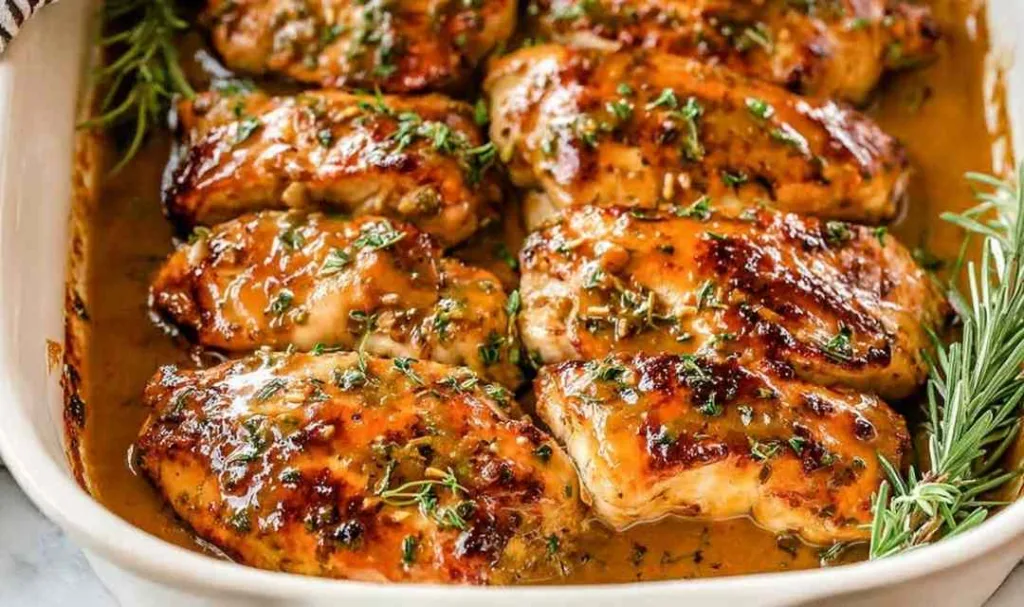
Key Players in This Recipe
Understanding what each ingredient brings to the dish is one of those small pieces of kitchen knowledge that makes you a more confident cook.
Boneless, skinless chicken breasts are the foundation. They cook evenly and absorb the sauce beautifully. I always look for breasts of similar thickness so they finish baking at the same time. Boneless, skinless chicken thighs work well too, but they need a few extra minutes of cooking time.
Chicken seasoning blend builds your flavor base before the sauce even touches the meat. If you do not have a specific blend, a combination of garlic powder, onion powder, salt, and black pepper works perfectly.
Olive oil (divided) serves two purposes here. You use most of it for browning the chicken in the skillet, and the remainder goes directly into the honey mustard sauce to help it emulsify smoothly.
Honey (1/4 cup) is the heart of the sauce. It provides natural sweetness that balances the sharpness of the mustards and caramelizes into a gorgeous glaze during baking. In my kitchen, I prefer a good raw honey when I can find it. The flavor is noticeably fuller.
Dijon mustard brings a clean, pungent depth that anchors the sauce. It is the ingredient that makes the honey taste more interesting rather than simply sweet.
Yellow mustard adds brightness and a mild tang. It lightens the sauce and keeps it from feeling too heavy.
Wholegrain mustard is my personal favorite addition to this recipe. Those little mustard seeds create a wonderful rustic texture against the smooth glaze and give this dish its unmistakable character.
White vinegar (1/2 teaspoon) adds just a whisper of acidity to brighten all the flavors. You will not taste it directly, but you would miss it if it were gone.
Paprika (1/8 teaspoon) provides a gentle warmth and a hint of color that rounds out the sauce without overpowering the honey and mustard profile.
Fresh rosemary sprigs (optional) tuck in beautifully between the chicken breasts. As they bake, they perfume the whole dish with an herbal, almost floral note that makes the kitchen smell extraordinary. I always recommend including them.
How to Make Baked Honey Mustard Chicken
Step 1. Preheat your oven to 375 degrees F. Lightly grease a 9×13 baking dish with cooking spray and set it aside. Having everything ready before you start makes the process smooth and stress-free.
Step 2. Heat 1 and 1/2 tablespoons of olive oil in a skillet over medium-high heat until shimmering but not smoking.
Step 3. Season the chicken breasts all over with the chicken seasoning blend, then add them to the hot skillet. Cook for 2 minutes on each side, just until nicely browned. Do not move the chicken while it is searing. I have found that this quick sear builds a deeper, more complex flavor that the oven alone cannot replicate.
Step 4. While the chicken sears, prepare your honey mustard sauce. In a small mixing bowl, combine the remaining 1/2 tablespoon olive oil, honey, Dijon mustard, yellow mustard, wholegrain mustard, white vinegar, and paprika. Whisk until smooth and glossy. Taste the sauce at this point and adjust if you like more sweetness or tang.
Step 5. Transfer the browned chicken breasts from the skillet to the prepared baking dish. Arrange them in a single layer with a little space between each piece so the heat circulates evenly.
Step 6. Pour the honey mustard sauce over the chicken breasts, turning each piece over to coat completely on all sides. Every surface should be covered.
Step 7. Tuck fresh rosemary sprigs between the chicken breasts if using. This step is optional but I strongly recommend it.
Step 8. Cover the baking dish tightly with aluminum foil and bake for 20 minutes. The foil traps steam and keeps the chicken tender throughout the initial bake. Do not skip this step.
Step 9. Remove the foil and continue baking for 15 minutes, or until the chicken registers 165 degrees F on an instant-read thermometer. This uncovered phase is where the sauce caramelizes into that gorgeous sticky glaze. Always use the thermometer here. Ovens and chicken thickness vary, so trust the temperature reading over the clock.
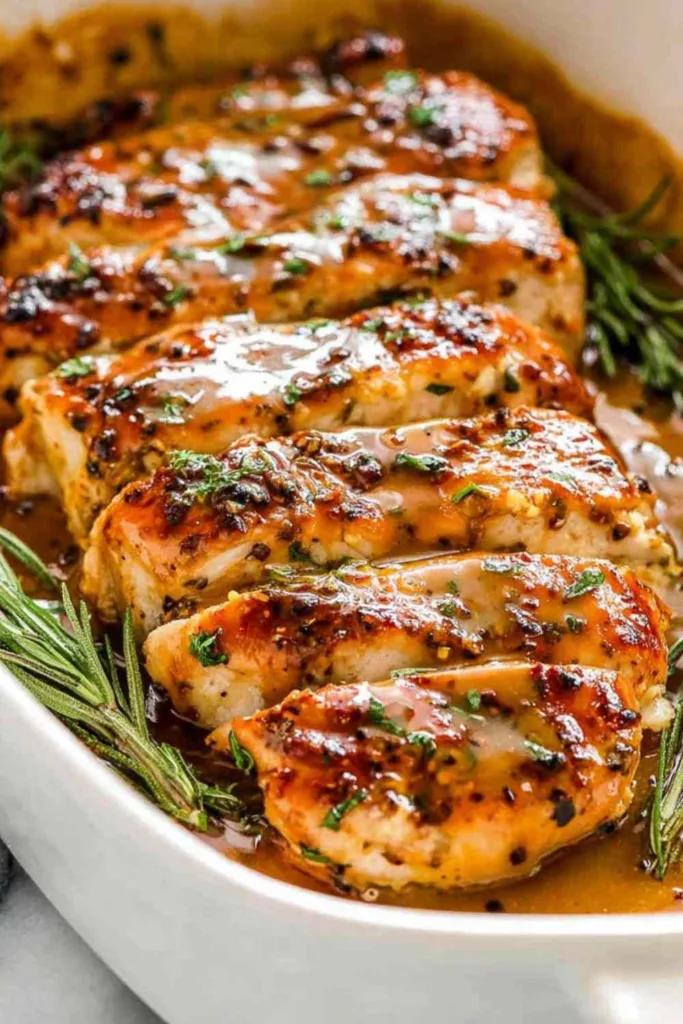
Step 10. Remove from the oven and let the chicken rest for 5 minutes before slicing. This rest allows the juices to redistribute back through the meat. Slice into it too soon and those juices run out onto your cutting board instead of staying in the chicken.
Recipe Notes
- Chicken: Boneless, skinless chicken breasts are recommended for this recipe. Boneless, skinless chicken thighs can be used as a substitute. Add approximately 5 to 10 minutes of additional baking time for thighs and always confirm doneness with a thermometer reading of 165 degrees F.
- Chicken seasoning blend: If you do not have a specific blend, use your favorite herbs and spices for chicken. A simple mix of garlic powder, onion powder, paprika, salt, and black pepper works very well.
- Mustards: The three-mustard blend gives this sauce its layered character. However, you can use just one or two mustards if that is what you have on hand. Dijon alone produces the best result when working with a single mustard.
- Searing: Browning the chicken in the skillet before baking is optional but strongly recommended. It adds an extra layer of flavor through caramelization that noticeably improves the final dish.
- Thermometer: Use an instant-read meat thermometer to avoid both dry and undercooked chicken. It is the most reliable tool for getting baked chicken right every time.
Making the Most of Leftovers
This baked honey mustard chicken stores beautifully, and the flavors actually deepen overnight as the sauce continues soaking into the meat.
Refrigerator: Transfer cooled chicken to an airtight container and refrigerate for up to 3 to 4 days. I always store leftovers with some of the sauce spooned over the top to keep the chicken moist.
Freezer: This dish freezes well for up to 2 to 3 months. Wrap individual portions in plastic wrap before placing them in a freezer-safe bag to prevent freezer burn and make future weeknight meals effortless.
Reheating: Thaw overnight in the refrigerator, then reheat gently in a covered skillet over medium-low heat with a small splash of water to loosen the sauce. Low and slow is the approach that keeps the chicken tender rather than dry.
What to Serve with Baked Honey Mustard Chicken
The sweet and tangy richness of this dish pairs beautifully with sides that either complement its warmth or offer a fresh contrast. Here are the combinations I reach for most often:
- Loaded mashed cauliflower. Creamy and satisfying without being too heavy, this low-carb side soaks up every bit of that honey mustard glaze. It is our most frequent pairing in this house.
- Roasted potatoes and carrots. A classic, hearty combination that echoes the sweet and savory notes of the glaze. Toss them in olive oil, rosemary, and salt before roasting.
- Honey-glazed carrots and green beans. These glazed vegetables mirror the honey notes in the chicken perfectly and bring a gorgeous pop of color to the plate.
- Garlic Parmesan baked eggplant. A satisfying vegetable side that holds its own alongside bold glazed chicken without competing for the spotlight.
- Cauliflower rice or quinoa salad. When I want something lighter, a bright quinoa salad with lemon and fresh herbs brings freshness to balance the rich glaze.
- Picnic sandwich the next day. Slice leftover chicken thin and build a sandwich with crisp lettuce, fresh tomato, and a swipe of mayonnaise. One of the best ways to enjoy this recipe twice.
More Chicken Recipes You Will Love
If you enjoy this baked honey mustard chicken, these recipes are worth adding to your weekly dinner lineup:
- Brown Sugar Dijon Chicken Thighs – Same sweet and tangy flavor family, made with juicy thighs and a brown sugar Dijon glaze.
- Pretzel Chicken with Mustard Cheddar Sauce – A crispy, mustard-forward chicken recipe with a rich cheddar dipping sauce that mustard lovers will not want to miss.
- Honey Mustard Chicken Sliders – A fun, casual way to use the same honey mustard flavor profile for a crowd-pleasing appetizer or game day spread.
- Maple Dijon Chicken Bowl – A wholesome bowl that takes the Dijon base in a slightly sweeter direction with maple and pairs it over grains.
FAQs
Absolutely. Boneless, skinless chicken thighs work very well in this recipe. Add 5 to 10 extra minutes of baking time and always confirm doneness with a thermometer reading of 165 degrees F.
The three-mustard blend is what creates the layered complexity of the sauce, but the recipe works with a single mustard. Dijon is the best standalone choice because it provides the most flavor depth on its own.
Yes. You can sear the chicken and prepare the sauce up to 24 hours in advance, storing them separately in the refrigerator. Assemble and bake just before serving. You can also marinate the coated chicken in the sauce overnight for deeper flavor.
Baked Honey Mustard Chicken
Ingredients
Equipment
Method
- Preheat oven to 375 degrees F. Lightly grease a 9×13 baking dish with cooking spray and set aside.
- Heat 1 and 1/2 tablespoons olive oil in a skillet over medium-high heat until shimmering.
- Season chicken breasts all over with the chicken seasoning blend. Add to the skillet and cook for 2 minutes on each side until browned. Do not move the chicken while searing.
- In a small mixing bowl, combine the remaining 1/2 tablespoon olive oil, honey, Dijon mustard, yellow mustard, wholegrain mustard, white vinegar, and paprika. Whisk until smooth and well incorporated.
- Transfer browned chicken breasts from the skillet to the prepared baking dish in a single layer.
- Pour the honey mustard sauce over the chicken breasts, turning each piece to coat completely on all sides.
- Tuck rosemary sprigs between the chicken breasts if using.
- Cover the baking dish tightly with aluminum foil and bake for 20 minutes.
- Remove the foil and continue baking for 15 minutes, or until the chicken reaches an internal temperature of 165 degrees F on an instant-read thermometer.
- Remove from oven and let stand 5 minutes before slicing and serving.