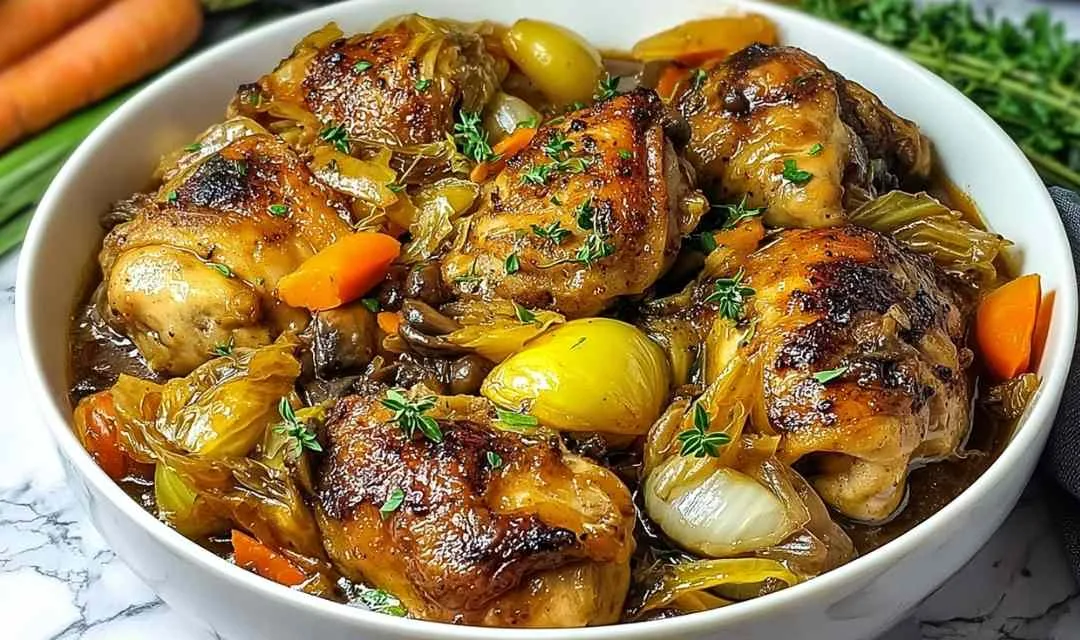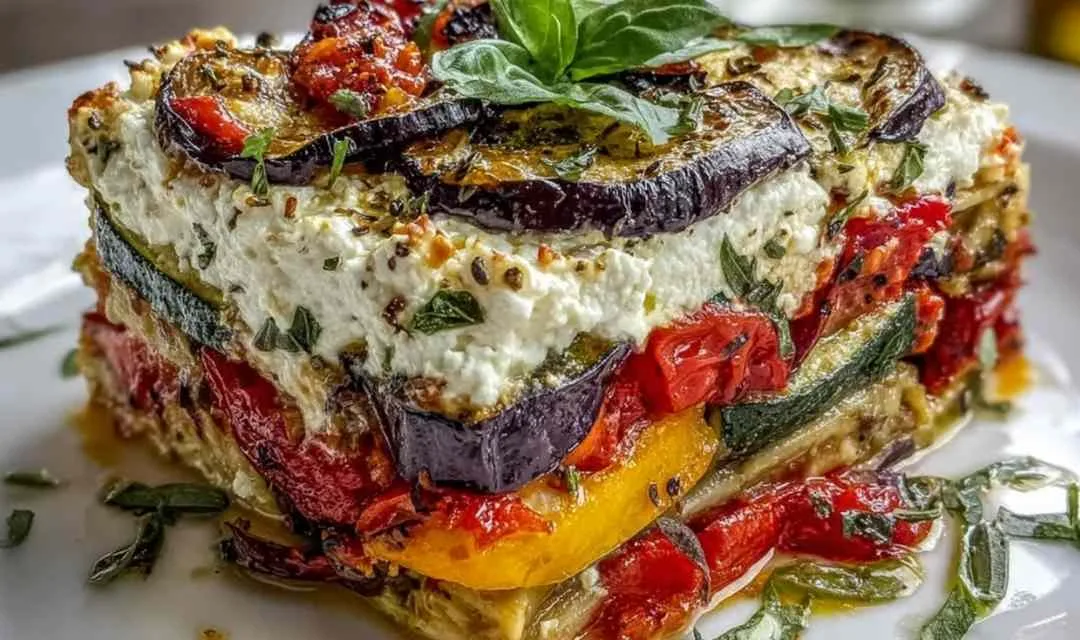
Mediterranean vegetable lasagna transforms humble vegetables into a showstopping dinner that’ll have your family asking for seconds. I learned this comforting twist on classic lasagna during a potluck with neighbors who’d just returned from Italy, and after testing it dozens of times in my own kitchen, I’ve made it my own with roasted veggies and that perfect cheese pull we all love.
There’s something magical about pulling a bubbling pan of lasagna from the oven on a Sunday afternoon. The smell reminds me of my grandmother’s kitchen, though she stuck to traditional meat sauce while I’ve fallen head over heels for this vegetable-packed version. The roasted eggplant and zucchini bring such depth – slightly charred edges, creamy centers, all nestled between tender noodles and clouds of herbed ricotta. My daughter requests this for her birthday dinner every year, and watching friends lean back with satisfied sighs after their second helping never gets old. It’s the kind of dish that makes you feel accomplished without spending all day in the kitchen, and honestly, the leftovers might be even better the next day. Time to get our hands floury and build something beautiful.
What Makes This Mediterranean Vegetable Lasagna So Special
After years of making both traditional and vegetarian lasagnas, I’ve come to appreciate what sets this Mediterranean version apart. This isn’t just about swapping meat for vegetables – it’s about creating layers of flavor that stand proudly on their own.
- Pantry-friendly ingredients that don’t require specialty store trips, since most home cooks already have marinara, ricotta, and basic Italian herbs on hand
- Comes together in about an hour from start to finish, making it perfect for Sunday meal prep or weeknight dinners when you have a bit more time
- Delivers consistently crowd-pleasing results with that perfect balance of creamy ricotta, gooey melted cheese, and tender roasted vegetables
- Adapts easily to dietary preferences by substituting cottage cheese for ricotta or adding different vegetables based on what’s in season
- Creates that perfect combination of textures – the slight char on vegetables, smooth ricotta layers, and that irresistible cheese pull everyone loves
- Works beautifully for entertaining since you can assemble it ahead and simply pop it in the oven when guests arrive
I’ve served this Mediterranean vegetable lasagna to confirmed meat-lovers who came back for thirds, which tells you everything you need to know about its satisfying nature.
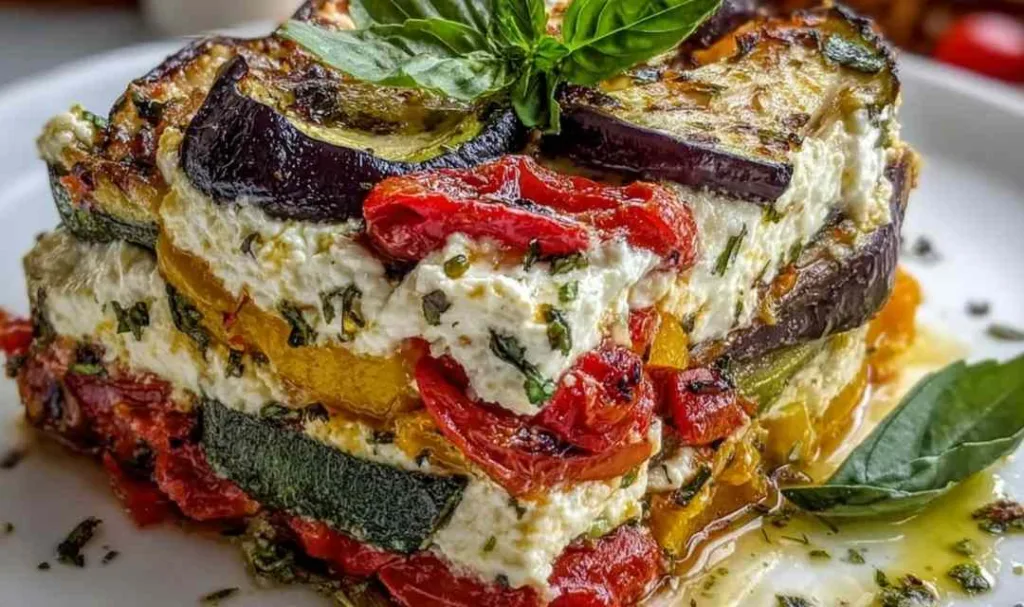
Ingredient Spotlight
Eggplant forms the hearty base of our vegetable layers, and when roasted properly, it develops a silky texture that mimics the richness traditional lasagna gets from meat sauce. I always choose firm eggplants with smooth, glossy skin and slice them into even 1/4-inch rounds for consistent roasting.
Zucchini adds a mild, slightly sweet flavor that balances the eggplant’s earthiness while contributing moisture to each bite without making the lasagna watery. I’ve learned that slicing them lengthwise rather than in rounds creates better structural layers.
Bell peppers bring both vibrant color and a subtle sweetness that enhances the Mediterranean character of this dish. After years of testing, I prefer using one red and one yellow pepper because they roast beautifully and add visual appeal to each slice.
Ricotta cheese creates those signature creamy pockets throughout the lasagna, and mixing it with garlic and herbs transforms it from plain to phenomenal. In my kitchen, I prefer whole milk ricotta for the richest texture, though part-skim works when I’m watching calories.
Mozzarella and Parmesan cheeses deliver that coveted cheese pull and golden-brown top that makes Mediterranean vegetable lasagna irresistible. I’ve found that using freshly shredded cheese rather than pre-shredded melts more smoothly and creates better texture.
Marinara sauce serves as the flavor foundation, and I always choose a quality brand with simple ingredients or use homemade when I have time. Betty’s tip: taste your marinara before using it – if you wouldn’t eat it with a spoon, it won’t improve in the lasagna.
Olive oil for brushing the vegetables before roasting ensures they develop those delicious caramelized edges without drying out. Through trial and error, I learned that a light brush on both sides works better than drizzling, which can make vegetables too oily.
Garlic, oregano, and basil form the aromatic trio that gives our ricotta mixture its distinctive Mediterranean personality. The key I discovered is mixing these directly into the ricotta rather than layering them separately – it distributes flavor more evenly.
How to Make Mediterranean Vegetable Lasagna
Step 1. I’ve found that preheating your oven to 400°F and lining your baking sheet with parchment paper before you start slicing vegetables keeps the process flowing smoothly and prevents any sticking issues later.
Step 2. Arrange your eggplant slices, zucchini strips, and halved bell peppers on the prepared sheet, then brush both sides with olive oil and season generously with salt and pepper – Betty always says this roasting step is where the magic happens.
Step 3. Roast the vegetables for about 20 minutes, flipping them halfway through, until they’re tender with slightly charred edges that add incredible depth of flavor to your finished lasagna.
Step 4. While your vegetables roast, cook the lasagna noodles according to package directions, then drain and lay them flat on a clean kitchen towel to prevent sticking – I’ve learned this simple trick saves so much frustration during assembly.
Step 5. In a small bowl, mix your ricotta cheese with minced garlic, oregano, basil, salt, and pepper until well combined – after years of making this, I always taste and adjust seasoning here because properly seasoned ricotta makes all the difference.
Step 6. Spread half a cup of marinara sauce across the bottom of your 9×13-inch baking dish to create a moisture barrier that prevents the bottom noodles from drying out during baking.
Step 7. Layer three lasagna noodles over the sauce, then arrange half your roasted vegetables on top, spread half the ricotta mixture over the vegetables, and sprinkle with one-third of your mozzarella and Parmesan – Betty’s tip is to be generous but even with your layers.
Step 8. Repeat the layering process with another half cup of marinara, three more noodles, your remaining vegetables, remaining ricotta mixture, and another third of your cheeses.
Step 9. Complete your Mediterranean vegetable lasagna by topping with the final three noodles, the rest of your marinara sauce, and all remaining mozzarella and Parmesan, then cover tightly with foil.
Step 10. Bake covered for 25 minutes, then remove the foil and continue baking for 15 minutes more until the top turns golden and bubbly – my family prefers when I let it get nicely browned on top for extra flavor.
Step 11. Let your lasagna rest for at least 10 minutes before slicing (I know it’s hard to wait) so the layers set properly and you get those beautiful, intact portions everyone loves, then garnish with fresh basil leaves before serving.
Keeping This Mediterranean Vegetable Lasagna Fresh
I typically store leftover lasagna in an airtight container in the refrigerator for up to 3 days, and honestly, the flavors develop even more as it sits. The vegetables absorb the sauce and the cheese melds everything together into an even more cohesive dish that tastes just as good – sometimes better – than when it first came out of the oven.
For longer storage, Betty’s freezing method works wonderfully with this recipe. I wrap individual slices in plastic wrap, then place them in a freezer-safe bag or container where they’ll keep for up to 2 months. When you’re ready to enjoy them, simply transfer a portion to the refrigerator the night before to thaw slowly, which maintains the best texture. If you want to freeze the entire dish before baking, assemble everything in a freezer-safe baking dish, cover tightly with foil, and freeze. When you’re ready to bake from frozen, add an extra 10 minutes to the covered baking time, then uncover and finish baking until golden and bubbly.
For the best texture when reheating, I place portions in a preheated 350°F oven for 15 to 20 minutes covered with foil to prevent drying out. If you’re in a hurry, the microwave works too – just use medium power and cover with a paper towel to trap moisture while warming through. I’ve found that adding a tablespoon of water or extra marinara sauce before reheating helps keep everything moist and delicious.

Perfect Partners for Mediterranean Vegetable Lasagna
A crisp green salad tossed with lemon oregano vinaigrette cuts through the richness of the cheesy lasagna while keeping the Mediterranean theme consistent. I love using mixed greens, cherry tomatoes, and thinly sliced red onion with a simple dressing of lemon juice, olive oil, oregano, and a touch of Dijon mustard – the bright, tangy flavors refresh your palate between bites.
Warm, toasted garlic bread brushed with extra virgin olive oil and minced garlic is Betty’s go-to accompaniment because it’s perfect for soaking up any extra marinara sauce on your plate. I slice a French baguette on the diagonal, brush generously with garlic-infused olive oil, and toast until golden and fragrant. If you want to try something different, my Garlic Parmesan Roasted Shrimp makes an elegant starter before serving this lasagna.
Roasted asparagus or green beans with lemon zest adds a simple vegetable side that doesn’t compete with the vegetable-packed lasagna. I toss them with olive oil, salt, and pepper, roast at 400°F for about 15 minutes, then finish with fresh lemon zest and a squeeze of juice for brightness. For a heartier side option, consider pairing this with Spaghetti Squash Au Gratin.
Chilled white wine like Pinot Grigio or a light rosé complements the Mediterranean flavors beautifully without overwhelming the delicate vegetables. My family prefers serving this lasagna with a crisp, slightly acidic wine that cleanses the palate and makes each bite feel as delicious as the first.
For those who want to add more Mediterranean-inspired dishes to their dinner rotation, my Mediterranean Chicken Zucchini Bake shares similar flavors and would pair wonderfully with this lasagna for a feast-style meal.
FAQs
I recommend using cottage cheese as a lighter alternative, though I suggest draining excess liquid and pulsing it in a food processor for a smoother texture that more closely resembles ricotta.
To prevent this issue, make sure to roast your vegetables until slightly charred so excess moisture evaporates, and consider salting eggplant slices for 15 minutes before roasting to draw out additional water.
Many home cooks find success with assembling the entire dish 1 to 2 days in advance and storing it covered in the refrigerator until ready to bake – just add 5 to 10 minutes to the covered baking time since it’s starting cold.
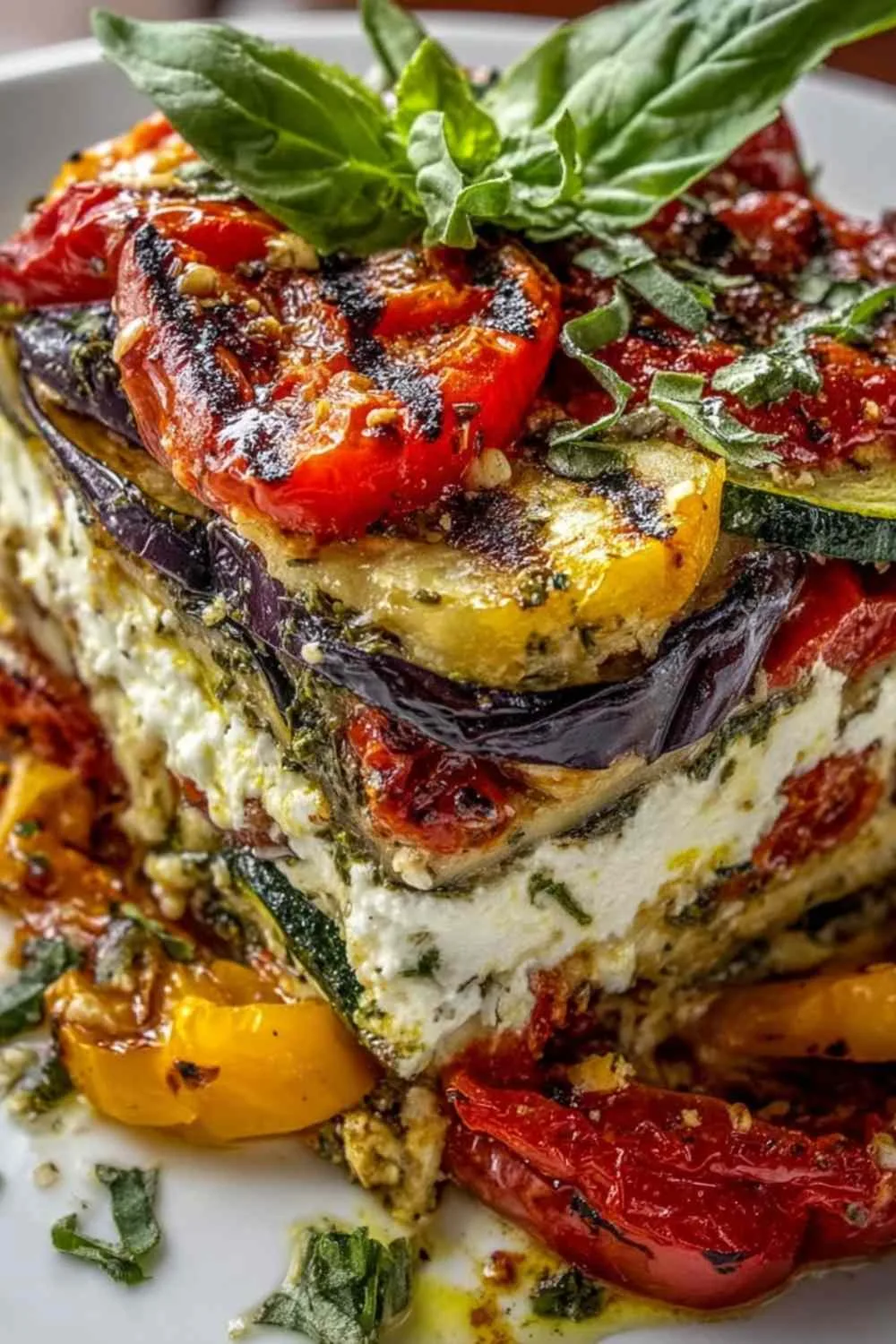
Layered Mediterranean Vegetable Lasagna with Creamy Ricotta
Ingredients
Equipment
Method
- Preheat your oven to 400°F (200°C). Line a baking sheet with parchment paper to prevent sticking.
- Arrange the eggplant slices, zucchini strips, and bell pepper halves on the prepared baking sheet. Brush both sides of all vegetables with olive oil and season generously with salt and pepper.
- Roast the vegetables in the preheated oven for about 20 minutes, flipping halfway through, until tender and slightly charred on the edges. Once roasted, slice the bell peppers into strips for easier layering.
- While the vegetables are roasting, cook the lasagna noodles according to package instructions until al dente. Drain and lay flat on a clean kitchen towel to prevent sticking.
- In a small bowl, mix the ricotta cheese with minced garlic, oregano, basil, salt, and pepper until well combined. Taste and adjust seasoning as needed.
- Spread 1/2 cup of marinara sauce evenly across the bottom of a 9×13-inch baking dish (at least 2 inches deep).
- Place three lasagna noodles over the sauce, followed by half of the roasted vegetables. Spread half of the ricotta mixture over the vegetables, then sprinkle with 1/3 of the mozzarella and Parmesan cheeses.
- Repeat the layering: spread 1/2 cup marinara sauce, add three lasagna noodles, arrange remaining roasted vegetables, spread remaining ricotta mixture, and top with 1/3 of the mozzarella and Parmesan.
- Finish with the final layer of three lasagna noodles, remaining marinara sauce, and all remaining mozzarella and Parmesan cheeses.
- Cover the baking dish tightly with aluminum foil and bake in the preheated oven for 25 minutes.
- Remove the foil and bake for an additional 15 minutes or until the top is golden and bubbly.
- Let the lasagna rest for at least 10 minutes before slicing to allow the layers to set. Garnish with fresh basil leaves before serving.