Ingredients
Equipment
Method
- Peel the onions and keep the root end fully intact. Using a sharp paring knife, cut a shallow X about half an inch deep into the root end of each onion to allow the broth to seep into the center during cooking.
- Melt the butter in a large Dutch oven over medium heat. Add the smashed garlic cloves and cook for about 1 minute until fragrant but not browned.
- Pour in the broth and wine. Add the thyme sprigs, bay leaves, kosher salt, and pepper. Bring to a gentle simmer. Gently place the prepared onions into the pot root-side down. The liquid should reach about halfway up the sides of the onions. Add more broth or water if needed. Reduce heat to low, cover with a tight-fitting lid, and simmer gently for 45 to 55 minutes. Avoid lifting the lid frequently.
- Test for doneness by inserting a paring knife or skewer into the center of the largest onion. It should slide in with no resistance. If any firmness remains, cover and continue cooking in 5-minute intervals.
- Using a slotted spoon, carefully transfer the cooked onions to a serving platter and tent loosely with foil to keep warm. Raise the heat to medium-high and boil the cooking liquid uncovered for 8 to 12 minutes until reduced by about half and lightly syrupy. This step is optional but recommended.
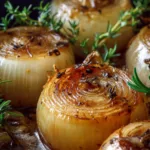
- Pour the reduced sauce over the warm onions. Garnish with fresh herbs and a pinch of flaky sea salt. Serve immediately with crusty bread. To serve as a main, place each onion in a shallow bowl with sauce over creamy polenta or mashed potatoes.
Notes
Always keep the root end intact so the onion holds together during cooking. Use Vidalia or sweet onions for the sweetest, most tender result. A low, gentle simmer is essential since a rolling boil will cause the onions to fall apart. For a crispy finish, transfer tender onions to an air fryer at 400 degrees F for 8 to 12 minutes after simmering. Leftovers keep in the fridge for up to 4 days and taste even better the next day.
