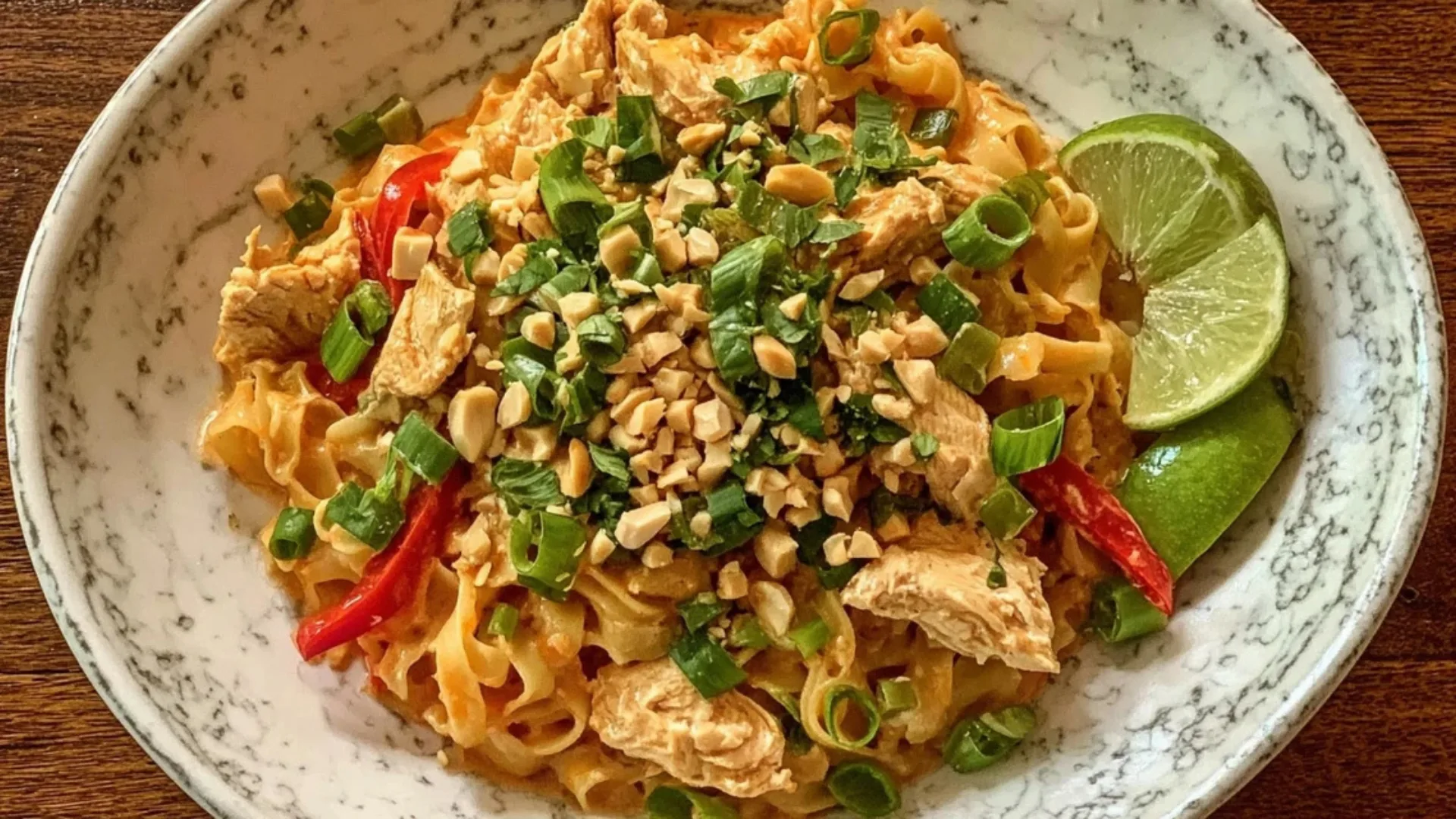
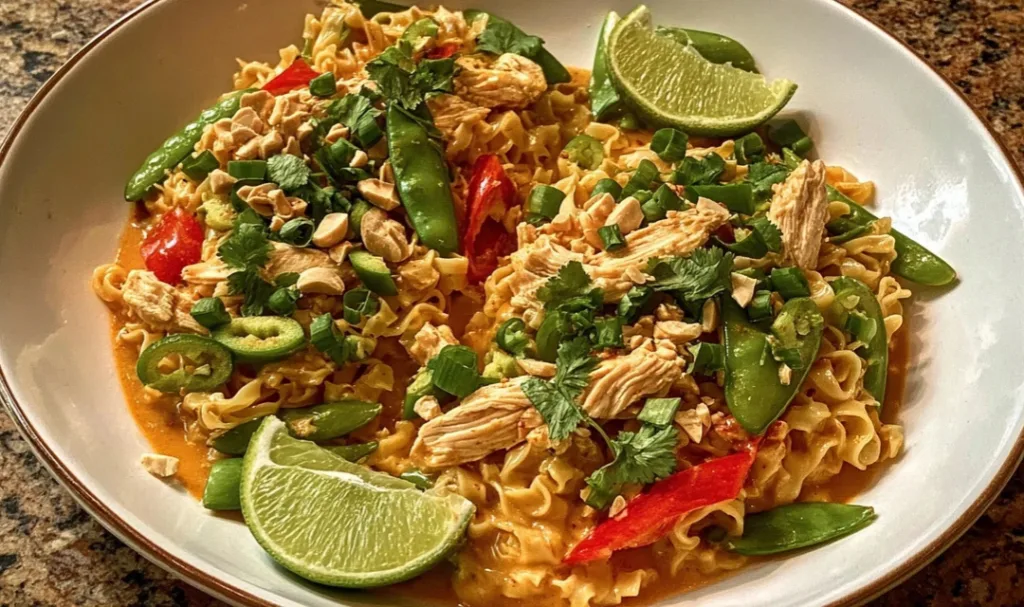
Thai peanut chicken noodle bowls have a way of making a regular Tuesday feel like something worth sitting down for. The homemade peanut sauce takes about two minutes to whisk together, and by the time the chicken and vegetables come out of the skillet, the whole kitchen smells like a restaurant you would actually choose to go back to.
The first time I made these, it was a Friday and I had chicken breast in the fridge, peanut butter in the pantry, and about 35 minutes before everyone expected dinner on the table. I combined what I had, adjusted the sauce until it tasted the way I wanted, and set the bowls out with extra lime wedges and a dish of crushed peanuts so everyone could finish their own. My son poured nearly half the garnish bowl onto his before I could say anything, and then asked for the recipe so he could make it at his apartment. That is the kind of feedback that earns a recipe a permanent spot in the rotation. Your kitchen is about to smell incredible.
6 Reasons Thai Peanut Chicken Noodle Bowls Belong in Your Recipe Box
Betty has always believed that weeknight recipes earn their place not by being complicated but by being consistently good. These Thai peanut noodle bowls fit that standard completely. The homemade peanut sauce is the kind of element that makes people think you spent far more time than you actually did.
- Ready in 30 to 35 minutes total, making it genuinely realistic on a packed weeknight
- Uses pantry staples you very likely already have including peanut butter, soy sauce, and honey
- Delivers a creamy, tangy, slightly sweet peanut sauce that coats every ingredient beautifully
- Keeps vegetables tender-crisp rather than soft, which makes a real difference in both texture and freshness
- Adapts easily to vegetarian, vegan, and low-carb preferences without changing the core method
- Holds up well for meal prep lunches, staying flavorful for up to three days in the refrigerator
Key Players in This Recipe
Rice noodles form the base and absorb the peanut sauce beautifully without becoming heavy or gummy. I always rinse them under cold water immediately after draining to stop the cooking and prevent clumping before they are ready to use.
Chicken breast, thinly sliced cooks quickly and picks up the seasoning well when cut into thin, even strips. Slicing against the grain and keeping the pieces uniform ensures everything cooks through at the same rate without any pieces drying out before others are done.
Unsalted peanut butter is the backbone of the sauce. In my kitchen, I prefer natural unsalted creamy peanut butter because it gives full control over the salt level and has a cleaner, more roasted flavor than sweetened varieties.
Soy sauce provides the savory, umami depth that balances the sweetness of the honey and the richness of the peanut butter. Low-sodium soy sauce gives you the best control over the final salt level without the sauce becoming sharp before everything comes together.
Lime juice is what lifts the sauce and keeps it from feeling too heavy. Fresh lime juice makes a noticeable difference compared to bottled. I always squeeze it fresh and keep the spent lime halves for serving alongside the finished bowls.
Sesame oil adds a toasty, nutty depth that is distinct from the peanut butter. A tablespoon is enough. I add it at the sauce stage rather than using it for cooking, since high heat diminishes its flavor significantly.
Snap peas, bell pepper, and julienned carrot provide the color, crunch, and freshness that make these bowls feel vibrant rather than heavy. Cutting everything into uniform sizes is the single most important prep step for achieving that tender-crisp texture once they hit the hot pan.
Sriracha is optional but worth including for households that enjoy heat. One teaspoon gives a gentle warmth that is noticeable without being sharp. I serve extra on the side so guests can adjust their own bowls.
How to Make Thai Peanut Chicken Noodle Bowls Step by Step
Step 1. Cook the rice noodles according to the package instructions. Once tender, drain and rinse immediately under cold water to stop the cooking and prevent sticking. Set aside in the colander while you prepare everything else.
Step 2. In a medium bowl, combine the peanut butter, soy sauce, lime juice, honey or maple syrup, sesame oil, and sriracha if using. Whisk until smooth. I’ve found that adding water one tablespoon at a time lets you dial in exactly the right consistency. The sauce should coat the back of a spoon without being thick enough to clump when tossed with the noodles.
Step 3. Heat the vegetable oil in a large skillet or wok over medium-high heat until shimmering. Season the sliced chicken breast with salt and pepper just before it goes into the pan.
Step 4. Add the chicken to the hot skillet in a single layer if possible. Cook for 5 to 7 minutes, stirring occasionally, until golden brown on the outside and cooked through with no pink remaining. Remove and set aside on a clean plate.
Step 5. In the same skillet with the remaining oil and browned bits, add the bell pepper, snap peas, and julienned carrot. Betty’s tip: keep the heat at medium-high and let the vegetables sit for about a minute before stirring so they develop some color before you toss them.
Step 6. Stir-fry the vegetables for 3 to 5 minutes until they are tender-crisp with visible color remaining. They should still have a slight bite when pressed and should not look limp or steamed.
Step 7. Return the cooked chicken to the skillet. Pour the peanut sauce over everything and toss to coat. Cook for another 2 to 3 minutes until the sauce is heated through and clinging evenly to the chicken and vegetables. This is where these Thai peanut chicken noodle bowls really come together.
Step 8. Divide the cooked rice noodles among bowls. Top with the peanut chicken mixture and garnish with sliced green onions, chopped cilantro, and crushed peanuts. Serve with lime wedges on the side.
How to Store and Reheat Leftovers
I typically store leftovers with the peanut sauce already mixed through the chicken, vegetables, and noodles rather than separating the components. Keeping everything together actually works better here because the sauce prevents the noodles from drying out between servings. Store in an airtight container in the refrigerator for up to three days.
For freezing, I recommend freezing only the peanut chicken and vegetable mixture without the noodles or garnishes. Noodles do not freeze and thaw well and tend to turn mushy after a night in the freezer. The chicken and vegetable portion freezes fine in a sealed freezer-safe container for up to two months. Thaw overnight in the refrigerator, then cook fresh noodles when you are ready to serve.
For reheating, the stovetop over medium heat for three to five minutes with a splash of water or a small squeeze of fresh lime juice gives the best result. The liquid loosens the sauce back to its original consistency as it warms. The microwave also works for quick reheating in 60-second intervals, stirring between each one to warm everything evenly without drying out the chicken.
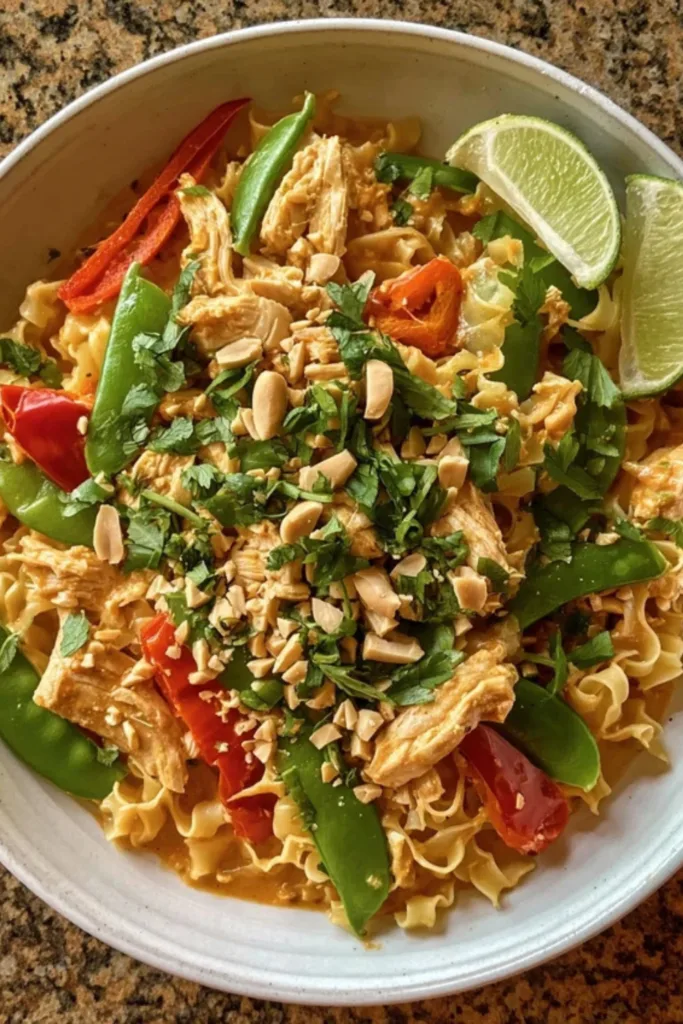
What Goes Well with Thai Peanut Chicken Noodle Bowls
These bowls work as a complete meal on their own, but a side or two turns them into a spread worth gathering around. Here are the combinations that work best:
- Bang Bang Fried Rice is a bold companion dish for a larger spread. The spicy-sweet sauce profile complements the peanut sauce without competing with it.
- Sweet Chili Chicken Bowl works well alongside these noodle bowls when you are feeding a crowd and want two bowl-style options with different sauce profiles.
- A simple cucumber salad dressed with rice vinegar, sesame oil, and a pinch of sugar cuts through the richness of the peanut sauce and adds a cool, refreshing contrast to the warm bowl.
- Crispy Garlic Parmesan Brussels Sprouts add a roasted, slightly bitter note that balances the sweetness of the honey and peanut butter in the sauce.
- Fresh spring rolls with shredded cabbage and extra peanut sauce for dipping turn this into a full Thai-inspired spread that feels special without requiring much additional effort.
- Extra lime wedges and a small dish of crushed peanuts and red pepper flakes set out at the table let everyone customize their own bowl, which is always a simple touch that makes the meal feel more engaging.
Variations Worth Trying
Vegetarian or vegan version. Replace the chicken with pressed and drained firm tofu cubes stir-fried until golden, or with drained chickpeas for a quicker option. Use maple syrup instead of honey and confirm your soy sauce is vegan-certified.
Adjust the spice level. Increase the sriracha to 2 teaspoons or add a pinch of red pepper flakes for more heat. To reduce spice, omit the sriracha or substitute with mild chili garlic sauce for flavor without the burn.
Swap the noodles. Soba noodles made from buckwheat add a nutty, earthy character that works beautifully with the peanut sauce. Zucchini noodles give a low-carb option that keeps the bowl feeling light and fresh.
Add more vegetables. Broccoli florets, baby corn, shredded cabbage, or sliced mushrooms all fit naturally here. Add them to the stir-fry step alongside the existing vegetables and adjust cooking time based on density.
Use the peanut sauce beyond this recipe. This sauce works as a dipping sauce for spring rolls, a dressing for shredded cabbage salads, or a drizzle over grilled proteins throughout the week. It keeps in the refrigerator for up to five days in a sealed jar.
If you enjoy the Thai flavor profile, these Thai basil beef rolls and this Thai potsticker soup are both worth having in your rotation. For a similar stir-fry approach with chicken, this chicken zucchini stir fry is a fast, clean weeknight option. And for more Thai-inspired ideas, the creamy Thai peanut chicken recipe takes a similar sauce in a different direction worth exploring.
FAQs
Yes. Shred the rotisserie chicken and add it directly to the skillet when you would return the cooked chicken in Step 7. Skip the cooking step entirely, which saves about 8 minutes of active time.
Add water one tablespoon at a time and whisk until the sauce reaches a consistency that coats the back of a spoon without clumping. Warm water incorporates more smoothly than cold.
Yes. The sauce keeps in a sealed jar in the refrigerator for up to five days. Stir well before using since the ingredients can separate slightly as it sits. Add a small splash of water if needed to loosen it back to the right consistency./
Thai Peanut Chicken Noodle Bowls
Ingredients
Equipment
Method
-
Cook rice noodles according to package instructions. Drain and rinse immediately under cold water to stop cooking and prevent sticking. Set aside.
-
In a medium bowl, whisk together peanut butter, soy sauce, lime juice, honey or maple syrup, sesame oil, and sriracha if using. Add water one tablespoon at a time until the sauce coats the back of a spoon. Set aside.
-
Heat vegetable oil in a large skillet or wok over medium-high heat until shimmering. Season sliced chicken with salt and pepper.
-
Add chicken to the hot skillet and cook for 5 to 7 minutes, stirring occasionally, until golden brown and cooked through with no pink remaining. Remove and set aside.
-
In the same skillet, add bell pepper, snap peas, and julienned carrot. Stir-fry over medium-high heat for 3 to 5 minutes until tender-crisp.
-
Return the cooked chicken to the skillet and pour the peanut sauce over everything. Toss to coat and cook for 2 to 3 minutes until the sauce is heated through and clinging to the chicken and vegetables.
-
Divide the rice noodles among bowls. Top with the peanut chicken mixture. Garnish with sliced green onions, chopped cilantro, and crushed peanuts. Serve with lime wedges on the side.