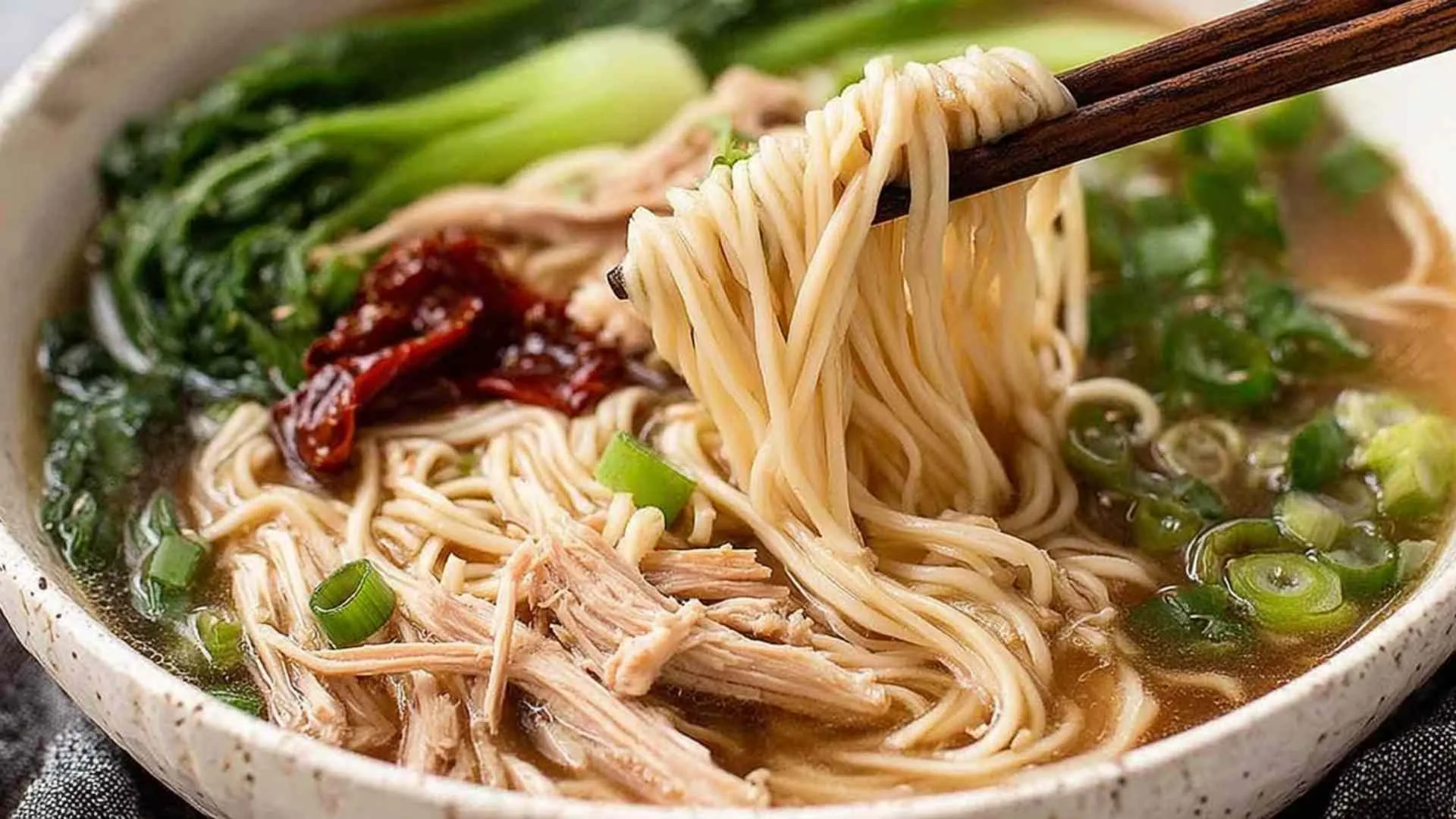
Chinese noodle soup is one of those weeknight meals that looks like it came from a restaurant but comes together in your own kitchen faster than you can order takeout. I still remember the first time I made a proper broth at home, standing at my Midwest farmhouse stove, skeptical that a handful of pantry staples could taste this good.
Growing up, Sunday soups were a ritual in my grandmother’s farmhouse. The whole house filled with that deep, savory smell before noon, and we all knew something good was coming. When I started working on this Chinese noodle soup recipe, I kept thinking back to that feeling. The broth here is built the same way she built everything: with patience, good aromatics, and a willingness to let flavors do the talking. What surprised me most was how little it takes to get there. A splash of Chinese cooking wine, fresh ginger, smashed garlic, and a good low-sodium stock are all you need to turn a simple pot into something that tastes genuinely special. Your kitchen is about to smell incredible.
Why This Chinese Noodle Soup Belongs in Your Weekly Rotation
After making this recipe more times than I can count, I can tell you with confidence that it earns its place in any home cook’s regular lineup. It is fast, forgiving, and deeply satisfying without asking much of you on a busy evening.
- Ready from start to finish in just 15 minutes
- Uses pantry staples you likely already have on hand
- Only 352 calories per bowl, light but filling
- No complicated techniques or special equipment required
- Works with any noodle, protein, or vegetable in your fridge
- Perfect for meal prep since the broth keeps beautifully for up to 4 days
Key Players in This Recipe
Every ingredient in this Chinese noodle soup has a specific job. Here is what each one brings to the bowl and why I would not leave any of them out.
Chicken Stock/Broth: The foundation of the whole dish. I always choose low-sodium so I stay in control of the salt level. Once soy sauce and cooking wine go in, a full-sodium broth can quickly become too salty to enjoy.
Chinese Cooking Wine (Shaoxing Wine): This is the single most important ingredient in the broth. Just one and a half tablespoons adds a round, savory depth that you cannot get from anything else. Without it, the broth tastes flat and one-dimensional. When I run out, dry sherry is the closest substitute I have found.
Light Soy Sauce: Brings the essential savory saltiness without turning the broth too dark. Start with the listed amount, taste, and adjust from there.
Fresh Garlic and Ginger: Smash the garlic and slice the ginger rather than mincing them. This lets the flavors infuse fully into the broth during simmering while making them easy to remove before serving. No gritty bits in your bowl.
Sugar: Just two teaspoons. It balances the saltiness of the soy sauce and rounds out the broth in a way that is subtle but noticeable if you skip it.
Toasted Sesame Oil: Optional, but I almost never leave it out. A small drizzle stirred in at the very end adds a nutty, fragrant finish that lifts the whole bowl.
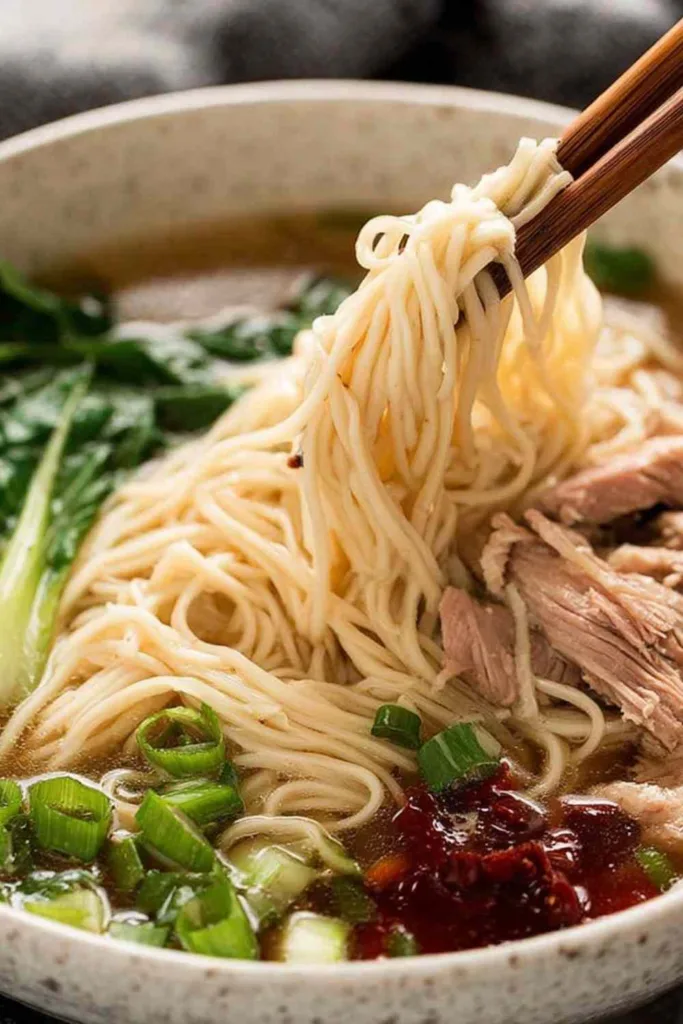
Fresh Egg Noodles: The traditional choice and the best texture for this soup. That said, I have made this with ramen, rice noodles, Hokkien, and even regular spaghetti when that was all I had. It always works.
Bok Choy: Minimal prep, great texture. Halve or quarter it, wash it well, and it only needs one minute of cooking. It stays slightly crisp and adds a mild freshness that balances the rich broth.
Cooked Chicken: Shredded rotisserie chicken is my go-to for weeknights. Zero extra cooking and it falls apart perfectly into the broth. Shrimp, tofu, or sliced pork all work well too.
How to Make Chinese Noodle Soup
Step 1. Combine the chicken stock, soy sauce, Chinese cooking wine, smashed garlic cloves, sliced ginger, and sugar in a medium saucepan. Set the heat to high, place the lid on, and bring the broth to a boil. Once boiling, reduce the heat to medium and let it simmer gently.
Step 2. Simmer the broth for 8 to 10 minutes. This is exactly enough time for the garlic and ginger to release their flavor fully without turning bitter. Do not rush this step.
Step 3. While the broth simmers, cook your noodles in a separate large pot according to the package directions. Fresh egg noodles typically need only 2 to 3 minutes. Pull them out just before they are fully done since they will continue softening in the hot broth.
Step 4. Prepare the bok choy by halving small heads and quartering larger ones. Wash each piece thoroughly between the leaves. Cook the bok choy directly in the simmering broth, or drop it into the noodle cooking water, for exactly one minute. It should be just tender with a little crunch still in the stem.
Step 5. Use a slotted spoon to fish out the garlic cloves and ginger slices from the broth and discard them. Stir in the sesame oil at this point if you are using it.
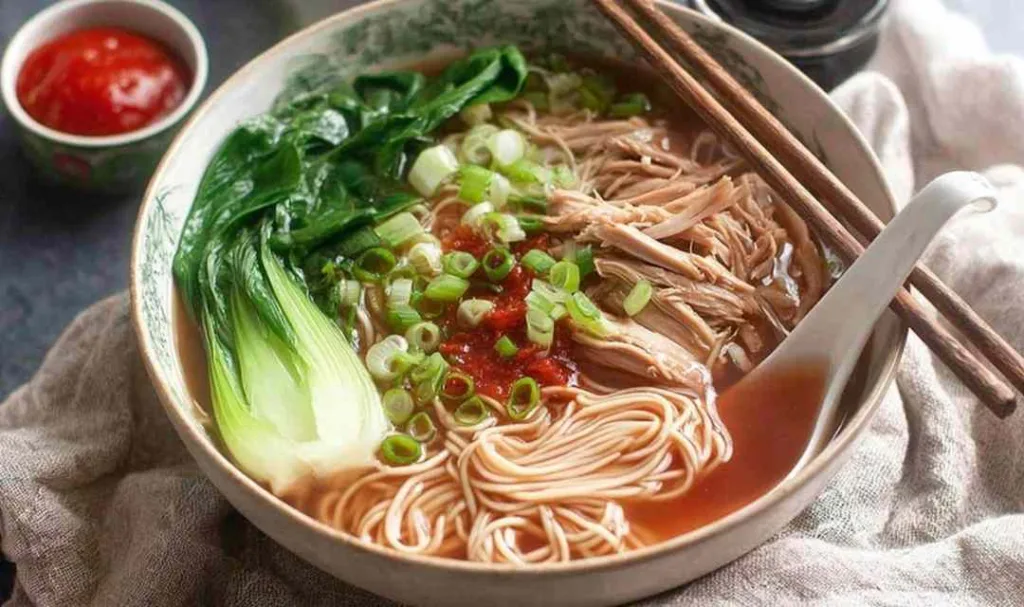
Step 6. Divide the cooked noodles between two bowls. Ladle the hot broth generously over the noodles. Arrange the bok choy and shredded chicken on top.
Step 7. Finish with sliced green scallions and serve immediately. This soup is best eaten right away while the broth is piping hot.
Important Notes
Chinese cooking wine is the ingredient that separates a flat, one-note broth from one that tastes like it came from a restaurant. The best non-alcoholic substitute is to swap some of the soy sauce for oyster sauce, which adds a similar savory depth.
Garlic and ginger: Smashing and slicing rather than mincing gives you maximum flavor infusion with easy removal before serving.
Noodles: Fresh or dried egg noodles, rice noodles, ramen, Hokkien, vermicelli, or zoodles for a low-carb version all work well in this broth.
Tips for Best Results
- Use low-sodium chicken stock so the finished broth is not overly salty after soy sauce and cooking wine are added
- Fresh noodles give a noticeably better texture than dried, though dried works in a pinch
- Cook noodles separately and add them to the bowls rather than into the broth pot so they do not absorb all the liquid
- For a low-carb version, skip the noodles entirely and double the vegetables
What to Serve With Chinese Noodle Soup
This soup is a satisfying meal on its own, but if you want to round out the table or add more variety, these pairings work particularly well.
- Easy Chinese Beef and Broccoli makes a wonderful side dish that shares the same flavor profile and turns this into a fuller spread
- Bang Bang Fried Rice adds a hearty, slightly spicy contrast that my family loves alongside a bowl of noodle soup
- Crispy Garlic Parmesan Brussels Sprouts bring a crunchy, roasted vegetable element that balances the soft noodles and rich broth
- Mushroom Spinach Scrambled Eggs work surprisingly well as a light protein side if you want to stretch the meal further
- Ginger Garlic Chicken Noodle Soup is worth bookmarking as a flavor variation to rotate in when you want something with a slightly different aromatic profile
Making the Most of Leftovers
The key to storing Chinese noodle soup well is keeping the broth and noodles in separate containers. Noodles left sitting in broth overnight will absorb most of the liquid and turn soft and bloated.
Refrigerator: Pour the cooled broth into an airtight container and refrigerate for up to 4 days. Store any leftover cooked noodles separately, tossed lightly with a small drizzle of sesame oil to prevent clumping.
Freezer: The broth freezes well for up to 3 months. I freeze it flat in zip-lock bags for easy stacking. Do not freeze cooked noodles as the texture suffers. Cook fresh noodles when you are ready to serve.
Reheating: Bring the broth back to a full simmer on the stovetop. Drop the cold noodles directly into the simmering broth for 30 to 60 seconds to heat through rather than microwaving them separately.
FAQs
Dry sherry is the closest substitute and works very well. For a non-alcoholic version, use extra chicken broth and add a tablespoon of oyster sauce to bring back the savory depth the wine provides.
Fresh thin egg noodles are the traditional choice and give the best texture. Ramen, rice noodles, Hokkien, vermicelli, and regular pasta all work in this broth.
Yes. Swap the chicken broth for vegetable broth, skip the chicken, and add tofu, mushrooms, or extra vegetables. The broth holds up well with plant-based swaps.
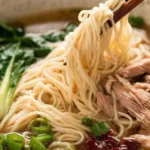
Chinese Noodle Soup
Ingredients
Equipment
Method
-
Combine chicken stock, soy sauce, Chinese cooking wine, smashed garlic, sliced ginger, and sugar in a medium saucepan. Bring to a boil over high heat, cover, then reduce to a gentle simmer.
-
Simmer the broth for 8 to 10 minutes to allow the garlic and ginger to fully infuse their flavor.
-
Meanwhile, cook noodles in a large pot according to package directions. Drain and set aside.
-
Halve or quarter the bok choy and wash thoroughly. Cook in the simmering broth or noodle water for 1 minute until just tender with a little crunch remaining.
-
Remove and discard the garlic and ginger from the broth. Stir in sesame oil if using.
-
Garnish with sliced scallions and serve immediately.