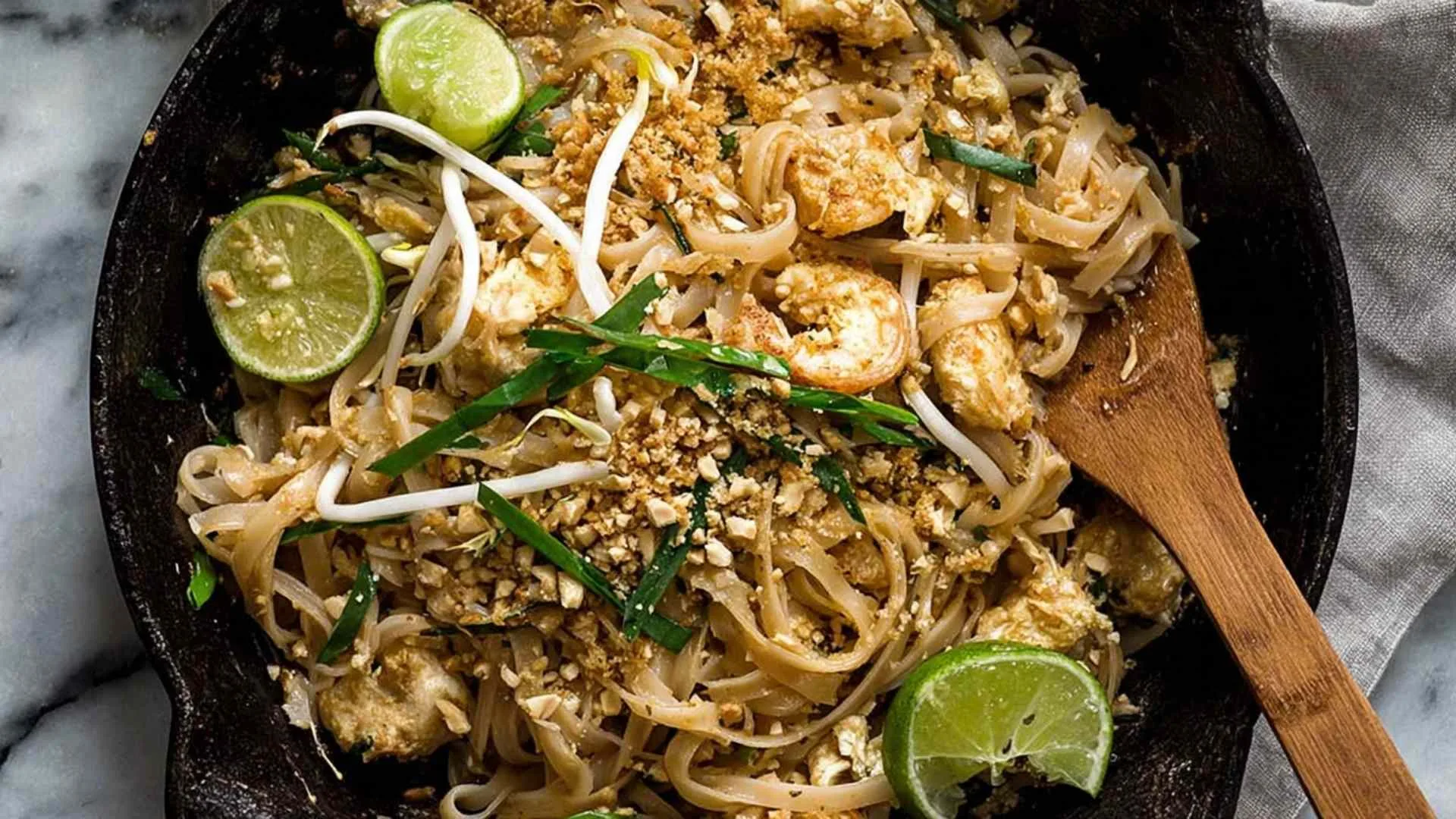
Chicken Pad Thai is one of those dishes I used to think was strictly a “restaurant thing” something that required a blazing-hot professional wok and years of training. Then one rainy Tuesday evening I decided to try making it at home, and honestly, it changed everything. The first bite took me straight back to my favorite little Thai spot downtown, except I was standing in my own kitchen in my flour-dusted apron.
Growing up, I cooked big satisfying meals in a farmhouse kitchen where nothing was ever wasted and everything had to come together fast. Mama always said a good cook makes do with what is on the shelf. That spirit is exactly what I love about this chicken Pad Thai recipe. It is weeknight-friendly, built from ingredients you can grab at any regular grocery store, and it comes together in just 30 minutes flat. The slippery rice noodles, that signature sweet-savory punch, the crunch of peanuts, and the bright squeeze of lime at the end it is all here, no plane ticket required. Your kitchen is about to smell incredible.
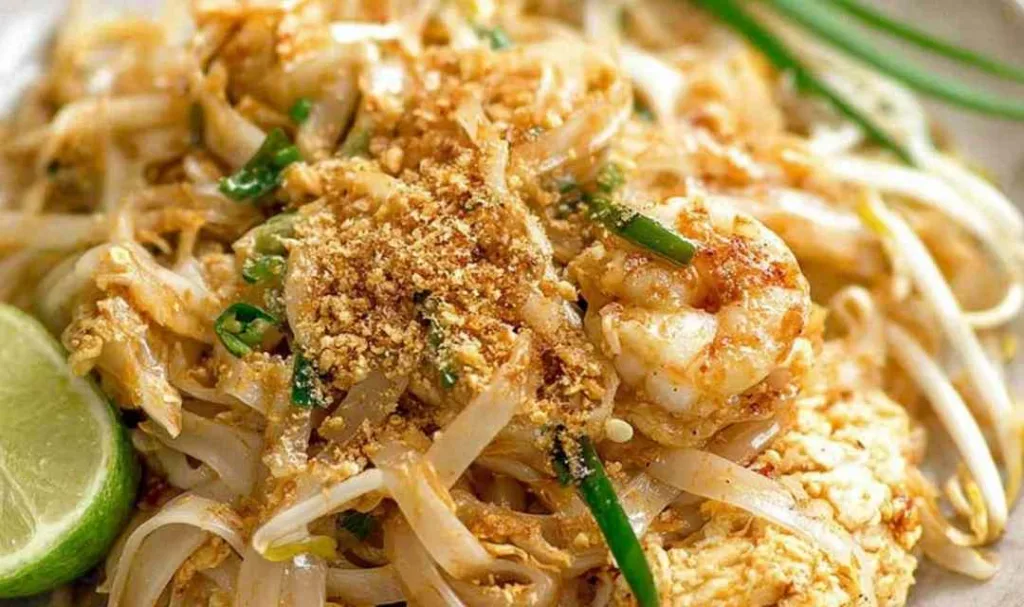
Why This Chicken Pad Thai Belongs in Your Recipe Box
Growing up in the Midwest, Thai food was not something we stumbled into often. But the moment I discovered Pad Thai, I knew it deserved a permanent spot in my rotation. It hits every note I look for in a weeknight meal: quick, satisfying, and endlessly adaptable.
Here is exactly why this recipe works every single time:
- Tastes just like takeout from a great Thai restaurant
- Less oily than restaurant versions because you control the oil
- Every ingredient is available at regular supermarkets, no specialty store required
- No special equipment needed a large non-stick pan does the job perfectly
- Ready in 30 minutes from start to finish
- Works with chicken, shrimp, tofu, or any protein you have on hand
Key Players in This Recipe
Understanding what each ingredient contributes transforms you from a cook who follows steps into one who truly understands the dish. Here is a breakdown of the building blocks behind this chicken Pad Thai.
Rice stick noodles are the heart of the dish. They absorb the sauce beautifully and deliver that slippery, satisfying chew. I always choose Chang’s brand because they hold their shape better during stir-frying and are far less prone to breaking than thinner varieties.
Tamarind puree is the soul of authentic Pad Thai. It provides that distinctive tangy, slightly fruity depth that no other ingredient can replicate. In my kitchen I always reach for the puree or paste, not the concentrate, which is far more intense and throws off the whole balance.
Fish sauce adds the savory umami backbone that makes this sauce so complex and crave-worthy. It may smell pungent straight from the bottle, but once it hits the heat and blends with the other ingredients it becomes absolutely essential. Light soy sauce can substitute in a pinch, though you will lose a little depth.
Brown sugar balances tamarind’s tartness and fish sauce’s salt. I always pack the tablespoon firmly loosely measured sugar will leave the sauce tasting flat.
Oyster sauce rounds everything out with a mild sweetness and a hint of brine. It adds body and subtle richness that ties the sauce together.
Firm tofu provides beautiful texture contrast and soaks up the sauce like a sponge. It must be firm tofu soft tofu will fall apart in the pan and turn the whole dish mushy.
Bean sprouts add freshness and crunch that cuts through the richness of the sauce. I add them toward the end so they stay bright and crisp rather than wilting into the noodles.
Garlic chives bring a mild garlicky flavor with a grassy freshness. If you cannot find them, chopped scallions work well as a substitute without losing too much of the dish’s character.
Lime wedges are non-negotiable at the table. That final squeeze of fresh lime brightens every single ingredient and is what makes the dish truly sing.
How to Make Chicken Pad Thai Step by Step
Step 1. Start by soaking your rice noodles. Place them in a large bowl, pour over plenty of boiling water, and soak for 5 minutes. Drain in a colander and rinse quickly under cold water. Never leave them sitting longer than 10 minutes — they continue softening even out of the water and will turn gummy in the pan.
Step 2. While the noodles soak, mix your sauce. Combine the tamarind puree, brown sugar, fish sauce, and oyster sauce in a small bowl and stir until the sugar dissolves. Having the sauce ready before cooking is the single most important prep step in this recipe. Once the pan is hot, things move very fast.
Step 3. Prep all remaining ingredients before turning on the stove. Slice the chicken thinly, chop the garlic and onion, whisk the eggs lightly, and measure out the bean sprouts, tofu, garlic chives, and peanuts. In my kitchen I lay everything out in small bowls within arm’s reach this is what separates a smooth stir-fry from a stressful one.
Step 4. Heat 2 tablespoons of oil in a large non-stick pan over high heat until shimmering. Add the garlic and onion and cook for 30 seconds, stirring constantly. You are building fragrance here, not browning.
Step 5. Add the thinly sliced chicken and cook for about 1 and a half minutes, stirring frequently, until mostly cooked through. Thin slices cook fast, so keep them moving.
Step 6. Push the chicken to one side of the pan and pour the whisked eggs onto the other side. Scramble gently with a wooden spoon, adding a tiny splash of extra oil if the pan feels dry, then mix the eggs into the chicken once mostly set. I have found that keeping the egg and protein separate for just a moment gives you better texture throughout the finished dish.
Step 7. Add the bean sprouts, tofu, drained noodles, then pour the sauce over everything. Toss gently for about 1 and a half minutes until the sauce is absorbed and the noodles look glossy and fully coated. If sauce is still pooling in the pan, toss for another 30 seconds.
Step 8. Add the garlic chives and half the peanuts. Toss quickly for 20 to 30 seconds, then remove from heat immediately. Overcooking the chives dulls their color and flavor.
Step 9. Serve immediately, topped with the remaining peanuts, lime wedges on the side, a pinch of ground chili if desired, and extra bean sprouts. Always squeeze that lime right before eating it makes a night-and-day difference to the finished bowl.
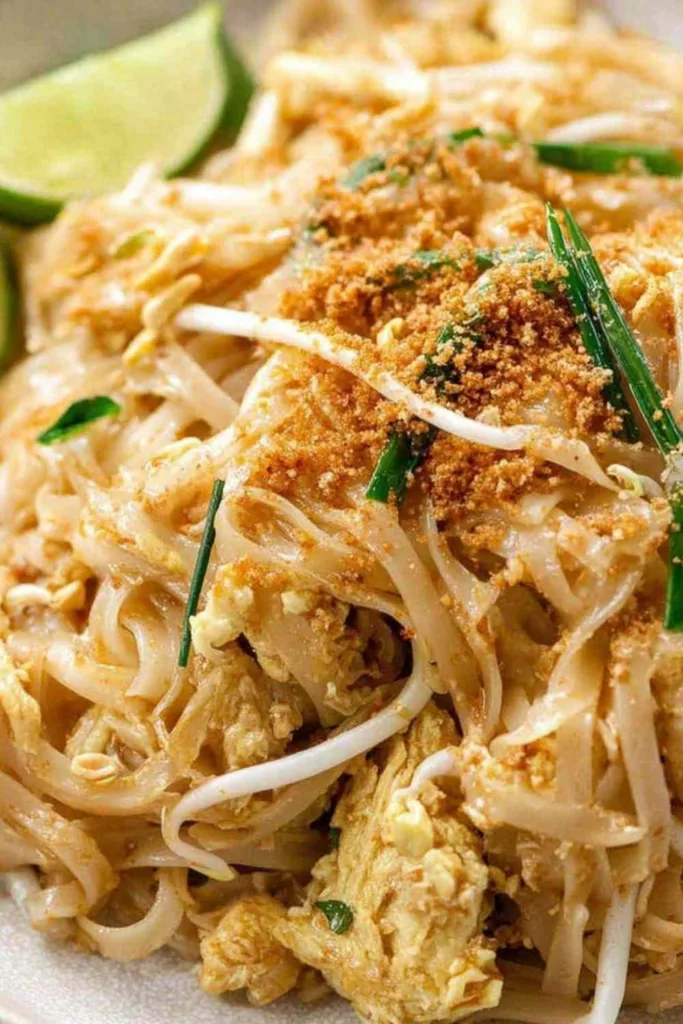
Keeping This Chicken Pad Thai Fresh
One of the joys of this recipe is that it reheats surprisingly well, which is not always the case with noodle dishes.
For refrigerator storage, transfer leftovers to an airtight container as soon as the dish cools down. It keeps well for up to 3 days and the flavors actually deepen a little overnight. The noodles will absorb more sauce and firm up slightly, but a quick reheat brings everything back to life.
When reheating, the stovetop is far and away the best method. Heat a non-stick pan over high heat, add the Pad Thai, and splash in 1 to 2 tablespoons of water. Toss for about 2 minutes until hot and the noodles are loose and glossy again. The water creates just enough steam to rehydrate the noodles without making them greasy. The microwave is not recommended — it tends to make the noodles gummy and unevenly hot.
Freezing Pad Thai is not something I typically recommend. Rice noodles do not hold up well through a freeze-thaw cycle and become quite soft once reheated. For the best experience, make just what you will eat within three days.
What to Serve with Chicken Pad Thai
Pad Thai is a complete meal on its own, but if you are building a spread or hosting friends, a few well-chosen additions create a fantastic feast.
- Thai Peanut Chicken makes a wonderful companion — the rich peanut sauce shares the same flavor profile and lets your guests mix and match proteins at the table.
- Bang Bang Fried Rice rounds out an Asian-inspired spread with its sweet-spicy sauce and satisfying texture — a great option if you are feeding a hungry crowd.
- Sweet Chili Chicken Bowl brings a fresh and vibrant contrast alongside Pad Thai, especially when you want a lighter second dish on the table.
- Thai Grilled Chicken (Gai Yang) is a natural partner from the same cuisine — smoky, herb-marinated chicken with a dipping sauce that pairs beautifully with the noodles.
- Coconut Chicken Brothy Rice offers a gentle, aromatic counterpoint that works especially well as a starter or light side when serving Pad Thai as the main event.
FAQs
Yes I use a ketchup-based substitute in a pinch: 1 tbsp ketchup, 2 tbsp brown sugar, 2 tbsp fish sauce, 2 tsp oyster sauce, 1 tsp dark soy sauce, and 2 tbsp rice vinegar. It captures the sweet-sour balance well without tamarind.
Chang’s dried rice stick noodles are strongly recommended because they are less prone to breaking during stir-frying. If you are using Erawan brand, soak in room-temperature tap water for 40 to 45 minutes and skip the boiling water entirely do not boil Erawan noodles.
You can mix the sauce and prep all your ingredients up to a day in advance, which makes the actual cooking incredibly fast. Cooking the full dish ahead of time is not recommended since the noodles are best eaten straight from the pan.