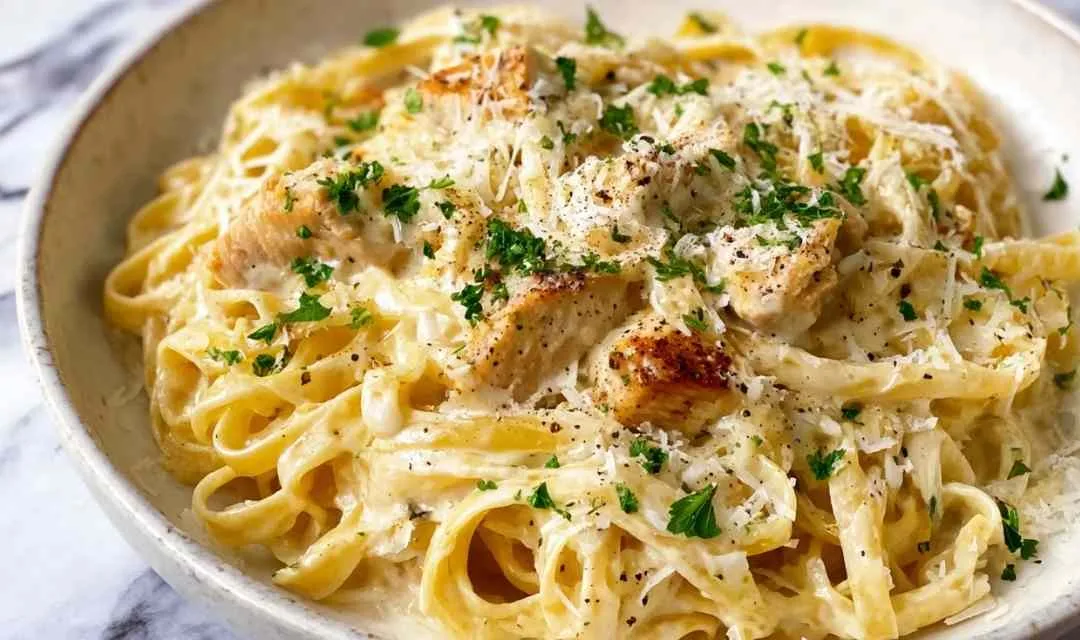
Chicken Alfredo Pasta is one of those recipes that turns an ordinary weeknight into something worth sitting down for. I have been making this dish for longer than I can remember, and every single time I melt the butter and watch the Parmesan fold into the cream, I am right back in my grandmother’s farmhouse kitchen on a cold Sunday in the Midwest. She never called it Alfredo. She just called it the pasta people came back for seconds of.
Growing up, I learned from watching more than reading. My grandmother had a way of cooking where she listened to the pan and adjusted by instinct. The sound of the butter sizzling, the moment the garlic smell shifted from sharp to soft, the way the sauce moved when she swirled the skillet. Those are the details no recipe card ever captures. This chicken Alfredo pasta carries all of those lessons. It uses simple ingredients, comes together in about 30 minutes, and delivers a sauce so silky and rich you will never reach for a jar again. Pull out your skillet because your kitchen is about to smell incredible.
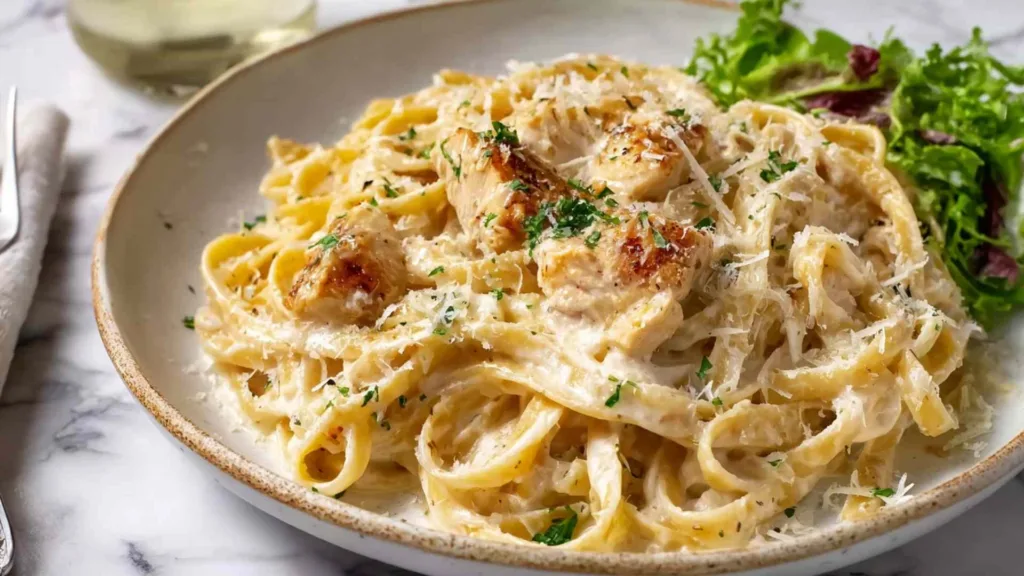
Why This Chicken Alfredo Pasta Belongs in Your Recipe Box
I have made versions of this dish for family gatherings, quick weeknight dinners, and everything in between. What keeps me coming back to this particular method is how dependable it is. The sauce behaves the same way every time when you follow the right steps, and the whole thing is on the table faster than most takeout.
- Rich, creamy homemade Alfredo sauce made entirely from scratch with no jarred shortcuts needed
- Ready in about 30 minutes, making it a realistic option even on busy evenings
- Uses simple pantry staples including butter, cream, Parmesan, and pasta that most home cooks already have on hand
- One skillet handles both the chicken and the sauce, which means less cleanup at the end of the night
- Classic Italian-American comfort food that works equally well for a casual Tuesday dinner or a dinner party main course
- Easily adaptable to different pasta shapes or with added vegetables depending on what you have available
Key Players in This Recipe
Knowing what each ingredient does helps you understand why certain substitutions work and others do not. Here is how I think about each component when I make this chicken Alfredo pasta.
Fettuccine (8 oz): The wide, flat shape of fettuccine is the traditional match for Alfredo sauce because it holds the creamy coating on every strand. I always cook it just to al dente, knowing it will continue to soften slightly once it hits the warm sauce.
Boneless, skinless chicken breasts (2): Chicken breast cooks quickly and slices into clean, neat pieces that sit well over pasta. The single most important prep step is patting the surface completely dry before seasoning. Moisture on the surface prevents the crust you are aiming for.
Unsalted butter, European-style preferred (7 tbsp): European-style butter has a slightly higher fat content that helps the sauce stay smooth and stable. Standard unsalted butter works fine if that is what you have.
Heavy cream (1 cup): Heavy cream is not negotiable here. Its fat content is what creates a coating, silky sauce without any added thickeners. Milk and half-and-half both lack the fat needed to hold the sauce together and will produce a thin, broken result.
Freshly grated Parmesan (1 cup): Always grate your own Parmesan for this dish. Pre-shredded cheese contains anti-caking agents that prevent it from melting smoothly, and you will end up with a grainy sauce. A microplane or the fine side of a box grater works perfectly.
Garlic (2 cloves, minced): Two cloves sauteed briefly in butter adds a warm, savory depth without overpowering the delicate cream and cheese. Fresh garlic makes a noticeable difference here compared to jarred.
Ground nutmeg (1/4 tsp): A small amount of nutmeg in a cream sauce is a classic technique that adds subtle warmth. You cannot identify it as nutmeg, but you would notice something missing if it were left out.
How to Make Chicken Alfredo Pasta Step by Step
I have cooked this dish enough times that the steps feel natural, but the sequence and a few small details are what separate a good Alfredo from a great one.
Step 1. Start the pasta water first. Bring a large pot of generously salted water to a boil before you do anything else. Getting this going early means the pasta and chicken finish close to the same time, which makes final assembly smooth.
Step 2. Cook the fettuccine. Add the pasta and cook until just al dente, 8 to 10 minutes. Before draining, scoop out at least 1/2 cup of the cooking water. That starchy water is essential for adjusting the sauce consistency later and should not be skipped.
Step 3. Dry and season the chicken. Pat both sides of the chicken breasts completely dry with paper towels. Season with 3/4 teaspoon kosher salt and 1/4 teaspoon black pepper. Drying the surface is the step most people skip and the reason many home-cooked chicken pieces end up gray instead of golden.
Step 4. Sear the chicken. Heat 2 tablespoons of neutral oil in a large non-nonstick skillet over medium-high heat until shimmering, about 2 to 3 minutes. Add the chicken and cook without moving it for 5 to 7 minutes. Flip, add 1 tablespoon of butter between the breasts, and cook another 5 to 7 minutes until cooked through to an internal temperature of 165 degrees F.
Step 5. Rest and slice. Transfer the chicken to a cutting board and tent loosely with foil. Let it rest for at least 5 minutes, then slice into pieces. Resting allows the juices to redistribute, keeping the meat moist when you plate it.
Step 6. Start the sauce in the same pan. Without wiping out the skillet, reduce the heat to medium and melt the remaining 6 tablespoons of butter. Those browned bits left behind from the chicken carry deep flavor and should be scraped up as the butter melts. Add the garlic and cook, stirring, for about 1 minute until fragrant.
Step 7. Build the Alfredo sauce. Pour in the heavy cream, then whisk in the Parmesan, nutmeg, remaining 1/4 teaspoon salt, and 1/4 teaspoon black pepper. Simmer gently for 3 to 4 minutes, stirring frequently, until the sauce thickens enough to coat a spoon. If the sauce looks too thick, add the reserved pasta water a few tablespoons at a time until it reaches the right consistency.
Step 8. Combine and serve. Add the drained fettuccine directly to the sauce and toss with tongs until every strand is coated. Divide among bowls, top with sliced chicken, and finish with extra Parmesan, chopped fresh parsley, and black pepper.
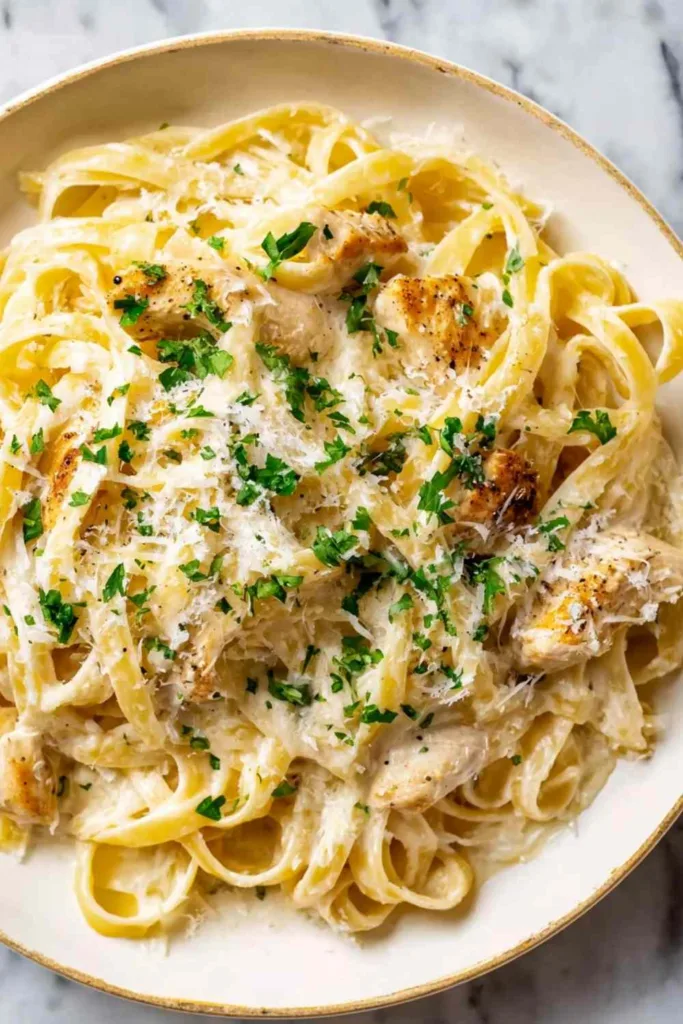
How to Store This Chicken Alfredo Pasta and Enjoy It Later
Alfredo pasta is at its absolute best the moment it comes off the stove. The sauce is at peak creaminess and the pasta is perfectly coated. That said, leftovers are worth saving and reheating properly makes a real difference.
I store leftovers in an airtight container in the refrigerator and use them within 3 days. The sauce will thicken considerably as it sits and gets absorbed into the pasta overnight, which is completely normal. When reheating, I always use the stovetop over low heat with a splash of heavy cream or chicken broth to loosen the sauce as it warms. Stir frequently and do not rush the process. The microwave also works if you use 30-second bursts and stir in between, but the stovetop gives a noticeably better result.
Freezing cream-based pasta is something I do not recommend. The sauce breaks apart when thawed and turns grainy, and the pasta becomes soft and unpleasant. If you want to meal prep components ahead, cook and freeze the chicken separately and make the sauce fresh when you are ready to serve.
What to Serve with Chicken Alfredo Pasta
Because this dish is rich and filling on its own, I like to balance the plate with something lighter or with a bit of texture contrast. Here are the sides my family reaches for most often.
- Roasted broccoli is my first choice every time. The slight char and mild bitterness cut right through the richness of the Alfredo sauce. If you enjoy that combination, you will also love this Garlic Parmesan Baked Eggplant as a vegetable side.
- A light green salad with a lemon vinaigrette brings freshness and brightness to balance the heavy cream sauce.
- Garlic bread is a classic pairing that gives you something to scoop up any extra sauce left in the bowl. This Perfect Parmesan Garlic Bread from our kitchen is an easy upgrade.
- Steamed or roasted asparagus adds a clean, green element and pairs well with the Parmesan flavors already in the dish.
- If you want a heartier complete meal, this Creamy Rotisserie Chicken Broccoli Pasta is a great variation to have in rotation alongside this recipe.
FAQs
Yes. While fettuccine is traditional, linguine, pappardelle, penne, and rigatoni all work well. Choose a shape that can hold onto a thick, creamy sauce and cook it to al dente regardless of which you pick.
This almost always comes down to one of two things: pre-shredded Parmesan that contains anti-caking agents, or heat that was too high when adding the cheese. Always grate your own Parmesan fresh and keep the heat at medium to medium-low when whisking it into the cream.
The sauce is best made fresh. You can cook and refrigerate the chicken separately up to a day ahead, then make the sauce and toss everything together just before serving. That approach gives you a head start without sacrificing quality.
Classic Chicken Alfredo Pasta
Ingredients
Equipment
Method
-
Bring a large pot of generously salted water to a boil. Add the fettuccine and cook until al dente, 8 to 10 minutes. Reserve 1/2 cup of the pasta cooking water before draining.
-
Pat both sides of the chicken breasts completely dry with paper towels. Season with 3/4 tsp kosher salt and 1/4 tsp black pepper.
-
Heat 2 tbsp neutral oil in a large non-nonstick skillet over medium-high heat until shimmering, 2 to 3 minutes. Add the chicken and cook without moving it for 5 to 7 minutes. Flip, add 1 tbsp butter between the breasts, and cook another 5 to 7 minutes until the internal temperature reaches 165 degrees F.
-
Transfer chicken to a cutting board, tent loosely with foil, rest for 5 minutes, then slice.
-
Without wiping the skillet, reduce heat to medium and melt the remaining 6 tbsp butter, scraping up any browned bits. Add the garlic and cook for about 1 minute until fragrant.
-
Whisk in the heavy cream, Parmesan, nutmeg, remaining 1/4 tsp salt, and 1/4 tsp black pepper. Simmer for 3 to 4 minutes, stirring frequently, until the sauce thickens enough to coat a spoon. Add reserved pasta water a few tablespoons at a time if the sauce is too thick.