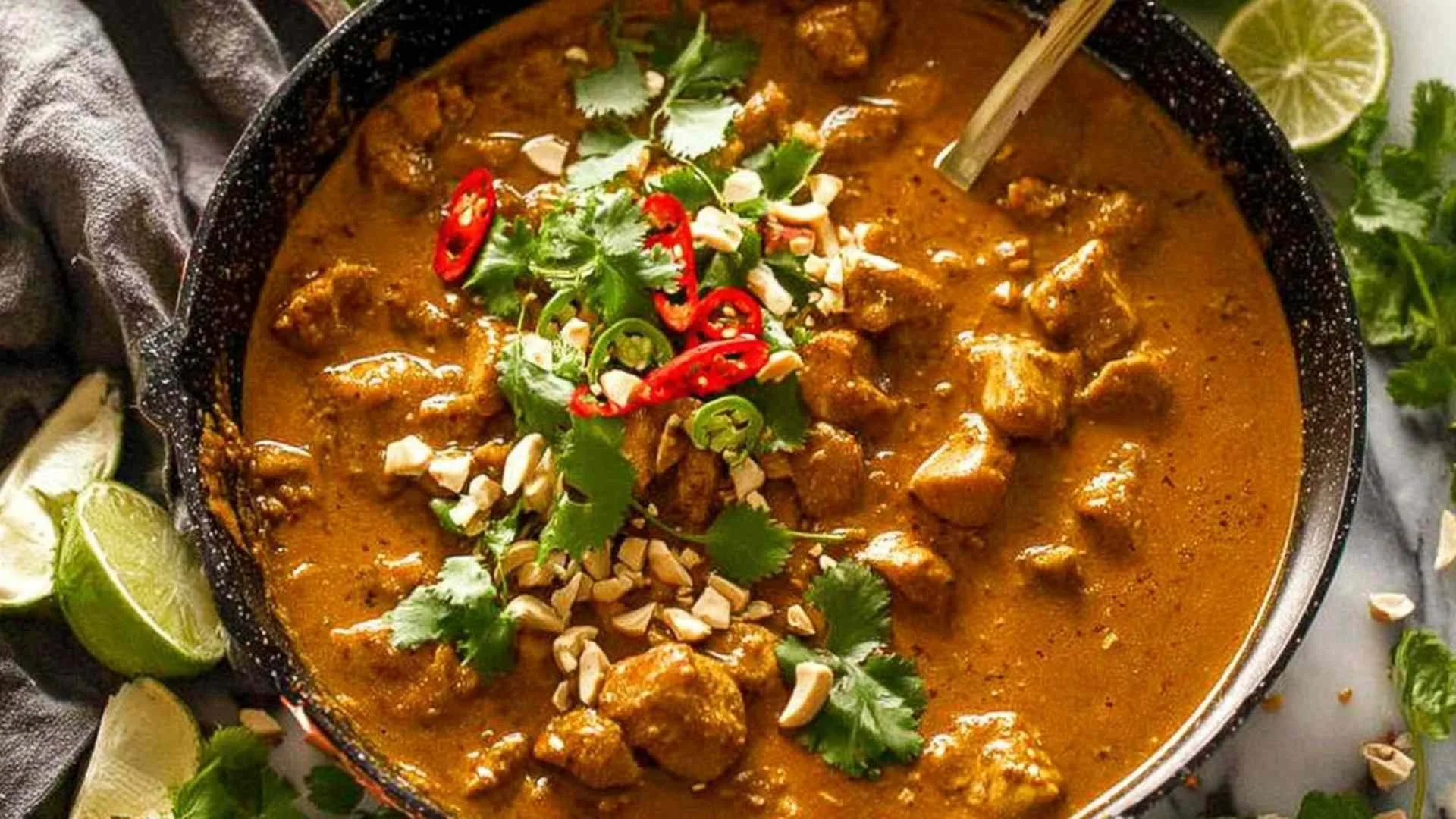
If you have been craving a rich, deeply spiced Chicken Satay Curry Malaysian recipe but thought you needed a restaurant to get it right, this one is going to change your evening. I am Nonna Betty Harper, and I have been cooking world-inspired dishes from my little Midwest farmhouse kitchen for decades. The first time I made this, my daughter-in-law set her fork down mid-bite and said she thought I had ordered takeout. That kind of reaction keeps me cooking.
It started on a rainy Sunday when my granddaughter brought home a bag of roasted peanuts from the farmers market and challenged me to do something creative. I remembered a Malaysian satay dish from a friend’s dinner party years ago, all warm spice and toasted peanut depth. By suppertime, the whole farmhouse smelled like something truly special. This Chicken Satay Curry Malaysian recipe has been on our family dinner rotation ever since. Your kitchen is about to smell incredible.
Why This Malaysian Satay Curry Belongs in Your Recipe Box
Betty has always believed that great food should be honest. Real ingredients, real technique, and real flavor without a trip to a specialty store. This Chicken Satay Curry Malaysian recipe delivers on all three, and it comes together in a single skillet in under 45 minutes.
- Every spice in the homemade satay seasoning is already sitting in your pantry
- Ready in under 45 minutes including marinating time, which makes it practical on a weeknight
- Packs 40 grams of protein per serving, so it is as nourishing as it is satisfying
- Works with chicken thighs, breast, shrimp, or beef for an adaptable weeknight dinner
- No blender paste jars, no shortcuts; this is scratch cooking at its most rewarding
- Tastes even better the next day, which makes it one of my favorite meal prep recipes
Key Players in This Chicken Satay Curry Malaysian Recipe
Knowing what each ingredient brings to the dish is the difference between following a recipe and truly owning it.
Chicken thigh fillets bring more fat and flavor than breast, which keeps every bite juicy even after a long simmer in rich sauce. I always choose thighs for this recipe and cut them into generous pieces so they hold their shape.
Homemade satay seasoning blend is the backbone of this entire recipe. It marinates the chicken and builds the base of the sauce at the same time. In my kitchen, I mix it fresh each time because the aroma alone is half the experience.
Roasted unsalted peanuts do double duty here. Half get blended into the sauce for creamy depth, and the other half are stirred in at the end for satisfying little crunch pockets throughout each bowl. Always go unsalted so you control the final seasoning.
Full-fat coconut milk is non-negotiable for me. The fat carries the coconut flavor, and light versions produce a noticeably thinner sauce that lacks the richness this curry deserves.
Kecap manis is a thick Indonesian sweet soy sauce that adds a gorgeous dark color and gentle sweetness. If you cannot find it at your local store, combine equal parts soy sauce and brown sugar and simmer until it thickens to a syrupy consistency. It works perfectly as a substitute.
Makrut lime leaves or lemongrass is the ingredient that takes this from a good homemade curry to something that genuinely tastes like a restaurant kitchen. I keep makrut lime leaves in my freezer at all times because they infuse a floral citrus note that the sauce cannot replicate any other way.
Birds eye chilies deliver a warm noticeable heat without overwhelming the dish. Start with three if you prefer mild and work up to six for a proper kick. You can always stir in a pinch of cayenne at the end to adjust.
If you enjoy bold peanut sauces, my <a href=”https://nonnafood.com/thai-peanut-chicken-creamy-recipe/”>Thai Peanut Chicken</a> is another weeknight favorite built around that same creamy, nutty flavor profile.
How to Make Chicken Satay Curry Malaysian Style
The method breaks into three phases: a flavor-packed marinate, a quick sear that builds color, and a low simmer that brings the sauce together into something your family will circle the stove for.
Step 1. Combine coriander, cumin, turmeric, paprika, chili powder, curry powder, salt, and sugar in a small bowl. Mix well. I have found that even a brief dry mix helps the spices bloom once they hit the pan.
Step 2. Toss the chicken thigh pieces with 3 and a half tablespoons of the seasoning blend and the grated onion. Let it rest at least 20 minutes, but if you can marinate overnight in the fridge, the depth of flavor is noticeably better for this Chicken Satay Curry Malaysian recipe.
Step 3. Heat one tablespoon of oil in a non-stick skillet over high heat. Cook the chicken in two batches until browned all over but still raw in the center. This caramelization is pure flavor. Transfer to a bowl, cover loosely, and keep warm.
Step 4. Reduce the heat to medium and add the second tablespoon of oil to the same skillet. Add the chopped chilies, diced onion, and minced garlic. Saute for about 2 minutes until the onion is soft and translucent.
Step 5. Add the remaining satay seasoning and cook for one minute while stirring constantly. Through trial and error I learned this step changes the sauce dramatically because it toasts the ground spices and deepens the base flavor.
Step 6. Transfer the skillet mixture to a blender with the chicken stock and half a cup of the peanuts. Blend until mostly smooth. A few peanut pieces remaining is fine. Pour the mixture back into the skillet.
Step 7. Stir in the remaining peanuts, kecap manis, dark soy sauce, coconut milk, and peanut butter until fully combined.
Step 8. Crush the makrut lime leaves in your hand to release their oils and add them to the skillet, or add the smashed lemongrass stalk. Return the browned chicken to the sauce.
Step 9. Bring everything to a gentle simmer, reduce the heat to medium-low, and cook uncovered for 15 minutes until the sauce thickens and coats the chicken.
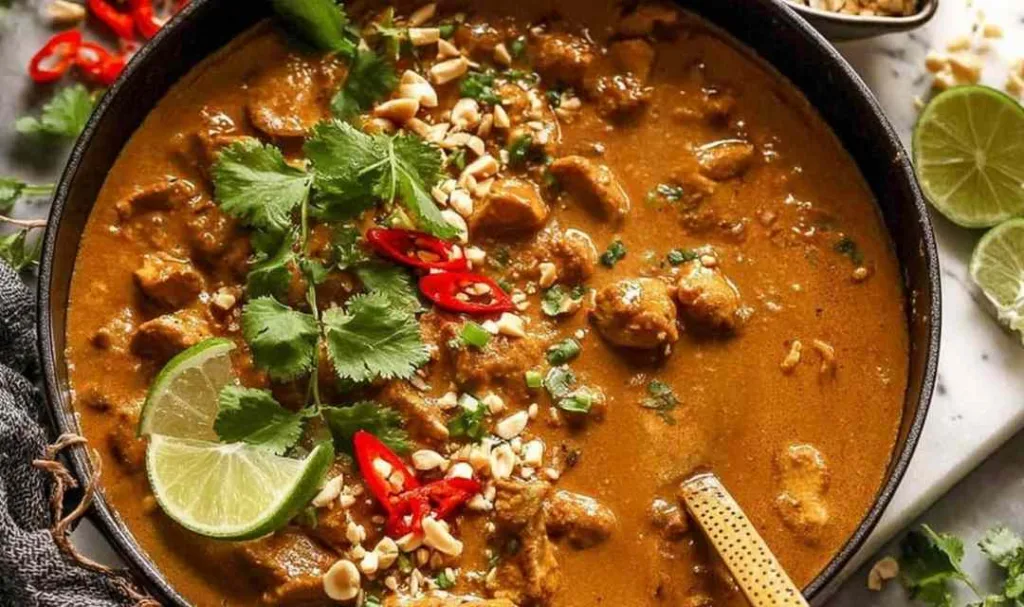
Step 10. Add lime juice to taste. Serve over jasmine rice and top with chopped peanuts, fresh cilantro, and extra chili if you like.
Important Notes
Chili powder for US readers: This recipe calls for pure ground chili, not the US blend labeled “Chili Powder” with one L, which contains cumin and other spices. Substitute with cayenne pepper for the same clean heat.
Kecap manis substitute: Combine a quarter cup of soy sauce with a quarter cup of brown sugar in a small pan. Simmer until it reaches a maple syrup consistency and cool before using. It keeps in the fridge for weeks.
Dark soy sauce deepens the color of the finished sauce to that rich brown you see in restaurant curries. Regular soy sauce works as a substitute but the sauce will look lighter. The flavor difference is minor.
Chicken cuts: Thighs are the best option for this dish. If you use breast or tenderloin, reduce the simmer time to 5 minutes only to prevent the leaner meat from drying out.
Tips for the Best Results
Marinate overnight when you have the time. Even 20 minutes works, but an overnight soak transforms the flavor of the chicken.
Use a non-stick skillet throughout. The spice paste on the chicken will cling and scorch on stainless or cast iron if the heat is not managed carefully.
Always reach for full-fat coconut milk. Light coconut milk produces a thinner, less luxurious sauce.
Makrut lime leaves or lemongrass are the secret behind restaurant-quality peanut curry. Do not skip both. Pick whichever you can find and use it.
For a vegan version, swap the chicken for pressed and seared firm tofu and replace the chicken stock with vegetable broth.
How to Store and Reheat This Curry
I typically store leftovers in a glass airtight container in the refrigerator where they stay fresh for up to 4 to 5 days. The peanut coconut sauce firms up slightly when cold, so give it a stir as it warms back up.
This Malaysian curry freezes well. Betty’s freezing method is simple: let the curry cool completely, portion into freezer bags or containers, press out excess air, and freeze for up to 3 months. Thaw overnight in the refrigerator before reheating.
For the best texture, reheat on the stovetop over medium-low heat with a small splash of water or chicken stock if the sauce has thickened too much. The microwave works in a pinch heated in 60 second intervals with a stir in between. Either way, the flavor holds up beautifully.
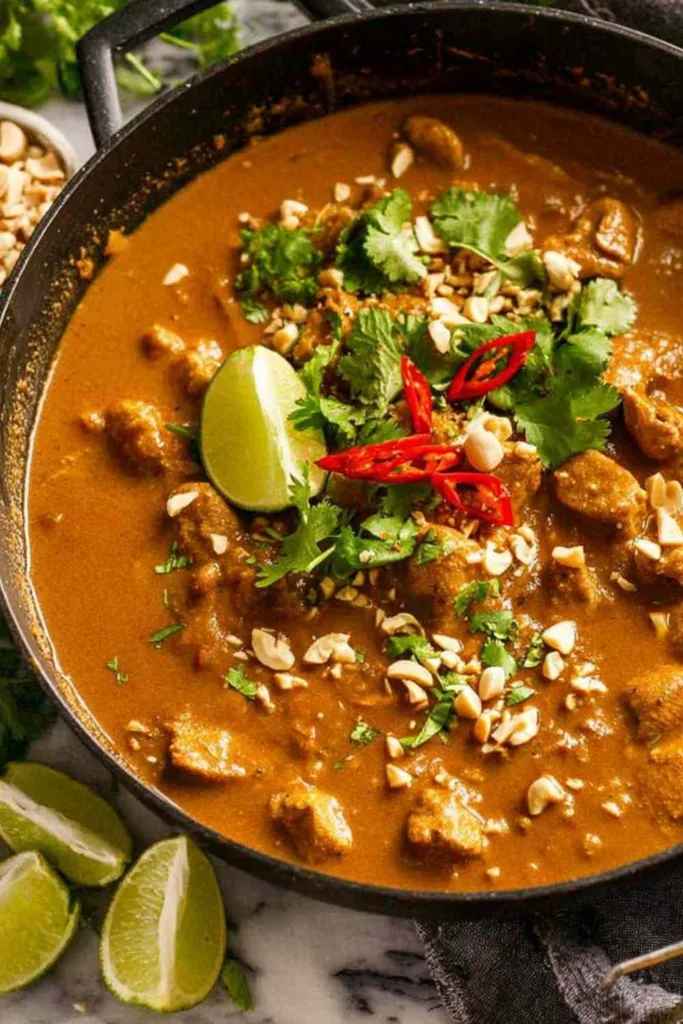
What to Serve With Chicken Satay Curry
Building the full plate around this curry is almost as satisfying as eating it. Here are the sides Betty reaches for most often:
- Coconut Chicken Brothy Rice makes a flavorful base that complements the peanut sauce beautifully.
- Lemon Rice adds a bright citrus contrast that cuts through the richness of the coconut curry.
- Fresh sliced cucumber and tomato wedges served plain with no dressing, a very traditional Southeast Asian accompaniment that cools each bite.
- Crispy Garlic Parmesan Brussels Sprouts for a roasted vegetable side that adds texture and substance to the plate.
- Maple Glazed Carrots and Brussels Sprouts bring a gentle sweetness that plays off the savory curry.
- Asian Mango Glazed Chicken if you are feeding a crowd and want a lighter second protein option alongside the curry.
FAQs
Yes, and I recommend it. The flavors deepen significantly after a night in the fridge. Make it up to 2 days ahead, store in an airtight container, and reheat gently on the stovetop with a splash of stock.
Thigh fillets are my first choice every time. Their fat content keeps the meat juicy during the simmer. If you use breast or tenderloin, pull the chicken out after 5 minutes to prevent dryness.
Simmer a quarter cup of regular soy sauce with a quarter cup of brown sugar until it thickens to a syrup. Cool before using. It works perfectly in this recipe.
Chicken Satay Curry Malaysian
Ingredients
Equipment
Method
-
Combine coriander, cumin, turmeric, paprika, chili powder, curry powder, salt, and sugar in a small bowl. Mix well to form the satay seasoning.
-
Toss chicken thigh pieces with 3.5 tablespoons of the satay seasoning and the grated onion. Marinate for at least 20 minutes, or overnight in the fridge for best results.
-
Heat 1 tablespoon of oil in a non-stick skillet over high heat. Cook the chicken in 2 batches until browned all over but still raw in the center. Transfer to a bowl, cover, and keep warm.
-
Reduce heat to medium. Add the remaining tablespoon of oil to the same skillet. Saute the chopped chilies, diced onion, and minced garlic for about 2 minutes until the onion is translucent.
-
Add the remaining satay seasoning to the skillet and cook for 1 minute, stirring constantly.
-
Transfer the skillet mixture to a blender. Add the chicken stock and half a cup of the peanuts. Blend until mostly smooth. Pour back into the skillet.
-
Stir in the remaining peanuts, kecap manis, dark soy sauce, coconut milk, and peanut butter until fully combined.
-
Crush the makrut lime leaves in your hand to release their oils and add to the skillet, or add the smashed lemongrass stalk. Return the browned chicken to the sauce.
-
Bring to a gentle simmer, reduce heat to medium-low, and cook uncovered for 15 minutes until the sauce thickens and coats the chicken.
-
Add lime juice to taste. Serve over jasmine rice and garnish with chopped peanuts, fresh cilantro, and extra chili if desired.