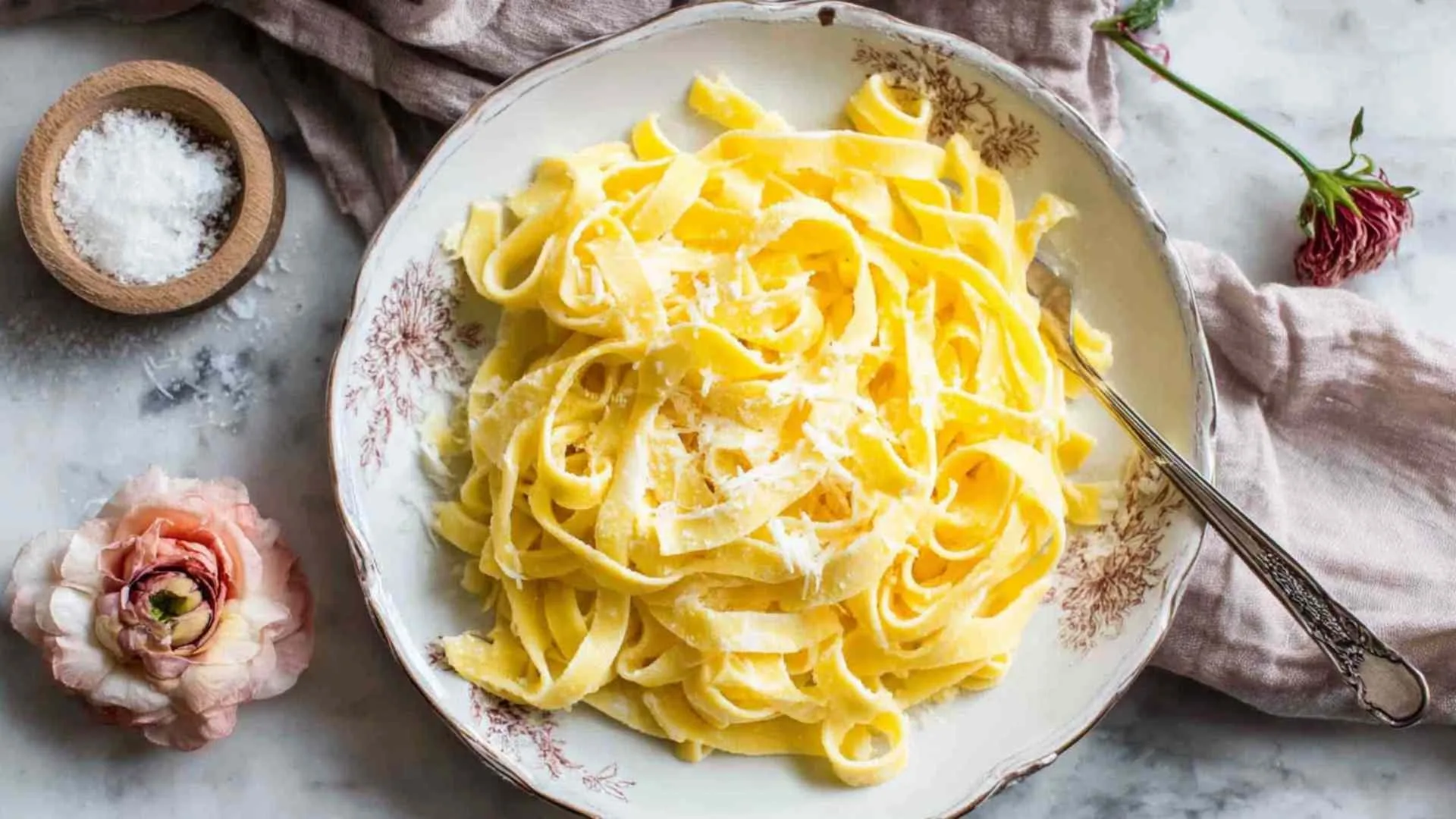
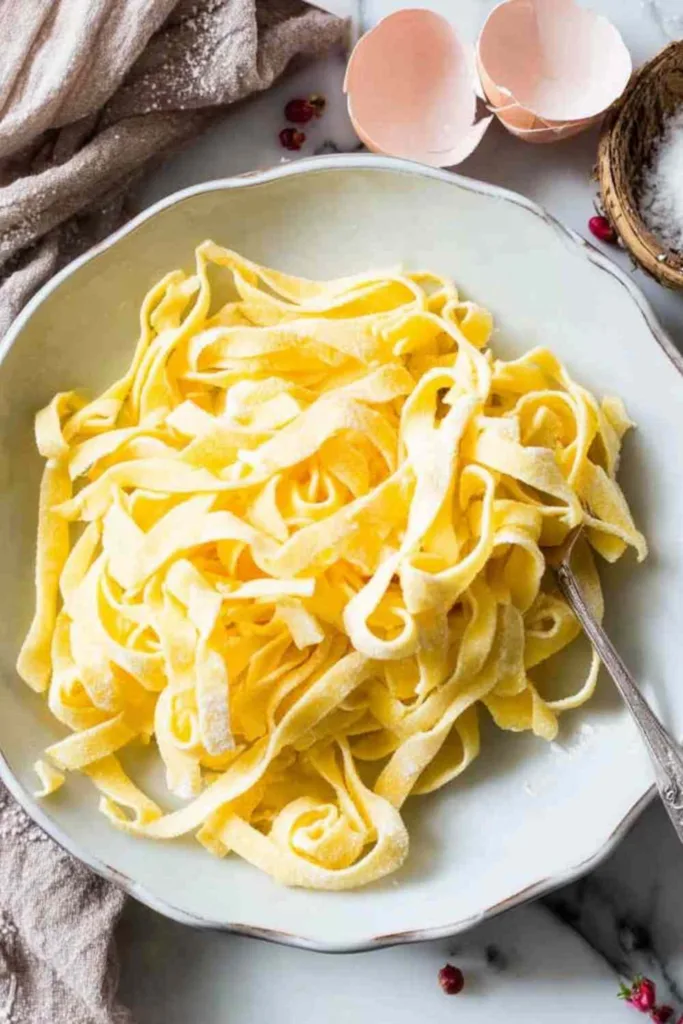
Homemade keto egg noodles changed everything for me the day my daughter was diagnosed with diabetes and I had to find a way to keep pasta night alive in our house. Growing up on my grandmother’s Ohio farm, a bowl of noodles in broth was the kind of meal that made everything feel okay, and I was not about to give that up. These low-carb egg noodles take just 2 ingredients, come together faster than you’d expect, and hold up beautifully in soups, with sauces, and even in baked dishes.
Ingredients for Homemade Keto Egg Noodles
I always keep eggs and cream cheese on hand, which makes these homemade keto egg noodles one of my most reliable go-to recipes when I need something quick, filling, and low in carbs. My go-to is full-fat cream cheese because it gives the batter the right consistency and keeps the noodles from falling apart once sliced.
- 3 large eggs (room temperature blends more smoothly)
- 3 oz full-fat cream cheese, softened — I recommend leaving it out on the counter for 20 minutes before blending; cold cream cheese will leave lumps in the batter that cause tearing when you cut the noodles
- Salt for boiling water — I usually add about 1 teaspoon per quart; it seasons the noodles gently without making them salty
Pro tip: In my experience, the brand of cream cheese matters more than you might think. A good full-fat block-style cream cheese (not whipped or spreadable tub varieties) gives you the cleanest batter and firmest noodles.
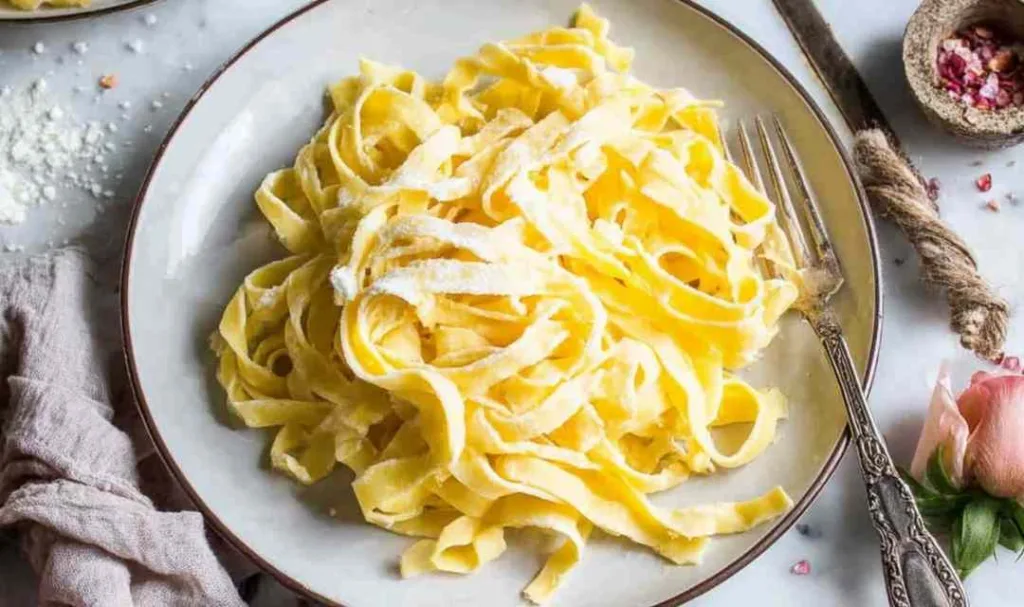
How to Make Homemade Keto Egg Noodles
I recommend reading through every step before you start; in my experience, the cooling step in the middle of this recipe is where most people rush and end up with noodles that crumble before they ever hit the pot.
Step 1: Preheat your oven to 325 degrees F (163 degrees C) and line a rimmed baking sheet with parchment paper. Press the parchment flat into the corners so the batter spreads evenly to the edges and does not pool in the middle.
Step 2: Add the eggs and softened cream cheese to a blender. Blend on high for 1 to 2 minutes until the batter is completely smooth with no visible white streaks or lumps. Stop and scrape the sides down halfway through. If you see any lumps of cream cheese remaining, keep blending. Lumpy batter bakes unevenly and the thick spots will not slice into clean noodles.
Step 3: Pour the batter onto the prepared baking sheet. Use a silicone spatula to spread it into one very thin, even layer across the entire surface, almost as thin as a crepe. Work quickly because the batter begins to settle fast. If one edge looks thicker, give the pan a gentle tilt to level it out before it goes in the oven.
Step 4: Bake for 10 to 12 minutes. Watch the edges closely from the 9-minute mark. They should turn a very pale golden color and just begin to pull away from the parchment. The center should look fully set and dry, not glossy or wet-looking. Pull the pan the moment the center is done; overbaking makes the noodles rubbery and hard to chew.
Step 5: Remove from the oven and let the egg sheet cool completely on the baking sheet for at least 25 to 30 minutes. Do not skip this step and do not rush it with the fridge or a fan. The cooling process is what firms the sheet so it can be sliced cleanly. This is the single most important step in the whole recipe.
Step 6: Once fully cooled, use a pizza cutter or a sharp chef’s knife to slice the sheet into thin strips about 1/4 inch wide for a fettuccine-style noodle. Cut in long, confident strokes from one end to the other rather than sawing back and forth, which can cause tearing.
Step 7: Bring a pot of salted water to a full rolling boil. Gently lower the noodles in using tongs or a spider strainer. Cook for 1 to 2 minutes only; these are not raw pasta and only need to be heated through. The moment they look soft and tender, they are done. Overcooking makes them fall apart.
Step 8: Drain using a spider strainer or slotted spoon rather than pouring through a colander, which will break the noodles. Serve immediately with a warm sauce or broth. Have your sauce ready and hot before the noodles go in the pot because these do not hold well once drained.
What to Serve with Homemade Keto Egg Noodles
These low-carb noodles are mild and savory on their own, which makes them a natural partner for bold, rich sauces and simple fresh sides. Here are my favorite pairings.
Creamy Garlic Chicken Alfredo: A classic creamy garlic sauce is one of the best matches for keto egg noodles because the richness clings to the egg-based noodles beautifully. My Creamy Garlic Chicken Alfredo is a 30-minute skillet dinner that pairs perfectly here.
Tuscan Chicken: The sun-dried tomato and cream sauce in a good Tuscan chicken dish coats these noodles in a way that tastes genuinely restaurant-quality. My Easy Low Carb Tuscan Chicken is one of the most popular recipes on this site and goes with these noodles like they were made for each other.
Marry Me Chicken: If you want a dinner that truly impresses, toss these noodles with my Marry Me Chicken. The creamy Parmesan and sun-dried tomato sauce soaks into every strand and makes the whole bowl feel completely indulgent with almost no carbs.
Creamy Pepperoncini Chicken Skillet: For a tangy, lighter option that still has bold flavor, my Creamy Pepperoncini Chicken Skillet works wonderfully over these noodles. The bright brine cuts through the richness of the egg noodles and balances every bite.
Chicken Broth Soup: These homemade keto egg noodles were practically made for a simple bowl of chicken broth soup. Slice them into shorter pieces and drop them into my Ginger Garlic Chicken Noodle Soup for a cozy, fully low-carb bowl that my family asks for every single winter.
Storage and Serving Tips
I typically store the uncut egg sheet rather than pre-sliced noodles whenever I plan to use them within a day or two. Wrap the cooled sheet tightly in plastic wrap or lay it flat in an airtight container. It keeps well in the refrigerator for up to 3 days. If you have already sliced the noodles, toss them lightly with a drizzle of olive oil before storing to prevent sticking.
For reheating, I always recommend a quick 60-second dip in simmering water or broth rather than the microwave. The microwave heats unevenly and makes these low-carb noodles rubbery. If you are adding them to a hot soup or skillet sauce, skip the boiling step entirely and just drop the sliced noodles directly into your pot during the last 2 minutes of cooking.
Pro tip: These noodles freeze better than you might expect. Lay sliced noodles flat on a parchment-lined tray, freeze until solid (about 1 hour), then transfer to a zip-lock freezer bag. They will keep for up to 1 month and can go straight from the freezer into boiling water without thawing first.
FAQs
I recommend sticking with cream cheese for the best texture, but ricotta makes a decent substitute. In my experience, ricotta noodles are slightly more delicate and need extra care when cutting and handling, but they work well in broth-based soups where texture matters less.
This almost always comes down to one of two things: cutting before the sheet is fully cooled, or spreading the batter too thick. Give it a full 30 minutes to cool completely at room temperature and aim for a sheet nearly as thin as a crepe before baking.
Many home cooks find it easiest to bake the egg sheet a day ahead, wrap it tightly, and refrigerate until ready to slice and cook. The sheet actually firms up overnight in the fridge, which makes cutting even cleaner and easier the next day.

Homemade Keto Egg Noodles
Ingredients
Equipment
Method
- Preheat oven to 325 degrees F (163 degrees C). Line a rimmed baking sheet with parchment paper pressed flat into the corners.
- Add eggs and softened cream cheese to a blender. Blend on high for 1 to 2 minutes until completely smooth with no lumps. Scrape down the sides halfway through.
- Pour batter onto the prepared baking sheet. Spread into one very thin, even layer using a silicone spatula. Work quickly and tilt the pan gently to level any uneven spots.
- Bake for 10 to 12 minutes until the edges are pale golden and just pulling from the parchment and the center is fully set and dry. Do not overbake.
- Remove from the oven and cool completely on the baking sheet for at least 25 to 30 minutes at room temperature. Do not skip this step.
- Once fully cooled, use a pizza cutter or sharp knife to slice the sheet into thin strips about 1/4 inch wide. Cut in long confident strokes.
- Drain gently with a spider strainer or slotted spoon. Serve immediately with warm sauce or broth.