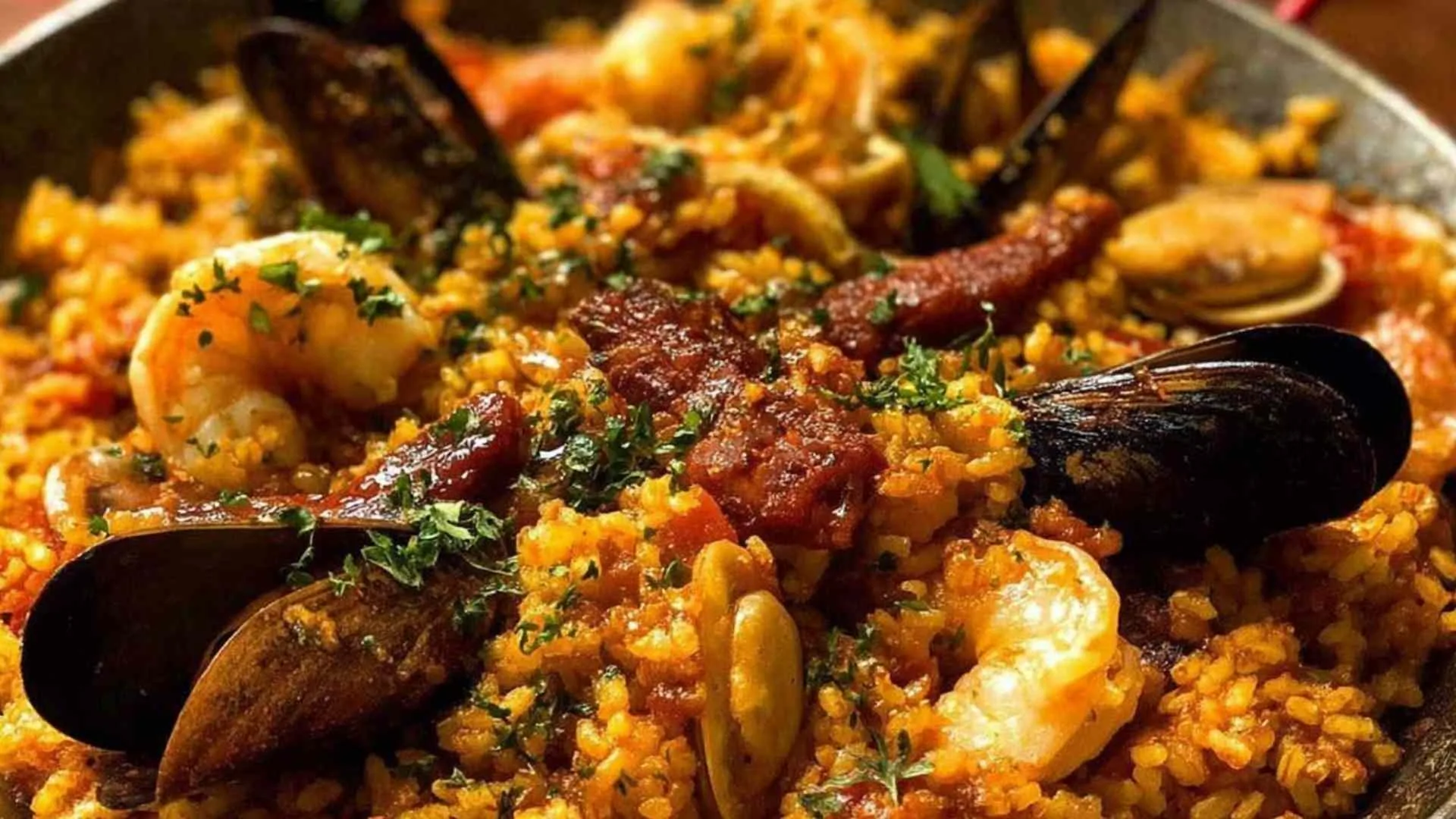
Spanish Paella is one of those recipes that sounds impressive but is genuinely within reach for any home cook, and once you make it, one-pan meals will never feel the same again. I still remember watching my neighbor Maria pull a gorgeous golden paella off her backyard grill for a summer gathering, and the saffron scent alone was enough to pull everyone out of their lawn chairs.
Back on the family farm in the Midwest, Sunday meals were never small affairs. We cooked for whoever showed up, and a dish that fed a crowd without a mountain of dishes to wash afterward was pure gold. Spanish Paella has become exactly that in my kitchen. The moment that wide pan hits the stove and the saffron blooms into the broth, the whole house smells like a coastal Spanish village. My grandchildren gather around the kitchen the same way I used to huddle near Grandma’s stove, waiting for something wonderful. This recipe brings that same feeling big flavor, joyful chaos, and a table full of happy faces. Your kitchen is about to smell incredible.
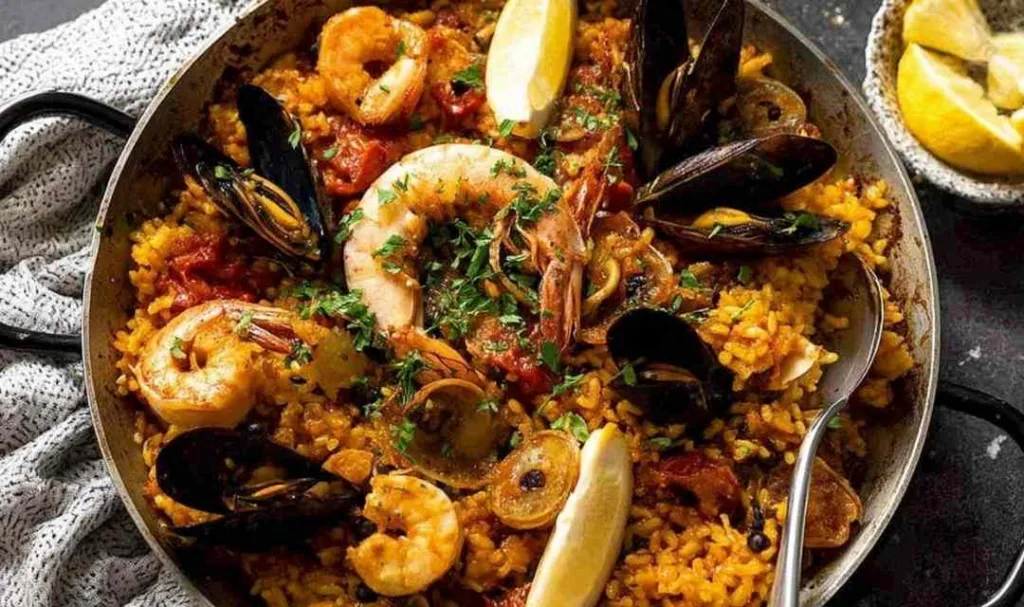
Why This Spanish Paella Recipe Belongs in Your Recipe Box
After years of making Spanish Paella for family gatherings, holidays, and casual Sunday dinners, I can tell you with confidence that this is one of the most forgiving and rewarding dishes you can bring to a table. It is built for people who love bold flavor without stress.
- One-pan meal with minimal cleanup everything cooks in a single skillet
- Ready in just 45 minutes from start to finish
- Packs over 56 grams of protein per serving, making it a genuinely high-protein dinner
- Flexible proteins swap the seafood or chicken to suit what you have on hand
- Saffron-infused rice absorbs natural seafood juices for incredible depth of flavor
- Feeds 5 to 6 people generously, perfect for family dinners and entertaining
Key Players in This Spanish Paella
Every ingredient in this Spanish Paella pulls its weight. Here is what you need to know before you shop.
Paella Rice (Bomba, Valencia, or Calasparra): This is the non-negotiable backbone of any great Spanish Paella. Paella rice absorbs far more liquid than regular rice without turning mushy, which means every grain soaks up that gorgeous saffron broth. I always look for bags labeled Bomba or Valencia. Risotto rice is your best substitute if you cannot find it.
Saffron Threads: Saffron gives Spanish Paella its signature golden color and delicate floral flavor. In my kitchen, I prefer threads over powder for the best results, but a pinch of saffron powder works perfectly on a budget. Either way, do not skip it entirely it is what makes the dish unmistakably paella.
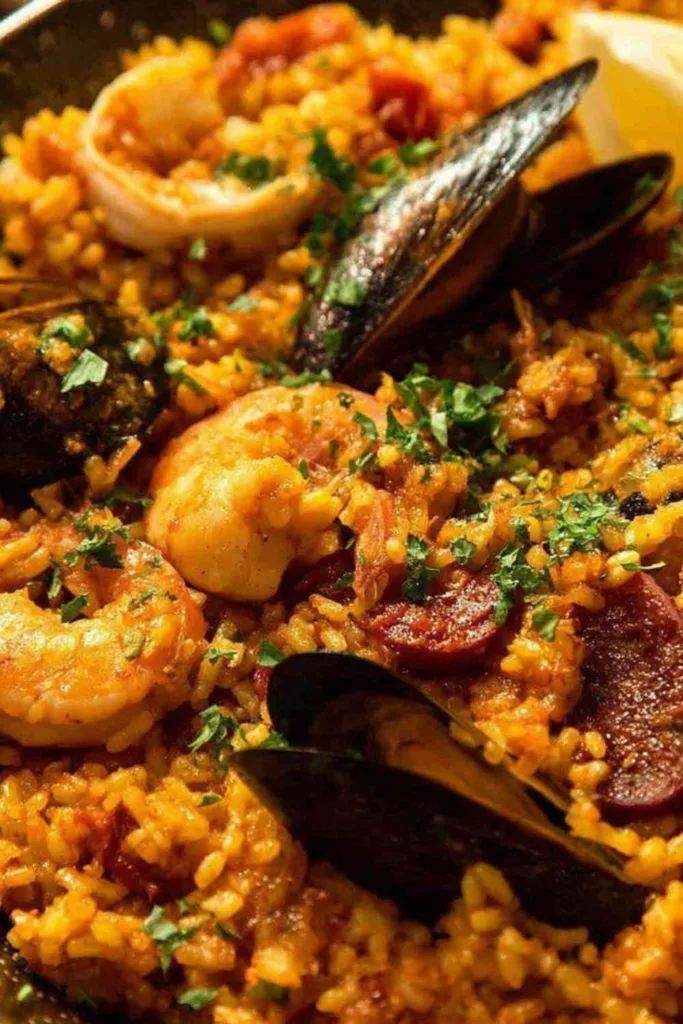
Chorizo (Cured): Make sure you pick up cured, pre-cooked chorizo, not the raw fresh sausage kind. Cured chorizo slices cleanly, sears beautifully, and releases a smoky, spiced red oil into the pan that flavors everything else. I always choose a firm Spanish-style chorizo for the best result.
Chicken Thigh Fillets: Thighs stay moist and tender even after sharing a pan with rice and broth. I have tried breast meat and it dries out. Thighs are the right call every single time, and they cut into bite-sized pieces that cook through perfectly in just a couple of minutes.
Mussels: Here is my most important tip smell every mussel before it goes in the pan. Fresh mussels smell clean, like the ocean. One bad mussel can ruin the entire dish, so take the extra thirty seconds. Mussels also release about half a cup of liquid as they cook, which acts like a natural homemade seafood stock right in the pan.
Full-Sodium Chicken Broth: Resist the urge to grab the low-sodium carton. The seasoning in this dish comes largely from the broth, the chorizo, and the seafood juices. A well-seasoned stock makes an enormous difference in the final flavor.
Whole Shell-On Prawns: The shells protect the shrimp from overcooking and release extra flavor into the rice. If you only have peeled shrimp, add them closer to the end of the second simmer to avoid rubbery results.
How to Make Spanish Paella Step by Step
I have made this Spanish Paella dozens of times, and these steps are tested, reliable, and designed so your rice cooks perfectly every single time.
Step 1. Heat 1 tablespoon of olive oil in a large 12-inch skillet over high heat. Add the sliced chorizo and cook for about 3 minutes until browned on both sides, then remove with a slotted spoon and set aside. That red-orange oil left in the pan is pure flavor.
Step 2. Add the calamari rings to the same hot pan and cook just 45 seconds per side, then remove immediately. Squid must be cooked fast anything in between fast and very slow turns it rubbery.
Step 3. Add more oil if needed. Add garlic and onion and cook for 2 minutes, stirring. Add the diced red bell pepper and cook for 1 more minute. This aromatic base is the foundation of a great Spanish Paella.
Step 4. Add the chicken thigh pieces and cook for about 2 minutes until lightly colored on the outside. They do not need to be cooked through yet they finish in the broth.
Step 5. Add your paella rice and stir until every grain is coated in the flavorful oil. This step adds wonderful nuttiness to the finished dish.
Step 6. Pour in most of the chorizo (reserve about a quarter for garnish), the chicken broth, tomato, and saffron. Give it one good stir to combine everything.
Step 7. Bring the pan to a simmer over medium heat, then let it cook uncovered for 10 minutes without stirring once. Stirring activates the starch and makes the rice gluey. Trust the process and leave it alone.
Step 8. Scatter the frozen peas over the surface, then press the prawns and mussels partially into the rice. They do not need to be fully submerged.
Step 9. Cook for 8 more minutes, turning the prawns halfway through if needed, until the prawns are opaque and the mussels are open. Discard any mussels that refuse to open. Remove the pan from heat.
Step 10. Taste the rice it should be firm but cooked through. If it is still a little tough, add a small splash of hot water and return to low heat for a couple more minutes.
Step 11. Arrange the reserved squid and chorizo on top, cover the pan with a lid, and rest for 5 minutes off the heat. The remaining liquid will be absorbed.
Step 12. Finish with fresh parsley and lemon wedges, bring the whole pan to the table, and mix it up before serving.
Tips for Best Results
- Use a pan large enough so the rice sits no deeper than about 3/4 inch before adding liquid. This ensures even cooking throughout.
- Do not stir once the broth goes in. The golden crust that forms on the bottom of the pan, called soccarat, is the most prized part of any Spanish Paella.
- Add seafood partway through cooking only. Adding it too early makes it rubbery and tough.
- Spanish Paella works great on the BBQ grill set the pan directly on the grates and adjust heat to maintain a gentle simmer.
- If your broth tastes a little flat before you add it, stir in a small pinch of salt or saute two minced anchovies with the onion. They dissolve completely and add remarkable depth.
What to Serve with Spanish Paella
Spanish Paella is a complete meal on its own, but pairing it well takes a good dinner to an unforgettable one. Here are some of my favorite combinations.
- Crusty sourdough or a warm baguette works perfectly for scooping up the saffron broth from the bottom of the pan. Try this alongside my Parmesan Garlic Artisan Bread for a crowd-pleasing side.
- A simple green salad with lemon vinaigrette cuts through the richness of the chorizo beautifully.
- If you want to go the full Spanish feast route, start with easy tapas starters before the paella, then finish with my Nutty Churro Bites with Nutella as a fun Spanish-inspired dessert.
- A chilled white wine or sangria pairs magnificently with the seafood. A crisp dry rosé or Spanish Albariño is ideal.
- For a lighter seafood starter before this main, my Tuscan Shrimp makes a wonderful opener that keeps the Mediterranean mood going.
- Love one-pan dinners as much as this one? My Lemon Garlic Butter Chicken and Green Beans and One Pan Honey Butter Garlic Chicken Rice are reader favorites that use a similar cook method.
How to Store and Enjoy Leftover Spanish Paella
Spanish Paella keeps well for a couple of days, which makes it great for intentional leftovers or a weekend meal prep dish.
For refrigerator storage, let the paella cool completely before transferring it to an airtight container. It will stay fresh for up to 3 days. The rice actually absorbs more flavor overnight, so day-two paella is often even better than the first serving.
Freezing is not recommended for this recipe. The seafood, particularly the mussels and prawns, suffers badly in texture after freezing and thawing. If you want to prepare ahead, make the rice base and chicken without the seafood, then add fresh seafood when you reheat.
For reheating, add a small splash of water or broth to the pan, then warm gently on the stovetop over medium-low heat with the lid on for about 5 minutes. This revives the rice without drying it out. Skip the microwave when possible it tends to make the rice tough and uneven.
FAQs
I always recommend Bomba rice, also sold as Valencia or Calasparra rice. If you cannot find it, risotto rice is the best substitute just add an extra half cup of water to the broth. Avoid long-grain, basmati, or jasmine rice as they have the wrong starch structure for paella.
Absolutely. I make it in a regular 12-inch skillet almost every time. The only thing that matters is that your rice is not stacked more than about 3/4 inch deep before adding liquid. Any wide, flat pan will work well.
Stirring activates the starch in the rice and makes it gluey and gummy instead of distinct-grained. More importantly, leaving it alone allows a golden crust called soccarat to form on the bottom it is the most delicious part of the whole pan, and stirring will destroy it.
Spanish Paella Recipe
Ingredients
Equipment
Method
-
Heat 1 tablespoon of olive oil in a 12-inch skillet over high heat. Add sliced chorizo and cook for about 3 minutes until browned on both sides. Remove with a slotted spoon and set aside.
-
Add squid rings to the same hot pan and cook for 45 seconds per side only, then remove and set aside immediately.
-
Add more oil if needed. Add minced garlic and diced onion and cook for 2 minutes, stirring. Add diced red bell pepper and cook for 1 more minute.
-
Add chicken thigh pieces and cook for about 2 minutes until lightly colored on the outside. They do not need to be cooked through at this stage.
-
Add paella rice and stir until every grain is coated in the oil. Cook for about 1 minute.
-
Pour in most of the chorizo (reserve about 1/4 for garnish), the chicken broth, tomato, and saffron. Stir once to combine everything.
-
Bring to a simmer over medium heat then reduce to a gentle simmer. Cook uncovered for 10 minutes without stirring at all.
-
Scatter frozen peas over the surface, then press prawns and mussels partially into the rice.
-
Cook for 8 more minutes, turning prawns halfway, until prawns are opaque and mussels are wide open. Discard any mussels that do not open. Remove pan from heat.
-
Taste the rice. It should be firm but cooked through. If still a little tough, add a small splash of hot water and return to low heat briefly.
-
Arrange reserved squid and chorizo on top, cover with a lid, and rest 5 minutes off the heat.
-
Scatter with fresh chopped parsley and lemon wedges. Bring the pan to the table and mix before serving.