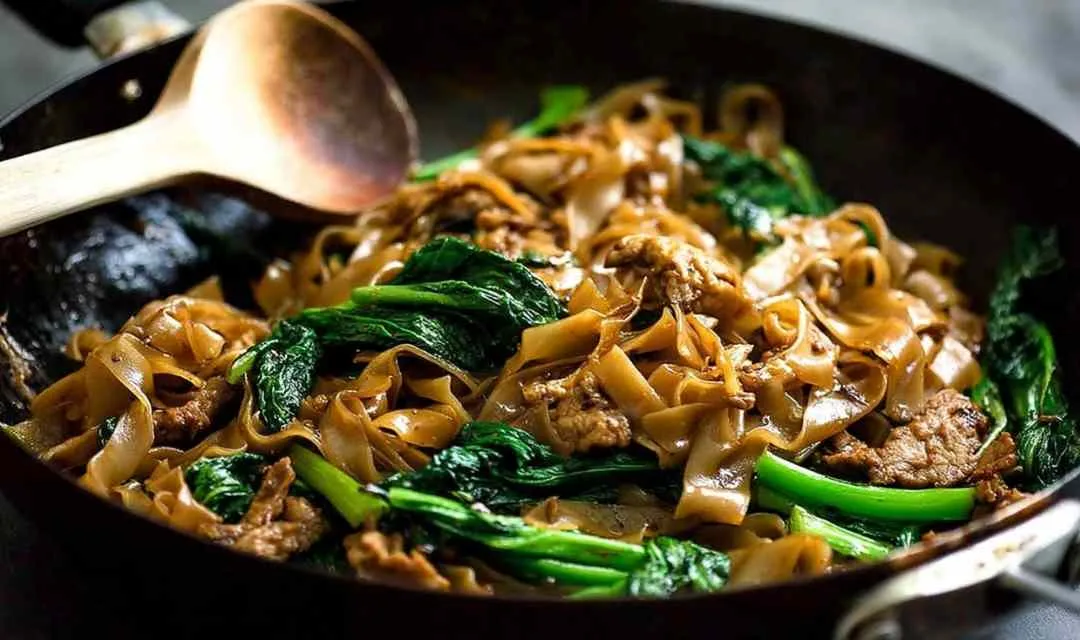
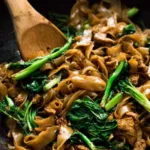
Pad See Ew Thai Stir Fried Noodles is one of those dishes I never expected to fall in love with in a little Midwest town, yet here we are. I remember pointing at something I could not pronounce on a laminated menu at a tiny Thai spot my daughter dragged me to one rainy Tuesday, and what arrived changed the way I thought about a weeknight dinner forever. Dark, glossy noodles with a faint char still rising off the plate. I drove home thinking about the sauce the entire way.
I spent months tinkering with this recipe at my own kitchen table, burning a few batches and breaking plenty of noodles along the way, before I landed on a method that finally made my family stop mid-bite and ask for seconds. The trick is not in the sauce alone. It is in the way you cook the noodles separately, letting them sit against a blazing hot surface long enough to caramelize at the edges. Restaurants do it with burners that reach temperatures no home stove can match. But with one smart technique, you can get surprisingly close. Your kitchen is about to smell incredible.
Why This Pad See Ew Recipe Works Every Time
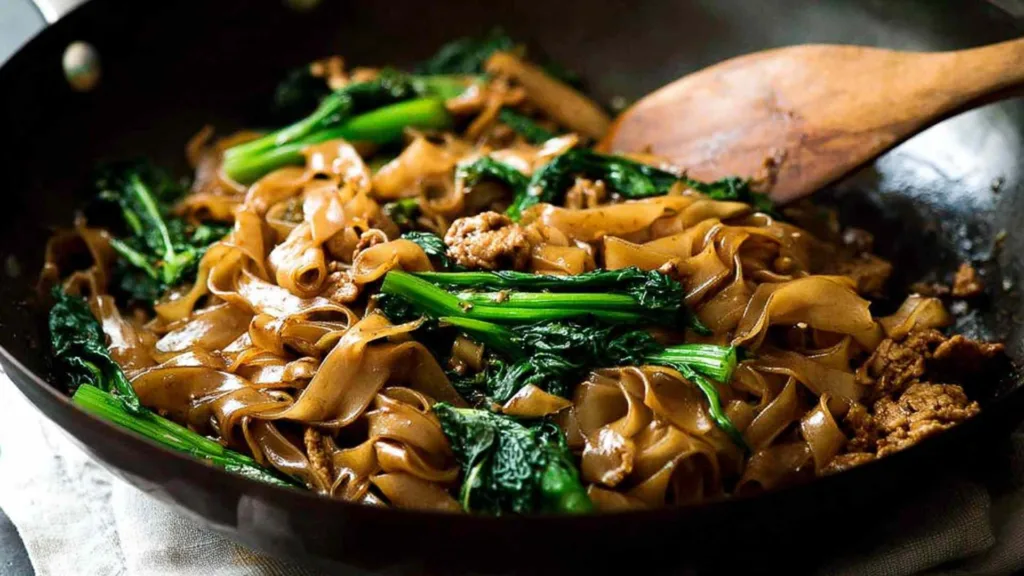
I have made Thai stir fried noodles more ways than I can count, and this version is the one that stuck. A handful of pantry sauces and one straightforward two-stage technique are genuinely all it takes to bring restaurant flavor into a home kitchen.
- Ready in about 18 minutes, which is manageable even on a Tuesday when everyone is hungry and patience is thin
- Uses a 5-ingredient sauce built from things you likely already have on hand
- The two-stage cooking method creates that signature caramelized noodle flavor that most home cooks never quite achieve
- Flexible protein options mean chicken, shrimp, tofu, or leftover roast all work here
- No special equipment needed, just one large skillet if you do not own a wok
- A complete meal for 2 to 3 people from a single pan
Key Players in This Recipe
Good Pad See Ew Thai Stir Fried Noodles starts with understanding what each ingredient actually brings to the bowl.
Wide dried rice stick noodles are the heart of the dish. I always reach for the widest noodles I can find at the supermarket, usually labelled Pad Thai noodles. Once rehydrated, they soak up the sauce in a way thinner noodles simply cannot. Fresh Sen Yai noodles are the traditional choice, but dried work just as well for home cooking and are far easier to find.
Dark soy sauce is what gives the noodles that deep brown color and adds a molasses-like richness. Do not skip it or swap it out unless you absolutely have to. The visual difference is noticeable and the flavor is not the same without it.
Oyster sauce is the workhorse of the whole sauce. It contributes a sweet, umami-forward complexity that no single other ingredient can replicate. Think of it as several sauces condensed into one bottle.
Light soy sauce seasons the dish and adds brightness. Both dark and light soy belong in this recipe and they are not interchangeable. Do not replace the light soy with more dark soy or the flavor becomes too intense.
White vinegar lifts the whole sauce. A touch of sour is a cornerstone of Southeast Asian cooking, and this small splash balances the salt and sweetness in a way that makes the dish taste complete rather than flat.
Chicken thighs stay juicy even at high heat in a way that chicken breast simply does not. Slice them thin so they cook through quickly alongside the garlic.
Chinese broccoli (Gai Lan) brings a mild bitterness that offsets the rich sauce beautifully. If you cannot find it, bok choy, pak choy, or broccolini all work well as stand-ins.
Garlic goes in first, perfuming the oil immediately and building the savory foundation before anything else hits the pan.
Peanut oil is my preference here when I have it. It handles high heat without smoking too early and adds a faint nuttiness that suits this dish well.
How to Make Pad See Ew Thai Stir Fried Noodles Step by Step
Once you start cooking this dish, it moves fast. I get everything chopped, measured, and within arm’s reach before the heat goes on. That prep habit is the single biggest lesson I have taken from years of weeknight stir fries.
Step 1. Trim the ends off the Chinese broccoli and cut into 3-inch pieces. Separate the leaves from the stems. If any stems are thick, cut them in half lengthwise so they are no wider than about one third of an inch. This ensures even cooking alongside the chicken.
Step 2. Cook noodles according to package directions and drain immediately. Time this step carefully. Cook them just before you need them, because rice noodles left sitting in a colander will stick together and break badly in the wok. If they are ready a few minutes early, toss them with a tiny drop of oil.
Step 3. Mix all sauce ingredients together in a small bowl and stir until the sugar fully dissolves. Have this ready to pour in one confident move. You do not want to be measuring sauces once the wok is blazing.
Step 4. Heat 1 tablespoon of oil in your largest heavy-based skillet or wok over high heat until shimmering.
Step 5. Add the garlic and cook for 15 seconds, stirring constantly. Add the sliced chicken and cook, tossing regularly, until it mostly changes from pink to white.
Step 6. Add the Chinese broccoli stems and continue cooking until the chicken is almost fully done. The stems need a little extra time compared to the leafy part.
Step 7. Add the Chinese broccoli leaves and toss for about 30 seconds until just wilted.
Step 8. Push everything to one side of the wok and crack the egg into the empty space. Scramble it quickly. Speed matters here. You want broken scrambled egg, not a fried egg sitting on top.
Step 9. Remove everything from the wok onto a plate and scrape the wok clean. This step is the secret I learned after too many batches of pale, stewed noodles. An empty wok means the noodles caramelize instead of steam.
Step 10. Return the wok to high heat and add the remaining 2 tablespoons of oil. Wait until you see it just starting to smoke before you add anything. That temperature is non-negotiable.
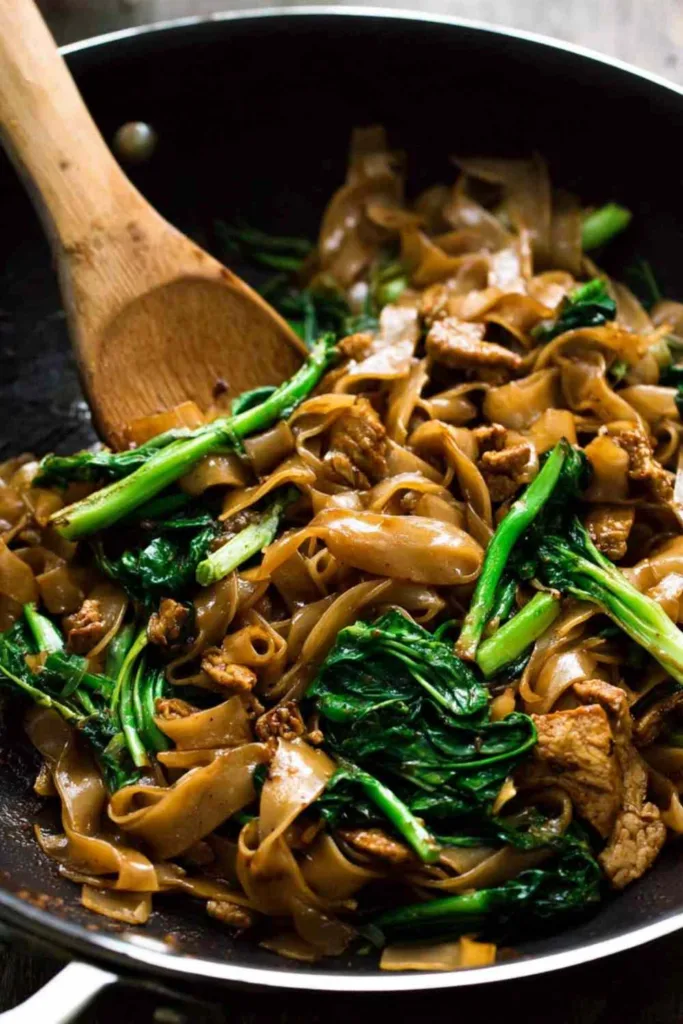
Step 11. Add noodles and sauce. Toss as few times as possible, about 1 to 1 and a half minutes, until the sauce is evenly distributed and the edges of the noodles show some caramelization. Every extra toss risks breaking the noodles, so resist the urge to keep stirring.
Step 12. Add the chicken and vegetables back in, give everything one quick toss to combine, and serve immediately. Pad See Ew is best eaten the moment it comes off the heat.
What to Serve with Pad See Ew
Pad See Ew Thai Stir Fried Noodles is a complete meal on its own, but if you want to build a fuller spread or feed a larger group, these pairings work really well alongside it.
- Bang Bang Fried Rice adds a bold, crispy counterpoint to the saucy noodles and rounds out a Thai-inspired table spread beautifully
- Thai Peanut Chicken shares the same Southeast Asian flavor profile and makes a satisfying second main if you are feeding a crowd
- Asian Slaw brings cool crunch and acidity that cuts right through the richness of the dark soy noodles
- Thai Basil Beef Rolls work well as a starter before the noodles hit the table and keep the flavor theme consistent throughout the meal
- Chicken Zucchini Stir Fry is a lighter vegetable-forward side that complements the noodles without competing with them
- Sticky Garlic Chicken Noodles pair naturally for a noodle-forward dinner spread when you are cooking for a bigger group
Making the Most of Leftovers
Pad See Ew Thai Stir Fried Noodles is genuinely best fresh off the wok when the caramelized edges are still crisp and the vegetables are bright. That said, leftovers happen and here is how to handle them.
Store cooled leftovers in an airtight container in the refrigerator for up to 3 days. I separate individual portions when I can so reheating is quicker on busy evenings.
Rice noodles do not freeze well. They turn mushy after thawing, so I do not recommend freezing this dish. Make only what you plan to eat within 3 days.
For reheating, a hot skillet or wok with a small splash of oil over medium-high heat gives the best result. Toss for a couple of minutes until warmed through. The microwave works in a pinch but the noodles lose their texture. The stovetop is worth the extra minute every time.
FAQs
A large heavy-based skillet works well. Cast iron and stainless steel both hold high heat reliably. The key is getting the pan genuinely hot before the noodles go in, so do not rush the preheating.
Bok choy, pak choy, and broccolini are all good substitutes. Cut broccolini stems in half lengthwise so they cook at the same rate as the leaves. Regular broccoli florets combined with fresh spinach also works in a pinch.
This usually comes down to one of two things: the dark soy sauce was skipped or swapped, or the wok was not hot enough when the noodles went in. Use dark soy specifically and wait until the oil just starts smoking before adding the noodles.
Pad See Ew – Thai Stir Fried Noodles
Ingredients
Equipment
Method
-
Trim ends of Chinese broccoli and cut into 3-inch pieces. Separate leaves from stems. Cut thick stems in half lengthwise so they are no wider than one third of an inch.
-
Cook noodles according to package directions and drain immediately. Use them right away and do not let cooked rice noodles sit.
-
Mix all sauce ingredients (dark soy, oyster sauce, light soy, vinegar, sugar) in a small bowl until sugar fully dissolves. Set aside.
-
Heat 1 tablespoon oil in a large heavy-based skillet or wok over high heat until shimmering. Add garlic and cook 15 seconds.
-
Add chicken and cook until it mostly changes from pink to white. Add Chinese broccoli stems and cook until chicken is almost cooked through.
-
Add Chinese broccoli leaves and toss until just wilted, about 30 seconds.
-
Push everything to one side of the wok. Crack the egg into the empty space and scramble it quickly.
-
Remove everything from the wok onto a plate and scrape the wok clean.
-
Return wok to high heat. Add remaining 2 tablespoons oil and heat until it just starts smoking.
-
Add noodles and sauce. Toss as few times as possible to disperse sauce and caramelize noodle edges, about 1 to 1 and a half minutes.
-
Add chicken and vegetables back in, toss quickly to combine, and serve immediately.